
Two Hearts, One Journey
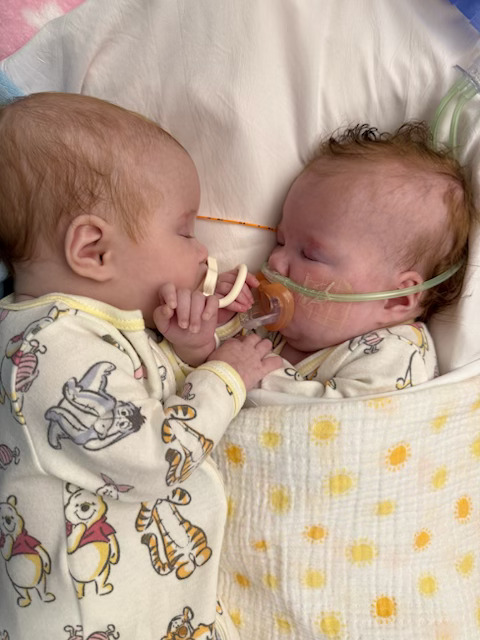
Lettie on the left and Lizzie on the right, sleeping contentedly face to face in the NICU during a visit. Lettie’s little hand is resting on her sister Lizzie’s arm. Photo | Payton and Jessie Jones
Twins Braving NICU Separation
By PJ Martin
Editor
The Herald-News
Metcalfe County residents, Payton and Jessie Jones, learned they were expecting twins during their first 8-week visit to the doctor. That is also when they first learned about the increased risks for twin babies, but no expectant parent ever wants to think about something happening to their babies.
As the pregnancy progressed, doctors kept a close eye on the twins, and as Payton explained, “It was 16 weeks before changes were noticed.” That’s when the real discussions about complication experiences by identical twins began. In a heartbreaking twist, Payton and Jessie were told about the various things that could affect the girls, and doctors watched the development of the twins carefully for Twin-to-Twin Transfusion Syndrome. As the pregnancy advanced, the doctors advised Payton to deliver the babies early at week 32 by C-section.
When Lettie and Lizzie (Elizabeth) were born on August 19th at the Medical Center in Bowling Green, the diagnosis was confirmed. Lizzie was born one minute before Lettie, and “She was blue,” mom Payton explained, “She wasn’t getting enough oxygen.”
Needing more care than the Medical Center could provide, Lizzie was rushed by helicopter to Norton’s Children’s Hospital by the “Just for Kids” Transport Team that specializes in neonatal and pediatric transport. Lettie, who was showing no immediate medical complications, was transported by ambulance.
With a diagnosis of Twin-to-Twin Transfusion Syndrome (TTTS), little Lizzie was placed in the Neonatal Intensive Care Unit (NICU) with a breathing tube in place.
According to the TTTS Foundation, TTTS only affects identical (monochorionic) twins, which usually share the same blood flow and nutrients from a shared placenta. In the case of TTTS, one twin receives less blood flow, referred to as the donor twin, and the other twin receives excessive blood flow, referred to as the recipient twin.

A precious family photo with mom, Payton holding Lettie, and dad, Jessie holding Lizzie in the NICU. Photo | Payton and Jessie Jones
By receiving less blood flow, the donor twin receives fewer nutrients, causing slower growth and less fluid, which causes the baby to produce less urine. Since the urine is part of the makeup of the amniotic sack volume, it can begin to shrink. Doctors must monitor the donor twin closely to make sure the sack doesn’t collapse around it, causing restricted movement and possible umbilical cord damage.
The NICU is a very specialized unit specifically for neonatal problems. The unit has room for 101 babies, and on average, there are probably 80 or so in the care of the unit at one time, according to Charles Howard, Night Shift Nurse Manager, who works in the unit and helps deliver the specialized care the babies receive.
When asked how rare TTTS is for babies in the NICU, Howard thought for a moment and estimated it as affecting probably 10-15% of identical twins. That’s fairly rare.
He explained that staffing depends on what level the baby is at, with level 4 being the highest and most critical level. The higher the infant’s level, the more one-on-one nursing care is required. The nurses may be caring for one baby, two, or even three per shift, depending on the level of care each needs. The staff meets daily to assess the level of care each infant requires.
Any parent going through the heartache and stress of having their tiny baby in NICU would be torn between trying to work and being there with their baby. Lizzy is in NICU, but her twin, Lettie, was released to go home with her parents. Not only was Payton recovering from the C-section surgery, but they were caring for newborn Lettie, while newborn Lizzie was over 100 miles away. Can you imagine the fear, stress, and not knowing what might happen?
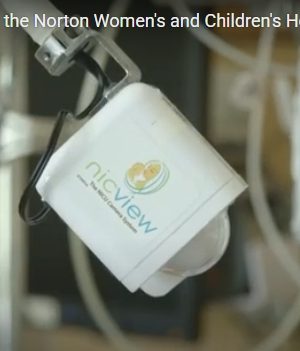
One thing has helped. Norton’s implemented the AngelEye camera program to help parents in these emotional situations. The cameras were installed back in July of 2025 and allow parents to see their infant at any time, day or night. Parents have access and can choose who else is allowed to see their infant. The cameras are on the babies 24/7, and it’s just one way that the hospital has tried to help relieve a little of the stress and distance felt by parents.
As of this writing, Lizzie has been in NICU for 108 days, is doing well, and has had the vent tube removed. When asked, Payton related that the hardest things she and Jessie have had to learn are patience and time. “They are strong,” she said, referring to the babies. “We just have to stay strong and keep praying.”
Payton and Jessie also welcome prayers from our readers.
Anyone who would like to learn more about Norton’s Children’s NICU can go to https://nortonchildrens.com/services/nicu/ and view the virtual tour video. You can also go to https://nortonchildrens.com/services/transport-team/ to learn more about the Just for Kids Transport Team.
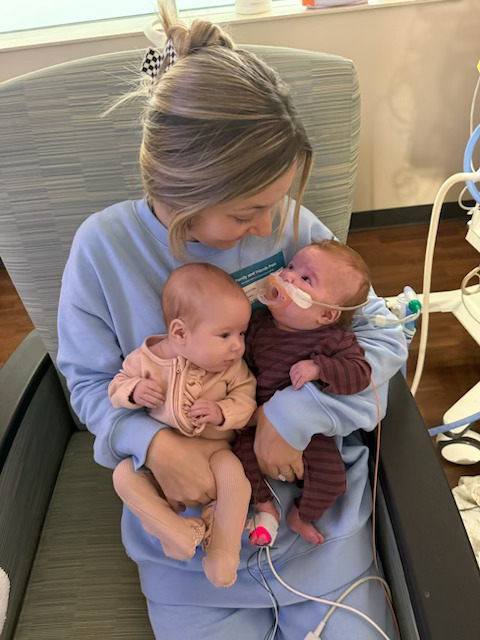
Mom is holding both babies in the NICU. Photo | Payton and Jessie Jones
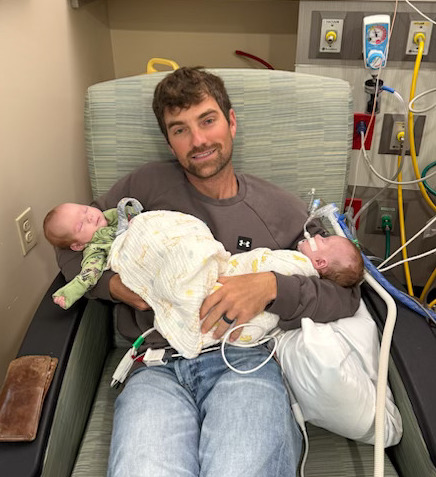
Dad holding both babies in the NICU. Photo | Payton and Jessie Jones

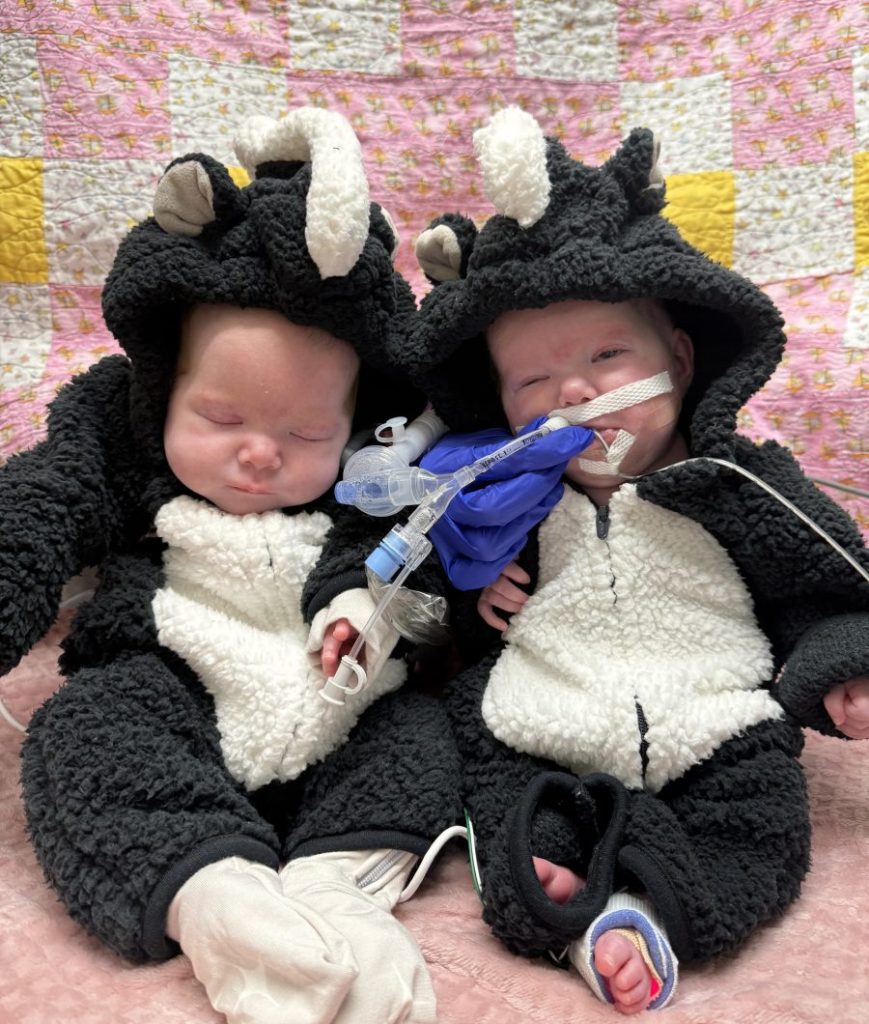
A photo of Lettie and Lizzie together after the breathing tube had been removed. Photo | Payton and Jessie Jones




Praying for your babies and for you both! Nortons is the best place to be! ❤️❤️
May God continue to bless you and your sweet family. Praying for you all