More Than Just a Response Call
By Kalee Gapinski, Freelance Writer
A small office space located on the side of Glasgow Fire Station One, the Barren-Metcalfe Emergency Communication Center operates mostly unnoticed. Inside, a small team of women respond to the community emergency calls.
Alison Burton, shift supervisor, has worked for Barren-Metcalfe ECC since 2012. Burton said a common misconception is that people tend to think they are secretaries for officers.
“There really is no typical day here. You can come in here and the phone may ring one or two times and then the phone may randomly ring until you can’t keep up.”
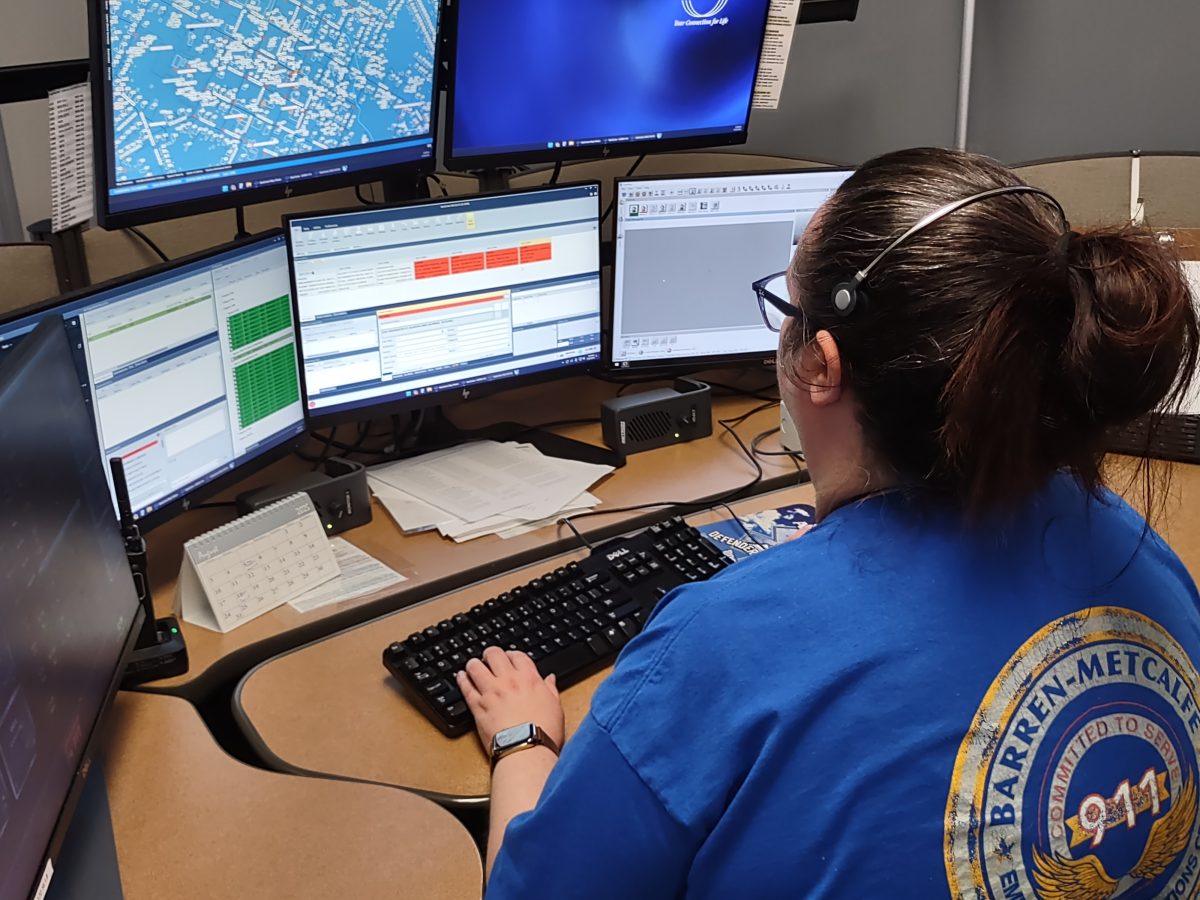
Alison Burton, shift supervisor for Barren-Metcalfe ECC, logs into the call centers software programs preparing for any incoming calls or emergencies. Photo by Kalee Gapinski
Burton said there was one night it was so bad that they were eating raw hotdogs for lunch. Nobody could get up to go fix food or to use the bathroom because it was just insane.
“A lot of people seem to think all we do in here is answer the phone and that is absolutely not true,” Burton said. “While we are answering one call, we are also running stuff for someone else on the radio, or we could be putting one person on hold and answering another call.”
Tabitha Tran has also worked for Barren-Metcalfe ECC since 2012 initially starting in the Metcalfe County center before transitioning to the Glasgow center in 2017. Tran said it was also a common misconception that people tend to think all they do is answer the phone.
“There will be times we could be on call giving CPR. We will be running information through NCIC. We may have another unit yelling at us,” Tran said. “Yes, we are designated to police, fire, EMS, but we also do EPOs and notarize warrants.” EPOS are Emergency Protection Orders.
Kat Stacker, a recent hire, said that they are also responsible for taking admin calls.
“Outside of 911, there are admin calls which are non-emergency calls,” Stacker said. “People call if they have questions about legal things. We can’t answer them but we connect them with officers or someone that can.”
Aside from responding to 911 calls, the hardest part of the job is the emotional burdens it carries. Burton said she can still remember the first phone call she took.
“I went home crying and said I can’t do this. I can still hear that lady screaming. The emotional burden and the mental burden is pretty heavy. People forget that, too,” Burton said. “Some people think that because we are not on scene and we don’t see what is happening, that it shouldn’t bother us. Why do we care? Hearing it and not being able to physically help is the hardest part.”
Tran said some calls are more difficult than others, especially when it comes to emergency calls for children being a mom and new grandmother herself, as well as receiving calls about people they know. She has even dispatched car wrecks for both her husband and son although she didn’t realize it until after.
Burton, Stacker and Tran handle the burdens by mutual support and therapy. Stacker said therapy has been beneficial for both work and personal life needs.
“I’ve maybe only had one or two experiences here that have kind of carried with me. Things that are just really hard to listen to and handle in the moment,” Stacker said. “The only stuff that sticks to me personally is I have experience working with dementia. I was a caretaker for a while, so if I get calls related to that it affects me a bit. I am getting better about it.”
Tran said that you get to know your responders and their families, and eventually they become like family to you. Burton said they don’t always like each other and they fuss and fight like siblings, but they love each other for the most part.
“This career means a whole lot to me. I have done this job when I have been emotionally drained from personal things, the people here and the responders have been my rock,” Burton said. “They helped me when I didn’t know who could help me. We’ve cried on each other’s shoulders. We’ve hugged. We’ve talked it out and even screamed. You trauma bond.”
Tran said you have to go into the field with an open mind because it is not an easy job.
“Don’t believe everything that you see on TV, it’s not real. Whoever is training you, if we sound like we are being not so nice or hateful, it’s not that we are trying to be that way,” Tran said. “We have people’s lives in our hands. We are playing with people’s lives daily. I take my job very seriously. I am very passionate about it.”
Tran said she has lost sleep and has had to have lots of therapy working in the field.
“I wish people would understand that we are human. There are times I question why I am doing this. At the end of the day it takes a special type of person for this job. It’s not meant for everybody,” Tran said.
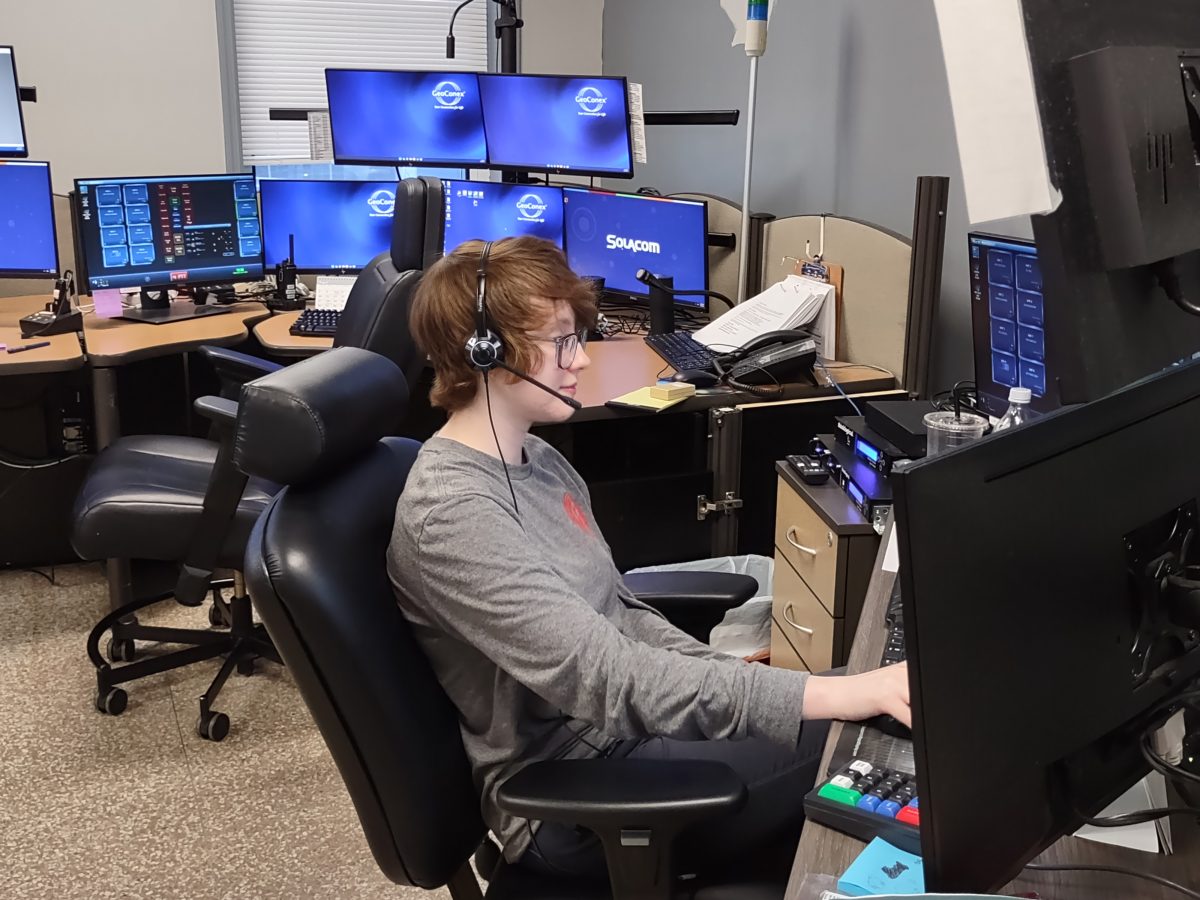
Kat Stacker, recent hire, sits at her call center desk preparing for any incoming calls or emergencies for the day at Barren-Metcalfe ECC. Photo by Kalee Gapinski