Do you hear what I hear?
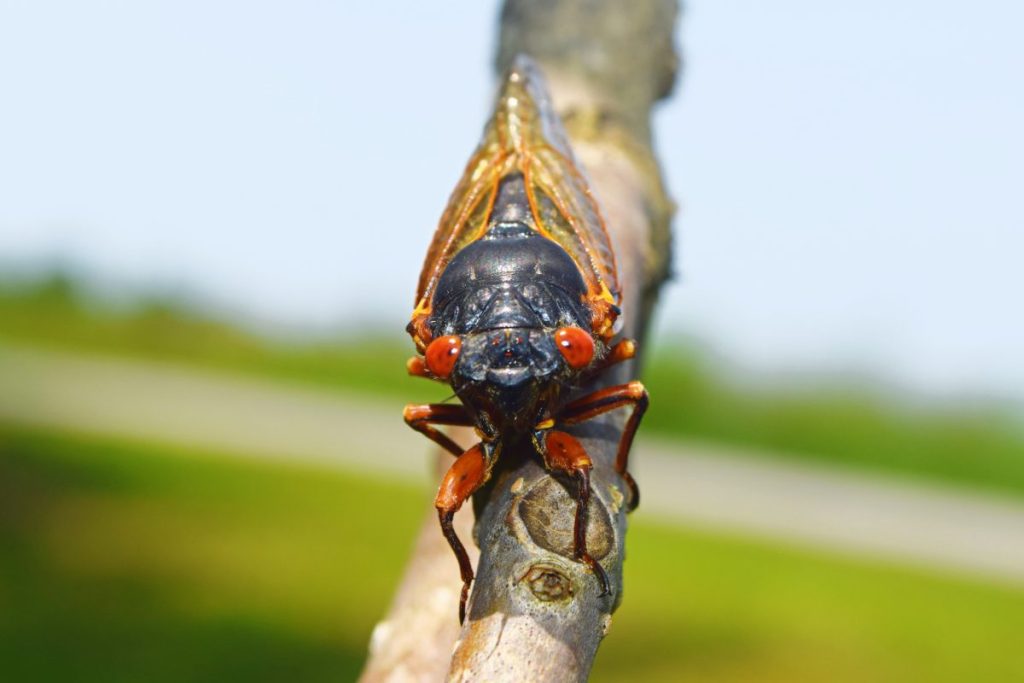
The Brood XIV cicadas emerge every 17 years in south central Kentucky and will not be heard or seen again until 2042. Photo by Mary Beth Sallee.
Mary Beth Sallee
Editor
The Hart Co. News-Herald
Anyone who has spent time outdoors since early May has more than likely heard Kentucky’s most recent returning visitor: the cicada.
This particular group of cicadas is known as Brood XIV (14). They last surfaced in 2008, emerging every 17 years and are known as periodical cicadas.
According to research, there are two types of cicadas: annual and periodical. Annual cicadas emerge each year, typically in the summer months, and are sometimes referred to as dog-day cicadas. They spend a much shorter time underground, typically two years, and are usually green or brown with black markings. Periodical cicadas, which are what south central and eastern Kentucky areas are experiencing now, emerge in massive groups every 13 or 17 years, depending on the brood. They have black bodies with red eyes and are smaller than annual cicadas.
Brood XIV cicadas feed underground for 17 years as nymphs. As stated on the University of Kentucky Marketing and Agricultural Communications website, the cicadas “…emerge from the soil to molt into their flying, adult form in late April to early May, when the soil warms to the mid-60s.” The nymphs will crawl out of the ground and climb trees and poles, then shed their shells to become winged adults.
After mating, female cicadas lay their eggs into the newer and lower branches of trees. Photo by Mary Beth Sallee.
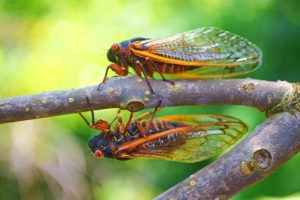
Male cicadas are the ones that sound off with mating calls that can reach as high as 100 decibels. Photo by Mary Beth Sallee.
Male cicadas are the ones that sound off with mating calls that can reach as high as 100 decibels. This is about as loud as a lawnmower or a motorcycle. The males have a special organ called a tymbal. When the male cicada flexes its muscles, a series of ribs within the tymbal organ buckle one after the other. Every time a rib buckles, it produces a clicking noise. The male cicadas’ chorus not only attracts females but also establishes territory.
After mating, female cicadas lay their
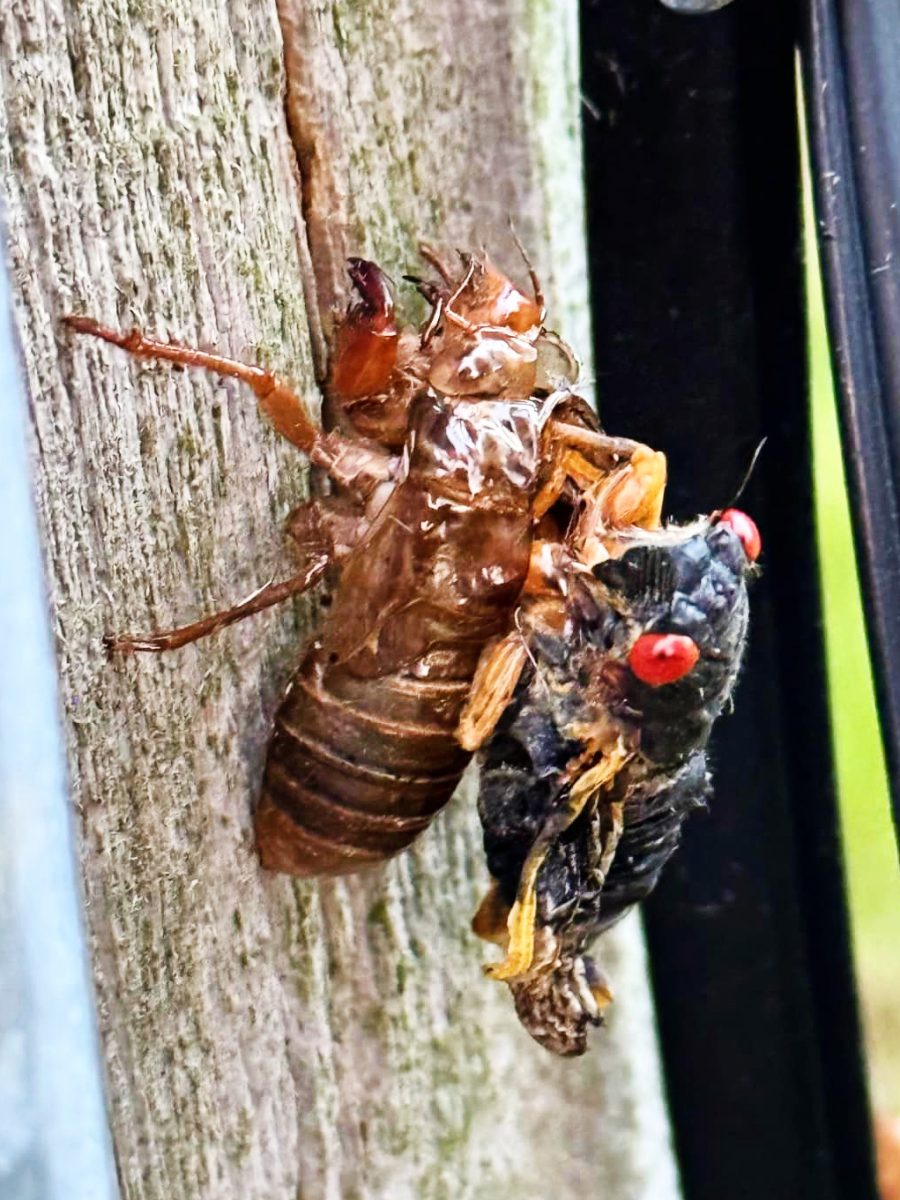
Brood XIV cicadas are feed underground for 17 years as nymphs. They then crawl out of the ground, climb trees and poles, and shed their shells to become winged adults. Photo by Mary Beth Sallee.
eggs in the newer and lower branches of trees. These typically include, but are not limited to: ash, apple, crab apple, dogwood, hickory, oak, pear, maple, beech, holly, and willows, among others. Female cicadas have what is known as an ovipositor, a longer and sharp, spade-like structure that is used to lay eggs by cutting slits into tree branches. They will inject anywhere between 200 to 600 eggs into the stem tissue of the tree branches.
After approximately six to ten weeks, nymphs will hatch from the eggs, fall from the tree branches to the ground, and burrow into the soil. The nymphs will feed on root sap and remain underground for several years, repeating the brood cycle. Adult cicadas usually only live for a few weeks after emerging and die shortly after mating and/or laying eggs.
It should be noted that cicadas and locusts are not the same thing. Locusts are a type of grasshopper that swarm and can cause significant damage to crops by consuming vegetation. In the Bible, locusts were part of the ten plagues that God sent upon Egypt to cover the land and devour the crops and tree fruits. Cicadas, however, are a type of insect that spend the majority of their lives underground and only emerge for a few weeks to reproduce.
Although the noise and vast number of cicadas may be overwhelming to some, cicadas are harmless to both humans and pets. They also do not pose a threat to crops, but can cause minor damage to young trees when female cicadas lay eggs within branches.
So, as you may hear an eerie chorus of cicadas rising from the trees, enjoy it while you can. This particular brood – Brood XIV – will not be heard or seen again until 2042.

There are 30 broods of periodical cicadas in the United States. Typically, the 17-year cycle broods primarily emerge in the Northeast, while the 13-year variety emerges in the South. However, brood ranges overlap in the southern Appalachian region. Chart: University of Kentucky Department of Entomology Website.
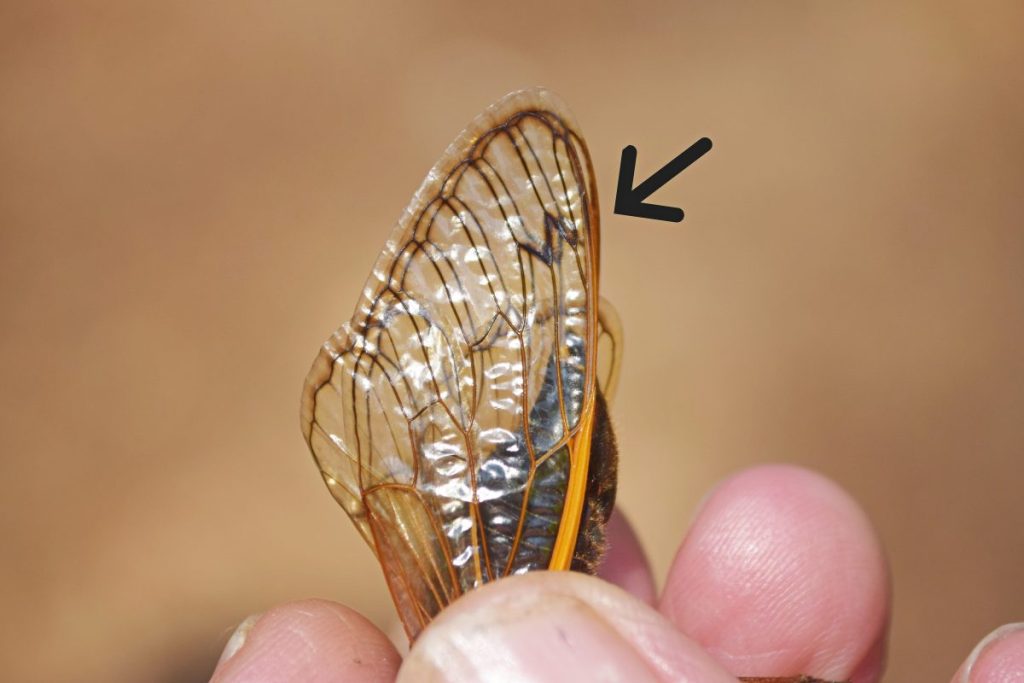
There is an old wives’ tale that says if you see a “W” on the wing of a cicada, there will be war, and if you see a “P” there will be peace. However, this has not been a proven observation, and scientists state that the “W” on a cicada’s wing is simply a pattern of the insect’s wing structure, not a message or warning. Photo by Mary Beth Sallee.
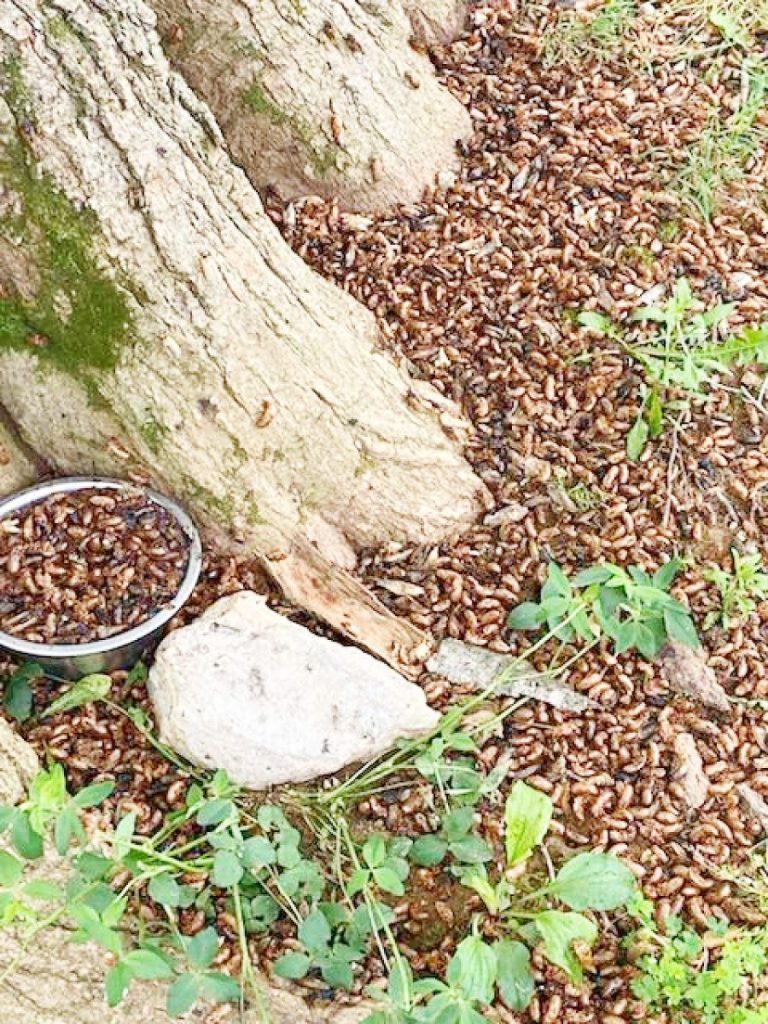
This photo, taken at the Tabb House and farm eight miles northeast of Munfordville, shows the empty brown shells left behind as cicada nymphs molt and transition into adults. Photo submitted by Charles D. Williams.