Human Trafficking Prevention Month
 By Damon Stone
Staff Writer
For over a decade, January has been designated as National Human Trafficking Prevention Month, which seeks to shed light on the crime, and to educate people on how to prevent and respond to the crime.
Human trafficking is a crime that does not distinguish between gender, race, or background, and affects millions from across the globe, according to the Drug Enforcement Agency.
“We don’t see a lot of it here locally, but if you see something, say something,” Darren Tabor, the Scottsville chief of police, said. “If you hear of some type of something going on, report it to your local (law enforcement) officials to let us investigate it.”
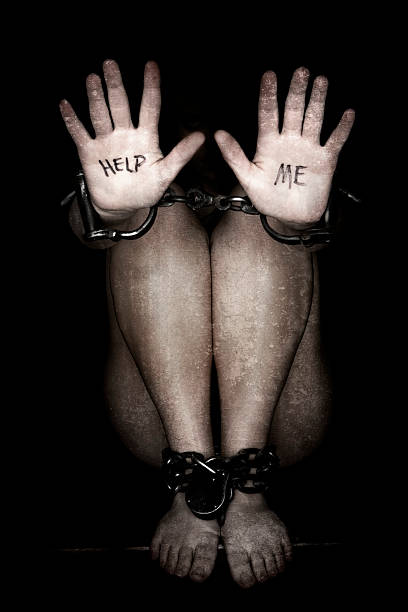
Those who are trafficked could be prevented from speaking out due to language barriers, fear or distrust of authority figures, or that they do not perceive themselves to be victims of human trafficking.
Oftentimes, victims of human trafficking are deceived into false promises, being of love, a good job with high pay for a small amount of work, or a stable life, and are thrust into situations where they are forced to work with little to no pay under intolerable conditions.
“We would respond with a patrol officer like we would with any call, through investigation, we would get (any victim) help through any type of medical needs first, and then any type of mental health therapy that we could do for that person at that point,” Tabor explained.
For the perpetrator, Tabor explained that detectives would open an investigation into that individual, and determine whether or not it was local, statewide, or tied to something related to internet crime.
These jobs can take the form of both legal and illegal jobs, including care facilities, restaurants, the drug trade, factories, and various other jobs, with some acting as domestic servants behind closed doors.
The most notorious form of human trafficking is that of sex trafficking, existing through various businesses, such as fake massage businesses, residential brothels, and strip clubs, with threats of violence, debt, and other forms of manipulation to keep victims involved in the sex industry.
Traffickers, like the victims, can be from a variety of backgrounds, with some using their position to take advantage of their victims, while others suffer the same socio-economic conditions as the victims.
“The biggest thing is to be vigilant,” Tabor said. “Watch for anything out of the ordinary, the big thing is anything with social media and any type of electronic crime that you may see, especially for your children.”
Tabor explained that children’s devices can have restrictions put in place to monitor what they see or do on the internet that could expose them to trafficking.
“Monitoring that as a parent is a big thing,” Tabor explained. “As far as an adult, be vigilant when you’re out and about. Don’t at nighttime, park in dark parking lots if you don’t have to, and make sure someone walks with you to your car.”
Tabor explained that if an individual feels unsafe walking to their car at night or during the day, they can contact their local law enforcement to provide an escort to the car.
“If you work at a business and someone’s been coming in there making any type of comments out of the way about whatever, be vigilant about that and report it,” Tabor explained.
The DEA provided a list of red flags to be aware of for possible human trafficking situations, including promises that seem too good to be true, being unclear about the terms of employment, and denying contact with friends and family.
To combat the growing threat of human trafficking, the Department of Justice released the National Strategy to Combat Human Trafficking in 2022.
If you or someone you know has experienced human trafficking, help is available through the National Human Trafficking Hotline, which provides free, confidential help at 1-888-373-7888, or text HELP to 233733 (BEFREE).
“Just be vigilant and pay attention to your surroundings,” Tabor explained. “Locally, and in any big cities, big towns, whatever. Everybody watches for everybody; if you see something, report it.”
More information can be found at https://www.dea.gov/resources/victim-witness-assistance-program/human-trafficking-prevention#:~:text=Since%202010%2C%20the%20President,Month%2C%202024%20%7C%20The%20White%20House.
Human Trafficking prevention month card, January. Vector illustration. EPS10