Building Hope
A Mission Trip to the Philippines – Part I
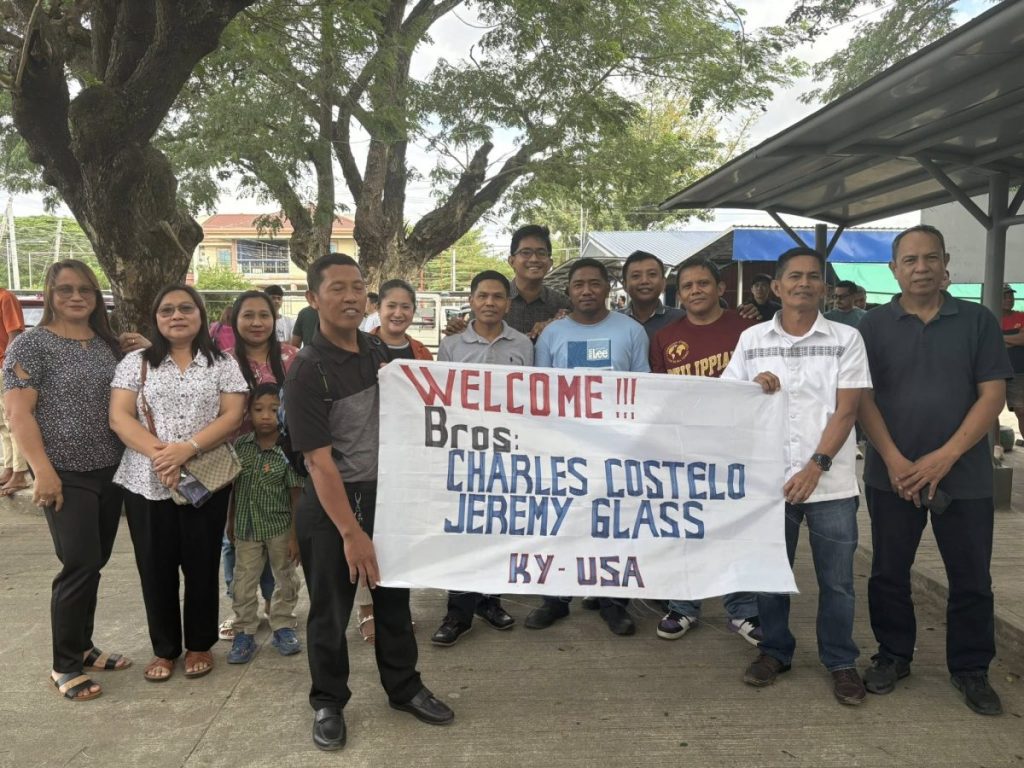
A welcoming group of ministers who were excited and happy to see them. They even made a welcome sign. Photo provided by Charles Costello
By PJ Martin
Editor
The Herald-News
In December, local residents Jeremy Glass and Charles Costello embarked on a faith mission to the Philippines, representing the North Main Church of Christ.
The pair were scheduled to embark on a tour of several churches and travel to many villages, but first, they made an important stop at the Manila American Cemetery.
“We went into Manila, and we had to spend the night, then we had to fly 300 miles farther on into the country to get to where we were going to work for the church,” explained Charles.
During that time, they traveled to the Manila American Cemetery, where Charles was able to visit the grave of his uncle, Sgt. James L. Costello. He is the first in his family to do so. Also, while there, Jeremy was able to visit the grave of his great-uncle, Pvt. Albert L. Richardson.
Many residents of Metcalfe County will remember Gary L. Richardson, a long-time educator who passed away in 2025. Pvt. Albert L. Richardson was his father, sadly Gary never knew him, because he was killed in WWII on Luzon Island before Gary was born.
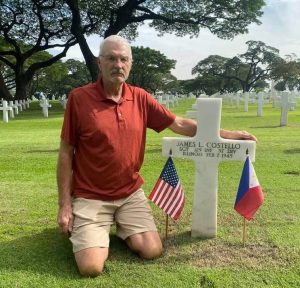
Charles Costello at the grave site of his uncle, James Costello at Manila American Cemetery. Notice the row after row of crosses behind him. Photo provided by Charles Costello
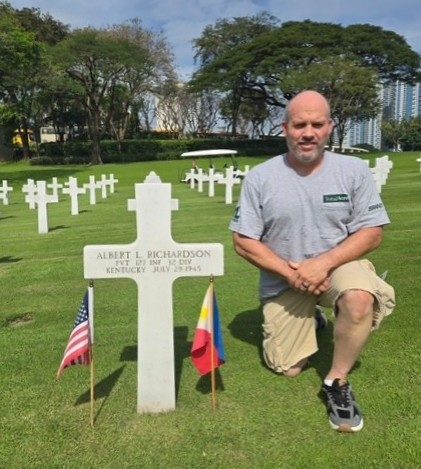
Jeremy Glass at the grave of his great-uncle Albert Richardson at Manila American Cemetery. Photo provided by Charles Costello
While at the cemetery, they learned that 17,000 American soldiers are buried there and that another 16,000 were never recovered from the terrible battle there. Charles explained that the soldiers had a hard time retaking, ,because the Japanese did not want to give it up. In the process, many people were killed and wounded. The site of the cemetery was once named Fort McKinley.
The journey continued the next day when they boarded a plane to a city named Tuguegarao that Charles refers to as “Tug City,” because it was much easier to pronounce. The two stayed at Tuguegarao and traveled the many miles all over the northern part of that province. The northern part is somewhat Americanized. The adults understand English well and speak it somewhat, but the children learn to speak English in school.
Most of the people have an American first name.
The southern half of the Philippines is a dangerous place called Mindanao, where the Muslims are. They have wars going on down there, but that is a long distance south of where they traveled.
When they finally arrived, a welcoming group of ministers were waiting for them with a sign.
“On the first Sunday, we went to three churches. We had church three times, and then two times per day, we went to a gospel meeting somewhere, and we traveled out into the country to villages,” explained Charles, adding that he preached at 18 churches total.
They lost count of how many people they baptized while there. Right before our interview, Charles found out they had baptized 27 people.
When asked if they walked from village to village, Charles replied that they drove instead, as the villages were often miles apart. The driving is really slow because the roads are in really bad shape, and the traffic’s bad too. Then, when they traveled up in the mountains, the roads were really crooked. “Sometimes we’d have to drive for an hour and a half to two hours to get to the next place, said Charles.
“The traffic is so bad, there’s millions of motorcycles. Everybody rides mopeds and motorcycles…And the traffic is so slow, and they don’t have stop signs, no yield signs, no red lights, no cops. People just drive crazy,” Charles said, he was amazed.
Both Charles and Jeremy agreed that the people were extremely nice. “It was unbelievable. They were so happy to see us. And I was surprised that at each church, at least one person came forward to be baptized; one church had six. It was five women and a man.”
As we looked at some of the photos, it appeared as if they were baptizing people in cattle tanks, the river, a swimming pool, anywhere they could find enough water. Charles confirmed it, “We went in a swimming pool, and one time we went in the creek, one time we went in the river, I thought we were gonna get washed away… We went one time, and it was like a hog pen, but they had a tank. The water was clear. That’s where we baptized the six people.”
They had to drive miles just to find somewhere they could baptize folks. They baptized a man who was a retired Philippine soldier who was paralyzed, and they had a hard time getting him into the tank. They had to lift him and put him over in the tank, and afterward they baptized his wife, too. They also baptized a lady who had had a stroke. These are just some of the people they met and remember.
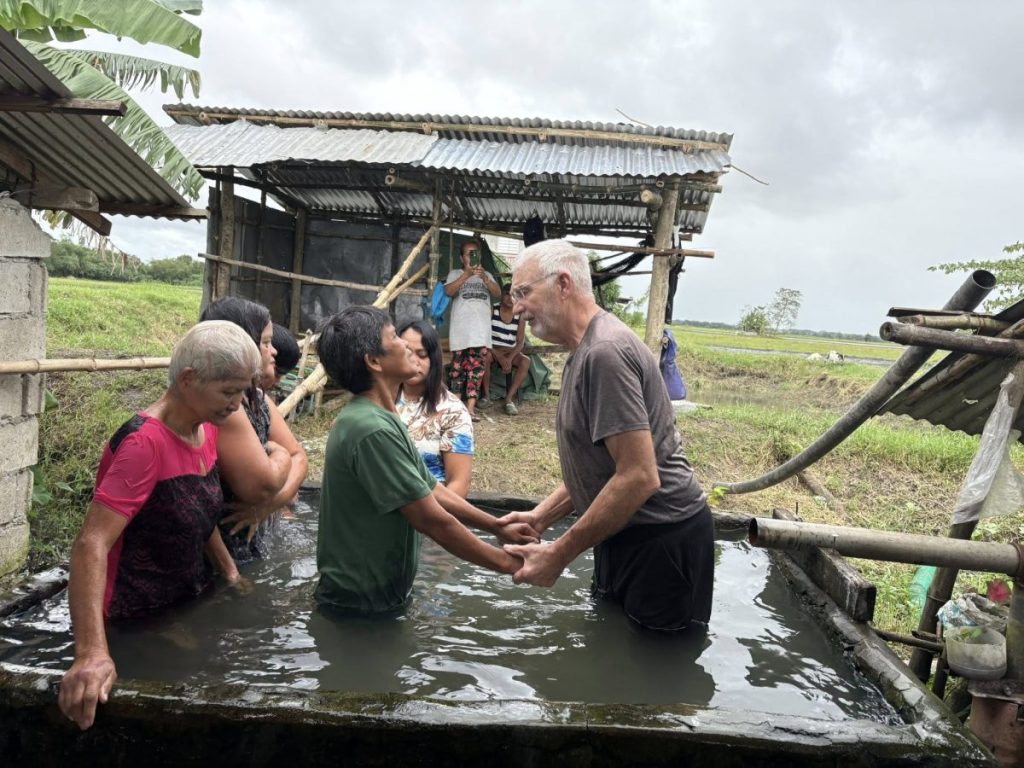
The cattle tank was used to baptize six people from the Culung church. Photo provided by Charles Costello
Charles and Jeremy agreed, “We were just so impressed by these people. They were so happy they didn’t want us to leave. They’re very happy people, inviting people.”
Their journey not only reinforced their faith, but also deepened their connection with the local community.
Keep reading the Herald-News for Part II next week, where they will share more about their experiences and the impact of their mission.