Recognizing the Signs
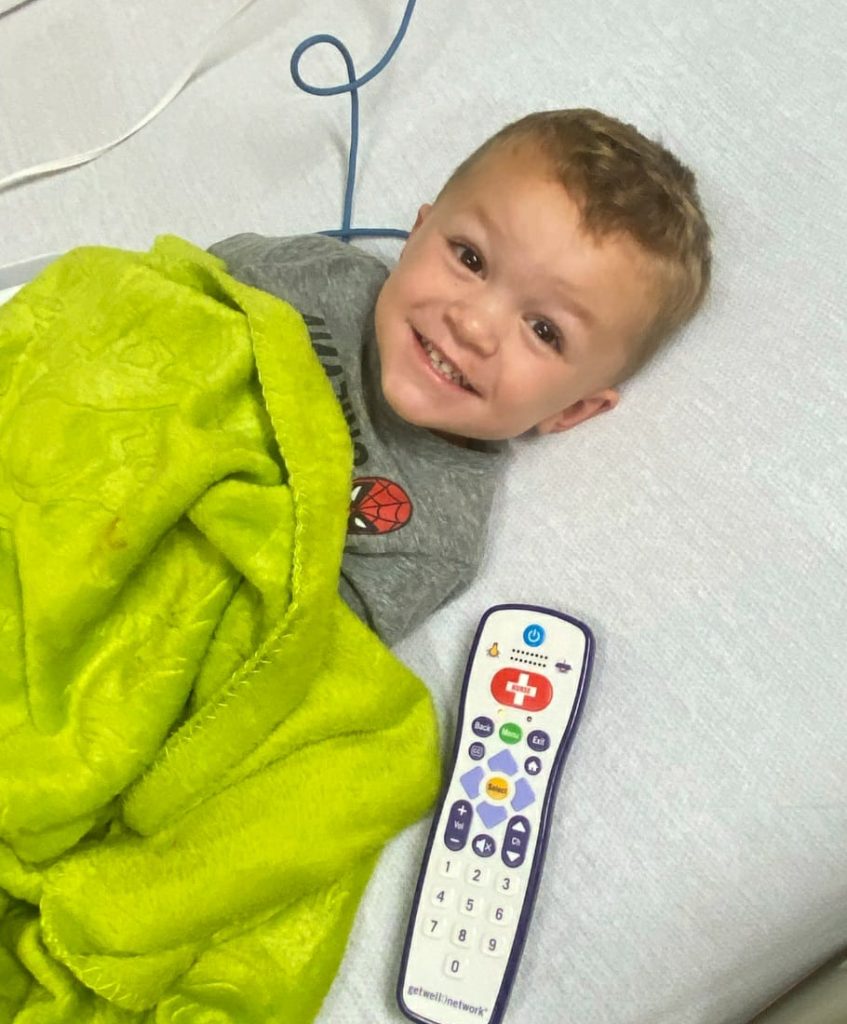
Malakai was just three years old when he was diagnosed with Type 1 Diabetes. Photo submitted.
Local Mother Shares Son’s Type 1 Diabetes Journey
Mary Beth Sallee
Managing Editor
Hart Co. News-Herald
When Chelsea Gillespie looks back on the weeks leading up to her son Malakai’s diagnosis, she can pinpoint the moment when everyday parenting concerns shifted into something far more urgent.
Malakai, now age seven, was only three years old when Type 1 Diabetes abruptly reshaped his life.
Before preschool began in September 2021, Chelsea said the changes in her son’s behavior were unmistakable once she paused to connect the dots.
“The week prior to starting school, Malakai started showing signs of a diabetic,” Chelsea said.
It wasn’t long before those early clues intensified. Increased thirst, frequent urination, and sudden bedwetting – especially after being potty trained so young – signaled something was wrong.
“Malakai started drinking a lot and peeing all the time. We could not even drive from our house in Munfordville to my parents in Bonnieville without stopping on the side of the road for him to use the bathroom,” Chelsea said. “He started, two weeks prior to diagnosis, bedwetting again, which was very odd considering he had been potty trained right at a year. The day he was diagnosed, we were at my in-laws’ house, and we had just loaded all the kids in the car. Malakai had to use the bathroom, so he went. After getting everyone buckled in the car, he had to pee again. At that point, I realized something was wrong. I told my husband when we got home I was going to check his sugar because he acts like a diabetic – peeing and drinking all the time. When we got home, I checked, and the meter said ‘high’ (which is typically over 600), so we took him to the ER, and his sugar was 749. At that point, he was transferred to Norton Children’s for the final diagnosis of Type 1 Diabetes.”
Chelsea recalled the emotional chaos of that night.
“Malakai was really too young to understand what was going on. He just knew I took him to the hospital, and all of a sudden everyone that came in was poking him with needles,” Chelsea shared. “I was very overwhelmed with all the information that was being received and felt defeated that I couldn’t do anything to stop the pain from coming every time someone walked in the room. I was also seven months pregnant at the time.”
With more than a decade in the medical field, Chelsea was familiar with diabetes, but Type 1 brought an entirely different reality.
“I knew about diabetes but really didn’t know much or the differences between Type 1 and 2, but I knew the common signs,” Chelsea said. “I also had gestational diabetes with my pregnancies, so I had all the things to be able to check sugar at home.”
Daily life changed instantly. Managing Malakai’s blood sugar became a constant routine.
“Malakai wears a Dexcom to monitor his blood sugar and also an insulin pump,” Chelsea said. “Every day we are carb-counting for everything he eats, also trying to keep a constant sugar reading with sports and school.”
What began as daily battles with needles slowly turned into resilience. But it wasn’t easy emotionally or physically.
“At first, it was very hard,” Chelsea said. “Malakai cried at every finger stick and insulin injection. At one point, he didn’t even want me near him because I became the bad guy always poking him with needles. It was very stressful and overwhelming, and most days we both just sat on the floor overwhelmed with emotions…Trying to explain to my 3-year-old at the time that Mommy isn’t a bad guy – she’s just trying to keep him alive.”
Today, Malakai has adapted very well and doesn’t remember a time before diabetes. He does his own finger sticks, needing assistance with pump changes and calculating his insulin at meals.
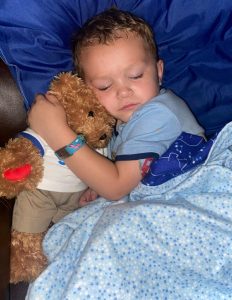
Pictured with his diabetes bear, Chelsea Gillespie said her son Malakai has adapted well since his diabetes diagnosis in 2021. Photo submitted.
“Hardest thing for Malakai is that he forgets and eats snacks without telling someone, and that he’s the only one in the family with it,” Chelsea said. “Malakai loves when we are out and see another person wearing a Dexcom or pump. He often asks them to take a picture together. He loves finding Dexcom buddies.”
Chelsea said that support has been essential – from family learning diabetes care alongside them to the medical team at the Wendy Novack Center in Louisville. She wishes more people understood what Type 1 Diabetes really means for a child.
“I wish people would understand that just because he has T1D doesn’t mean he can’t eat things,” Chelsea said. “Everyone is always asking what can he eat and when. He can eat just like any other normal person. He just needs insulin to cover it. Also, that emotions and everyday life affect his sugar range.”
For newly diagnosed families, Chelsea’s advice comes from experience and faith.
“Don’t give up! It’s so hard and overwhelming at first, but it does get better,” Chelsea shared. “Have faith. Rely on God. And reach out to others for assistance and questions. Don’t be afraid to ask questions.”
Chelsea’s hopes for the future rest on advances in research and the dream of a cure.
“My hope is that they would find a cure for T1D kids,” she said. “It’s so unfair they have to go through so much. I would hope in the future for transplants that would cure these children.”
While the journey is ongoing, Chelsea said it has permanently changed how she approaches motherhood.
“It has caused me to be more aware,” she said. “I have three other children, and I’m always aware of changes to hopefully catch it before it is too late. But it’s also made me a little of an overthinker. Every time one of the other kids drinks more than normal or uses the bathroom more than normal, my automatic thought goes straight to T1D.”
Chelsea has shared Malakai’s story so other parents may recognize the signs sooner, trust their instincts, and know they are not alone.

Malakai doesn’t let diabetes stop him from enjoying sports like baseball. He is pictured here wearing his Dexcom on the back of his arm. Photo submitted.