Keeping Your Cool
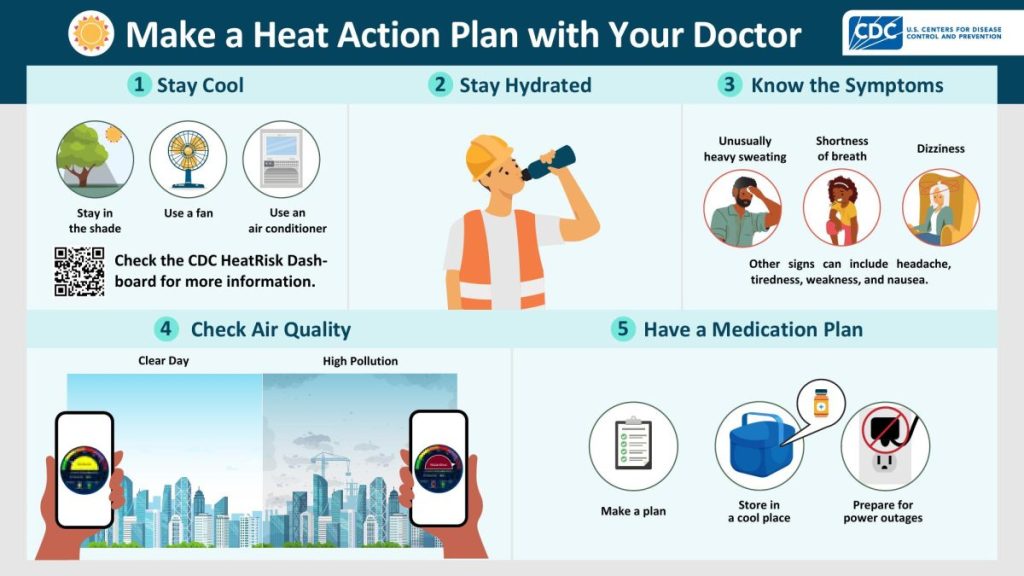
Graphic courtesy of the CDC
By PJ Martin
Editor
The Herald-News
When temperatures soar into the high 90s and beyond, it’s crucial to take steps to ease the strain on your home’s air conditioning system.
Prepare for extreme temperatures in the spring by scheduling annual air conditioning maintenance and repairs before summer begins. This can help prevent outages during the extreme temperatures or help prevent costly repairs later.
Remember to check on vulnerable neighbors, especially the elderly, people with medical conditions, and young children.
Just calling or visiting the elderly or ill who live near you could be the difference between life and death in extreme heat conditions. Emergencies can develop in seconds, so be kind and check on these folks.
Simple steps can be taken at home or in the office to minimize heat. Keep curtains or blinds closed, especially on the south side of your home or business. You may even have blackout curtains that keep the sunlight out.
Use the stove as little as possible, particularly the oven, which tends to heat the surrounding area. Use a microwave, air fryer, or outdoor grill to minimize heat inside.
The CDC gives these suggestions:
- People and pets should stay indoors. If air-conditioning isn’t available, seek refuge at a mall, library, or a community relief shelter.
- Remember to drink more fluids, but avoid alcohol and high-sugar drinks.
- When going out, wear light, loose fitting clothing and never leave children or animals unattended in a parked vehicle!
If you must work outside, there are a few things that can help you stay cooler. Try to schedule your work early in the morning before temperatures rise to extreme digits. Use cooling towels that wrap around your neck a try.
The CDC suggests working in the shade and taking breaks more frequently. Perhaps most important is to drink plenty of fluids.
- Carry a water bottle. Drink and refill it throughout the day.
- Consider limiting beverages high in sugars, sodium, caffeine, and alcohol, if possible.
- Monitor your urine color. Light yellow or clear indicates adequate hydration, while dark urine signals dehydration and the need to drink more fluids.
- If you are sweating a lot, combine water with snacks or a sports drink to replace the salt and minerals lost.
The American Red Cross reminds us to be prepared for blackouts. Utilities may be offline, so be ready to live without power, gas, and water. Plan for your electrical needs, including cell phones and necessary medical equipment.
According to the CDC, emergency room visits for heat-related illnesses significantly increased across several US regions during the warm season (May–September) of 2023, particularly among men and adults ages 18-64.
The Mayo Clinic lists these factors that may limit your ability to regulate your body temperature:
- Being older.
- Being overweight.
- Having certain health conditions.
- Taking certain medicines.
The risk of a heat-related illness also rises with:
- High humidity which prevents sweat from evaporating as quickly to cool down your body.
- High elevation which increases your chances of dehydration and sunburn.
- Strenuous exercise or activity, like hiking or biking in hot weather.
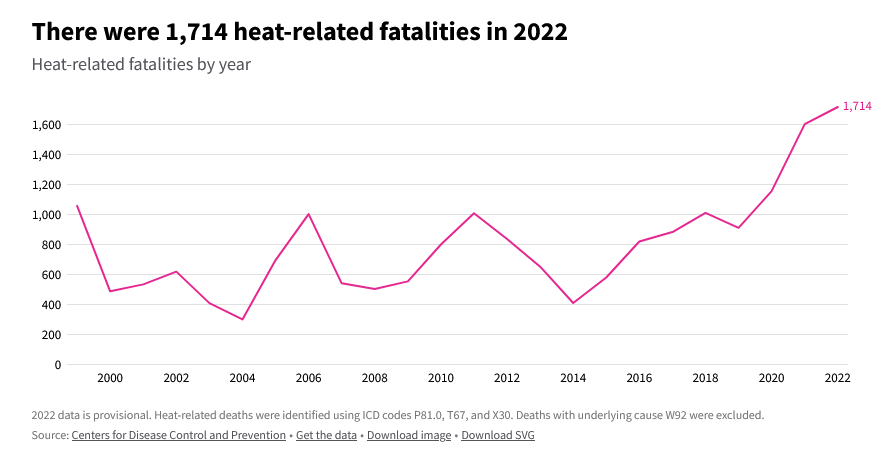
Graph courtesy of the CDC
Heat Exhaustion
Heat exhaustion is more likely to occur if you are dehydrated (reduces your ability to sweat), consume alcohol (affects body temperature control), or wear overly constrictive clothing that prevents sweat evaporation.
Heat exhaustion can develop suddenly or gradually. Symptoms may include:
- Cool, moist skin with goose bumps when in the heat.
- Heavy sweating.
- Faintness or dizziness.
- Fatigue.
- Weak, rapid pulse.
- Low blood pressure upon standing.
- Muscle cramps.
If you suspect that you have heat exhaustion, do the following:
- Stop all activity and rest.
- Move to a cooler place. Go inside an air-conditioned place if you can, or seek shade.
- Drink cool water or a sports drink.
Untreated, heat exhaustion can lead to heatstroke. Contact your doctor if your symptoms worsen or don’t improve within an hour. If you’re with someone who you suspect has heat exhaustion, call 911 for medical help if the person:
- Becomes confused or distressed.
- Loses consciousness.
- Is not able to drink.
- Has a core body temperature that reaches 104 degrees Fahrenheit or higher.
Heatstroke
Heatstroke is a life-threatening condition usually caused by prolonged exposure to high temperatures or physical activity in high temperatures. Excessive clothing, drinking alcohol, and dehydration can also contribute.
Possible symptoms include:
- A core body temperature of 104 degrees Fahrenheit or higher.
- Confusion, agitation, slurred speech, irritability, delirium, seizures, or coma.
- Nausea and vomiting.
- Flushed skin or changes in skin color.
- Rapid, shallow breathing.
- Rapid heart rate.
If you suspect someone is experiencing heatstroke, call 911 or your local emergency number, and while waiting for medical help, cool the person by:
- Move the person to a cooler location, such as shade or an air-conditioned place.
- Place the person in an ice water bath while providing head support. This is the best way to quickly reduce the person’s core body temperature.
- Give the person a cold shower or place ice packs or cold, wet towels on the person’s head, neck, armpits, and groin.
- Direct a fan at the person.
- Remove the person’s extra clothing.
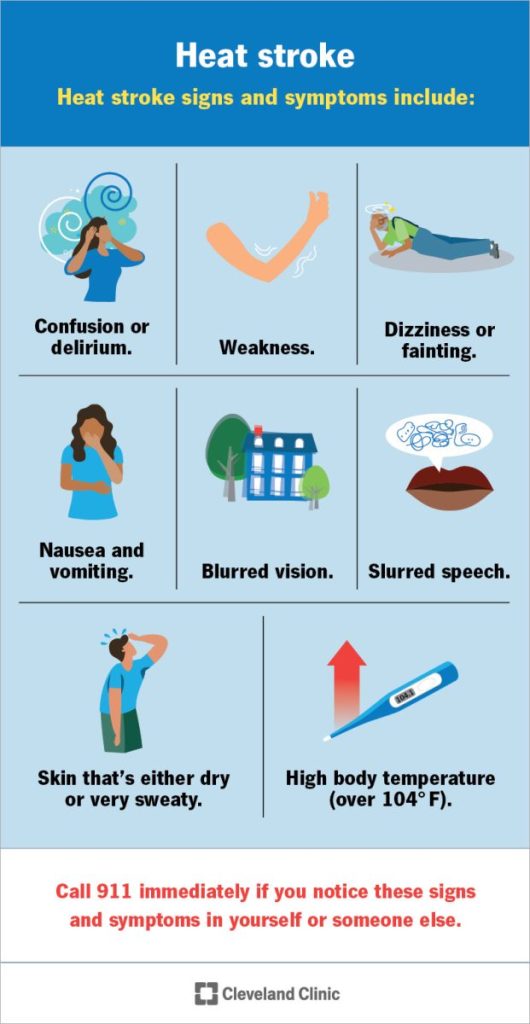
Graphic courtesy of the Cleveland Clinic