Speaking Out

“I don’t think people know how much that child loved Caverna,” said Shannon Heacock, of her son, Eli. Photo Submitted by Shannon Heacock
Family of Elijah Heacock Bravely Fights Back Against Financial Sextortion
Staff Reports
In the late night and early morning hours of February 27-28, tragedy struck the communities of Barren and Hart Counties.
Sixteen-year-old Elijah Heacock fell victim to a cyber scam, which ultimately led to him taking his own life. His family is now bravely speaking out, recalling his last days, as well as bringing awareness to a new version of terrorism which specifically targets teenage boys.
This is Elijah Manning Heacock’s story.
“He loved Caverna,” began his mother, Shannon Heacock. “He loved his school, his teachers. He loved everything about it. I don’t think people know how much that child loved Caverna. He loved his friends.”
On Thursday, February 27, Eli’s mom picked her son up from school in a Jeep she had purchased for him and took him for a haircut.
“We finally went and got his mullet cut off,” said Heacock. “We were ecstatic. That was almost like a family celebration…I had pulled up to the Jeep and had all the windows down because it was a nice, beautiful day, but his reaction to the Jeep was priceless. We planned on Saturday to take it and drive it.”
Despite Eli aggravating his mother about not being fond of the Jeep, he let her begin teaching him how to drive a stick shift. He hadn’t wanted to miss tennis practice that afternoon, because he had a tournament coming up the following Monday, but due to living in Glasgow, attending practice that day was impossible.
With the Caverna Colonels’ district basketball game against the Green County Dragons the following day, Eli was gearing up for a large turnout at the event. Recently, Heacock had assumed the role of cheer coach, and they were working to build Caverna’s pep section.
“Eli said ‘Mom, I want everybody there,’” she explained. “His sister had taken him to Burger King, and he’d gotten 60 crowns. He’d had me to ask Mr. B (for permission). We were supposed to paint them purple and white Friday morning because they were going to be able to slay the dragons. I wasn’t going to let him take it to school, but he’d actually made a sword out of pool noodles to slay the dragons and had asked if I could paint his face up (for the game). We’d talked, and he said he was going to bed because we had a big day (on Friday).”
The family turned in for the night, and all seemed normal.
At 10:24 p.m., Heacock received a screenshot from Eli about free coffee for school employees at McDonalds the following day. Because she doesn’t care for McDonalds coffee, she knew Eli was wanting it for himself.
“My understanding is the next text that came through was from another student who said he wanted to go to the game, but didn’t have any money,” said Heacock. “Eli told him ‘Mom’s got it.’”
Heacock then explained that at 10:45 p.m., the texts started coming in, which ultimately led to Eli’s decision to take his own life. At 11:30, she was awakened by her other children saying that Eli was hurt.
“We jumped out of bed and ran to the laundry room,” said Heacock. “My thought was Eli had already been up and when he gets it in his mind that something is going to be made, I thought 100% he’d climbed the (canning) shelf and fell and hit his head. We never heard anything (but) we did find the gun near Eli’s foot.”
911 was called and CPR was initiated.
“How do you go from hating a Jeep to this?” Heacock asked. “In an hour, they took our son.”
The “they” which Heacock is referring to are the seemingly nameless, faceless predators behind a new cyber scamming term called “financial sextortion.”
Financial sextortion is a crime that occurs when a predator threatens to release private material or harm their victim if they don’t comply with financial demands. The scam is the fastest-growing cybercrime, often targeting children in the United States, particularly boys ages 13 to 17.
In Eli’s case, the pictures he was being threatened with were generated using artificial intelligence (AI). They also had personal information about him, as well as his family. The predators had demanded money from Eli, which he sent, and then they demanded more.
“My understanding is there were no pictures sent (from Eli),” said Heacock. “They AI generated these pictures.”
Thankfully, at the hospital, Barren County Sheriff Deputy Adam Bow acted quickly.
“The officer scrolled down once, scrolled up, hit airplane mode, and said, ‘This has got to go to the FBI,’” said Heacock. “I remember seeing the two pictures that I could see. I saw the pictures and thought, ‘Who is that?’ It was supposed to look like Eli.”
Eli had borrowed $50 from his brother, saying he needed the money for a date, which his brother originally thought was suspicious since the twins weren’t allowed to date yet.
“As far as we know, (the texts) were just that night,” said Heacock. “(His phone showed) the AI generated photos and Eli begging.”
After receiving Eli’s original money, the predator told him that wasn’t enough.
Recalling the events of the day, Heacock explained she was still trying to process how, just within hours, they went from the moments with the Jeep and the haircut and the ballgame preparations to the moment in the hospital.
The doctors at TJ Samson Hospital in Glasgow inevitably told Heacock there was nothing more they could do, and began talks of flying him to Louisville.
In the early morning hours of Friday, February 28 at University of Louisville Hospital, Eli succumbed to his injuries. He was surrounded by his loved ones.
Elijah was buried in the suit he would have worn to prom. His twin sister, Palin, made sure he had new Air Force brand shoes. She also ensured everything was to his standard, in the way that only a twin could do.
“He had to be buried in brand new, matching socks, because he’d always take hers,” said Heacock of Palin’s decisions. “He had to have deodorant on (and) no unibrow. The little things that Palin made sure that Eli had…I know at the end of the day (it) made her feel better.”
Shannon Heacock and her family have bravely taken a hard stance against financial sextortion, advocating and speaking with legislators.
“By the wording, they’re thinking (the texts originated in) Nigeria,” explained Heacock, though the process to track the origin is a lengthy one. “They have schools (in countries such as Nigeria) to send children to to do this. I want this to be an act of terrorism. Why are they allowed to even reach our innocent children? That was a big blow to me, that they literally send their children to school to do this. The FBI and the locals consider it murder.”
Living in a small town, the majority of people have been stunned that something like this can happen right here on the home front. Heacock described the reaction of most people as a total shock.
Even more astonishing is that Eli is not the first local teen to face a cyber scam of this nature.
“Parents have been told to delete the number and get your child a new one,” said Heacock. “No, we don’t need to do that…We used to tell our kids about the big, bad scary people in the white van…We have to start talking about the big, bad scary people on the internet. In 45 minutes, (they) had my child terrified that he couldn’t come to me.”
According to the FBI website, a financially motivated sextortion scenario can happen quickly – sometimes in just five minutes. By visiting the site, individuals can learn more about how these schemes work, what to look for, and what to do if you’re a victim.
The FBI has staff dedicated to assisting crime victims, including a Victim Services Division to help know your rights if you are a victim of sextortion and your images have been posted online. The central message on the site is, “Trust that there is support and a path forward.”
“When I start speaking out, (I want people to know that) even if you sent out photos, that doesn’t make you a bad human,” said Heacock. “Get the FBI involved. They have a site that I am watching and reading into…If you sent photos and you feel they’ve been leaked, contact them, because they’ll put a tag with these photos, and every time they come across these photos, they’ll scratch them off the internet…(To protect) our innocent children, let’s not have them terrified.”
For Heacock, it’s important that laws are created and safety measures are put into place, and it’s even deeper than the new texting scams.
“Why does the internet have so much capacity to let things fly through?” said Heacock. “We talked to the FBI about making it more strict on apps (with) more cyber security for children…I was shocked to learn the other day that it starts with Roblox with some of these kids…How many kids go home at the end of the day and start playing a game?…How many kids come home, and they don’t have (anyone) to turn to? But they (have) whoever is on that internet.”
“We want to see apps pushing to save our children,” she added. “(If they) want our children to be on their apps, then we want safer programs for them.”
The Caverna Independent School District is holding an internet safety forum on March 31 from 5 p.m. until 7 p.m. to discuss the dangers of social media. The event is open to the public and will feature Detective Mike Lemon, a seasoned expert with 16 years of experience in Internet Crimes Against Children, including topics such as sextortion, cyberbullying, and much more.
“According to the FBI, most schools don’t want to talk about it,” said Heacock. “If we don’t, how many more will there be? They said it’s like a new thing to target young men.”
Heacock meets with the secretary for Representative Brett Guthrie next week regarding new cybersecurity guidelines. When asked if Eli’s case could be used as a catalyst for change, Heacock said she will do whatever it takes. She has dedicated herself to the cause and is diligently speaking out so no other family faces the heartache their family has endured.
“It’s a big deal to bury your child,” said Heacock. “Our house is quiet, and it’s a lot.”
If you feel you, your child, or someone you know is being exploited through financial extortion, contact your local FBI field office, call 1-800-CALL-FBI, or report it online at tips.fbi.gov.

“It’s a big deal to bury your child,” said Snannon Heacock. “Our house is quiet, and it’s a lot.” Photo Submitted by Shannon Heacock
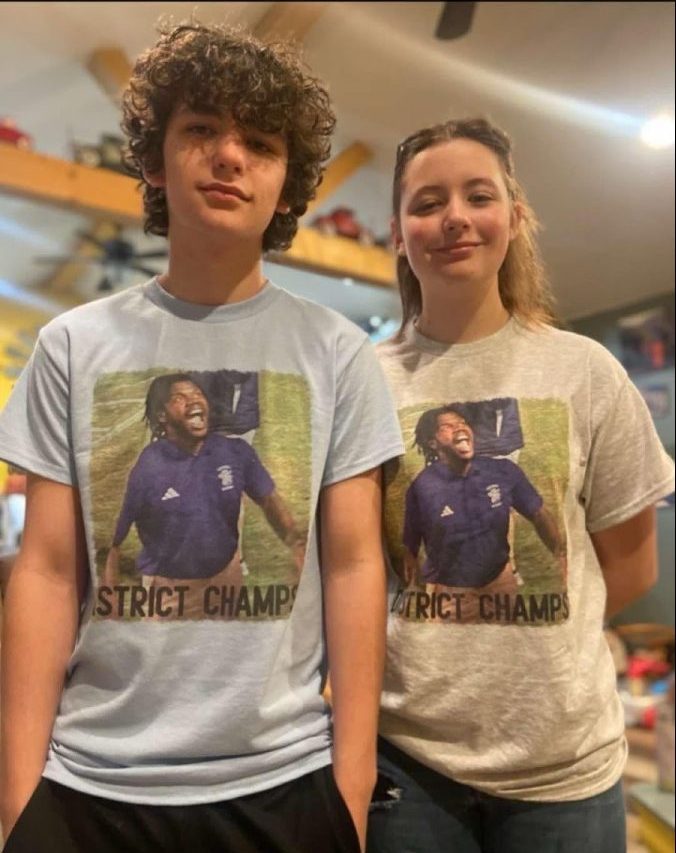
Shannon Heacock and her family have bravely taken a hard stance against financial sextortion, advocating and speaking with legislators. Photo Submitted by Shannon Heacock
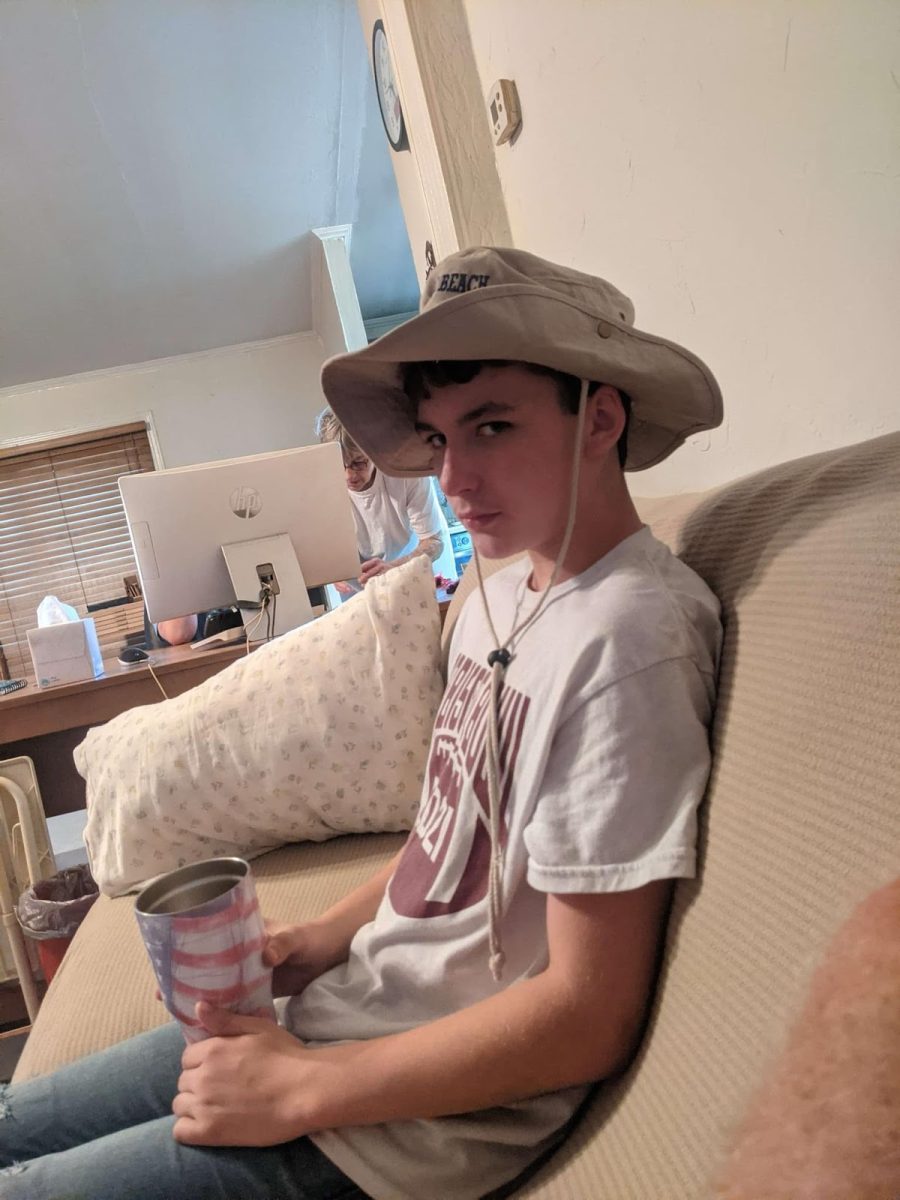
Financial sextortion is a growing danger in the US, particularly among teenage boys. In Eli’s case, the pictures he was being threatened with were generated using artificial intelligence (AI). Photo Submitted by Shannon Heacock