Kentucky Measles Cases Reach Highest Level Since 1991
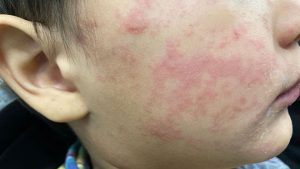
This child’s cheek shows the type of rash associated with measles. Photo courtesy of the CDC
By PJ Martin
Editor, The Herald-News
Kentucky health officials are urging families to check their vaccination records as the state sees its highest number of confirmed measles cases in a single year since 1991.
As of Sept. 2, Kentucky has confirmed 38 cases connected to an outbreak in Western and Central Kentucky. Only two people have been hospitalized.
Cases have been reported in Barren, Caldwell, Christian, Jessamine, Owen, Todd, Trigg, and Washington counties. Christian County has the most reported cases with 14, then Trigg County with six, followed by Barren and Washington counties with five each.
Four measles cases also were reported earlier this year in Jessamine County.
State health officials expect the number of cases and counties affected to grow, due to the contagious nature of measles prior to symptoms emerging.
“This is the largest measles outbreak Kentucky has experienced in many years,” said Dr. Steven Stack, secretary of the Cabinet for Health and Family Services.
Stack said measles is largely preventable through vaccination and encouraged parents and caregivers to make sure children are up to date on their MMR (measles, mumps, and rubella) vaccine.
All of Kentucky’s measles cases reported in 2026 have involved people who were not vaccinated or whose vaccination status was unknown.
Measles is highly contagious and spreads through the air. The virus can remain suspended in the air for up to two hours.
Symptoms usually begin eight to 12 days after exposure and can include a high fever (may spike to more than 104°), cough, runny nose, and red or watery eyes. Tiny white spots may appear inside the mouth two to three days after symptoms begin. A red rash generally develops three to five days after symptoms begin, often starting on the face or at the hairline then spreading downward to the rest of the body.
The CDC reports possible complications in children such as ear infections or diarrhea occurring in 1 of every 10 children with measles.
Children typically receive their first MMR vaccine dose between 12 and 15 months of age and a second dose between 4 and 6 years old. Adults who received only one dose or are unsure of their vaccination status may need another dose. Especially adults with weakened immune systems.
Two doses of the MMR vaccine are about 97% effective at preventing measles.
Health officials encourage Kentuckians to check with their health care provider or local health department if they are unsure whether they or their children are up to date on vaccinations.
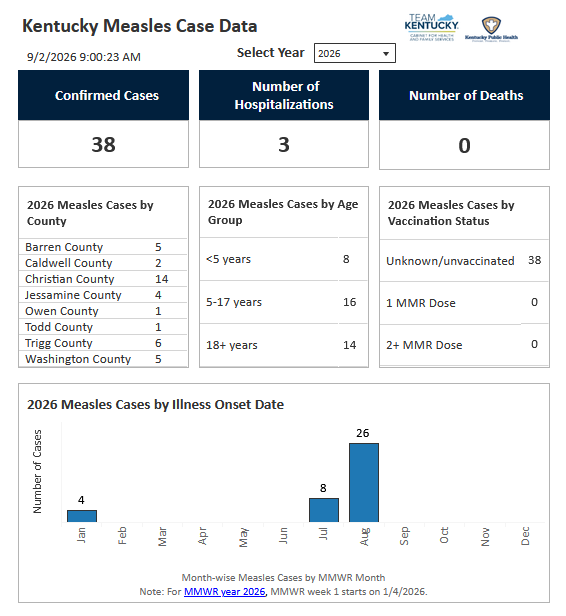
Data provided by the Kentucky Department of Public Health