
From Silence to Conversation: Cell Phone Ban Reshapes Glasgow High
By Allyson Dix, Managing Editor/Barren County Progress
When Moses Samuel first heard his high school would no longer allow students to carry their cell phones during the day, he didn’t want to return after summer break.
“At first, when I saw the school posted it, I wanted to move schools because I was like, no, I can’t do this,” he said. “I did not want to go to school on the first day.”
But four weeks into the school year, his perspective has shifted.
“Before the policy, it was sloppy,” he said. “At lunch, instead of communicating, everybody was just on their phone. In class, we’d watch TikTok, play games and not do anything. Lunch used to be awkward because some people didn’t have phones, and they would just sit there looking around while others were on their phones.”
Now, he said, “everybody’s just talking.” Samuel also said that people look up in the hallways instead of walking around staring at screens.
“With no phones, you get your work done because there’s nothing else to do,” he said.
Samuel, who is a Senior at Glasgow High School, believes the change will impact him long after high school.
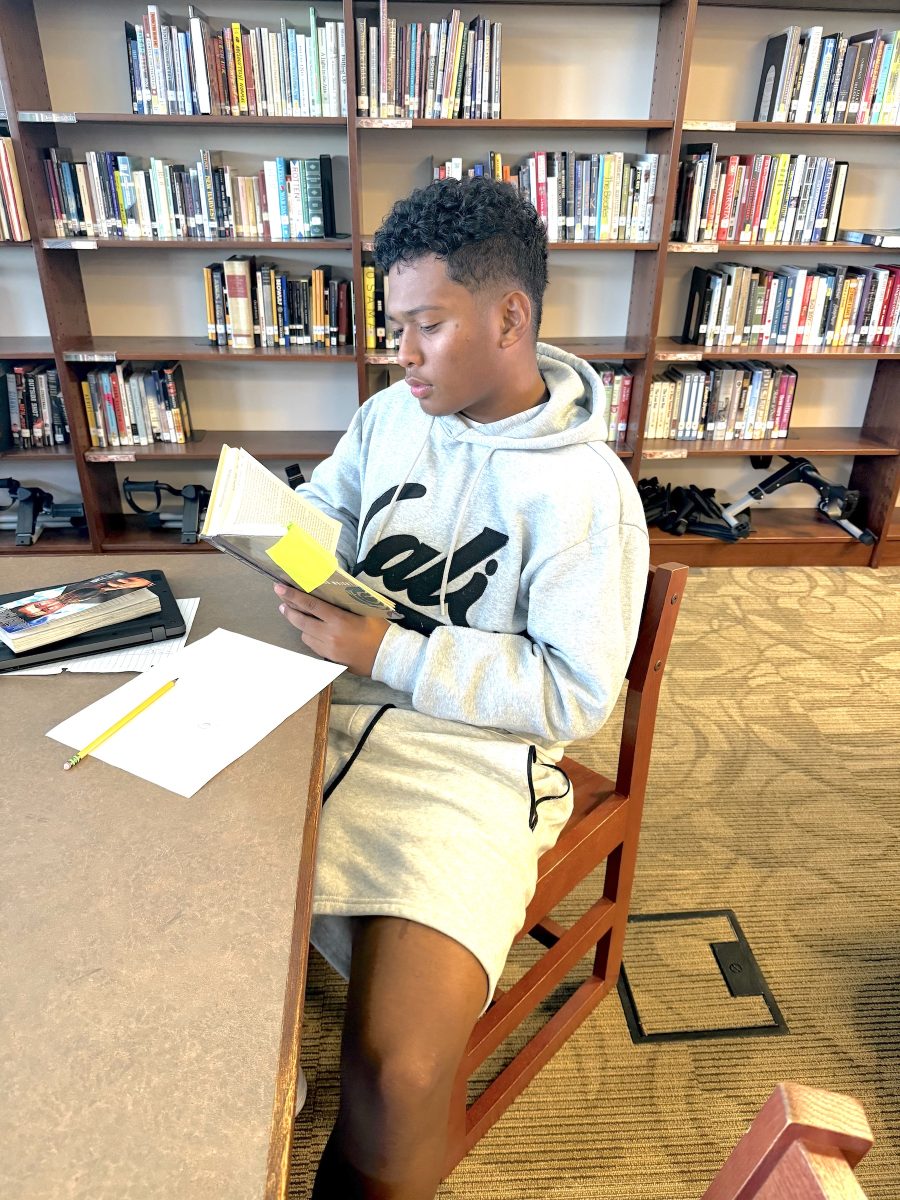
Moses Samuel, a senior at Glasgow High School, said he sees a dramatic increase in conversations at school among his peers after the district chose to disallow cell phones and other personal devices during the school day. He is also reading more books now. Morgan Cossel/Photo courtesy
Jada Smith has had a similar shift. Jada is a Junior at GHS with plans to pursue being an anesthesiologist. She said last year she often procrastinated on her dual credit assignments, opting instead to spend time in school scrolling on her cell phone.
“I wasn’t really paying attention as much as I should have,” Jada said. “If your phones weren’t taken away, I’d probably still be in the habit of waiting until Friday, Saturday, and Sunday to finish everything.”
Instead, now she finishes her work during school hours and rarely has homework, allowing her to enjoy free time as she pleases on the weekends. Jada, an avid reader of romance novels, is close to completing a series of books by Colleen Hoover, finishing four books in the four weeks since school started in late August.
When asked what difference she sees in her peers since the change, Jada said people are more focused on their surroundings. “Now people are seeing who they’re talking to, and more personalities come out. Bonds are stronger.”
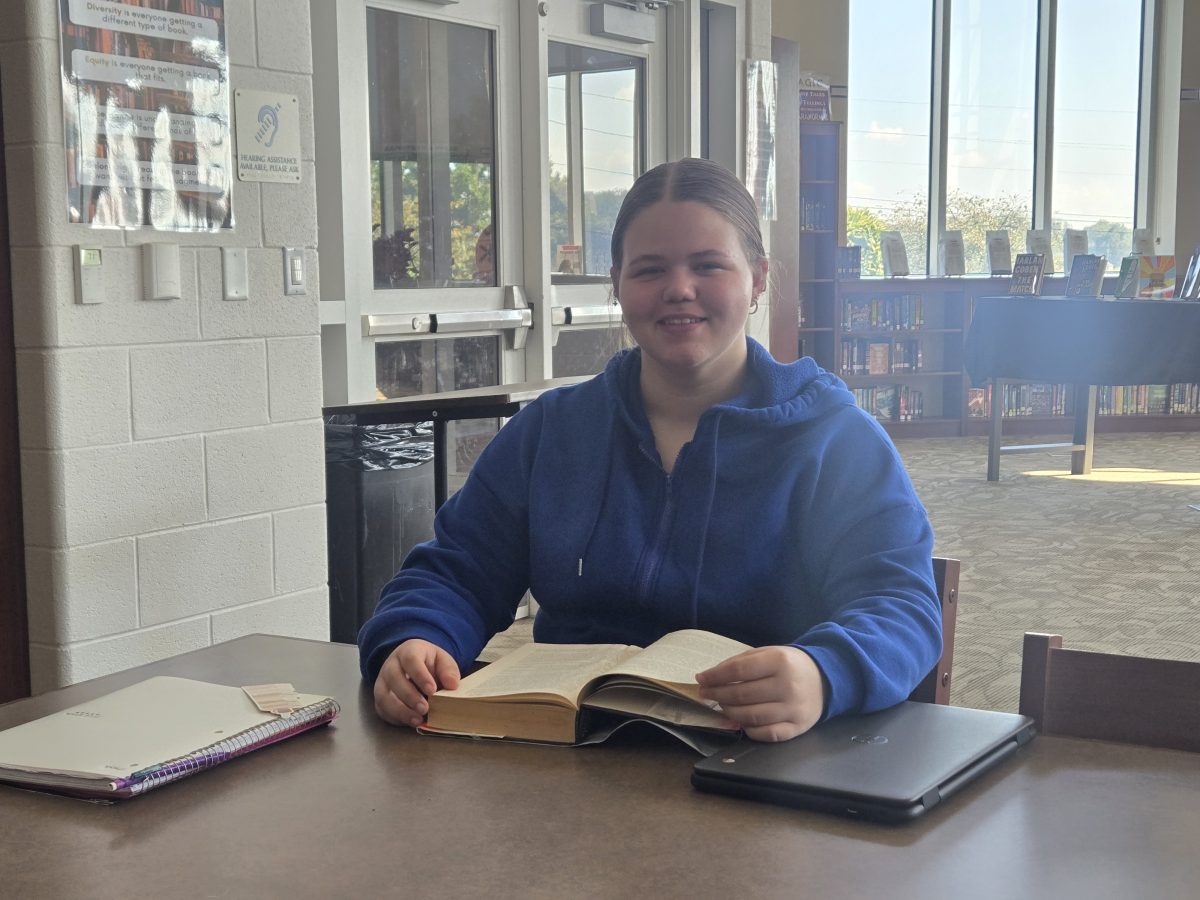
Jada Smith, a junior at Glasgow High School, said with the cell phone ban policy now in place, students’ personalities are starting to surface and they are starting to form stronger bonds. Allyson Dix/BCP photo
Teachers and administrators are already seeing the benefits since the district-wide policy went into effect.
Morgan Cossel, Library Media Specialist at GHS, reports a dramatic jump in reading amongst students.
In the first three weeks alone, Cossel reports students checked out 587 books compared to just 237 during the same time period last year. Collectively, students have logged over 18,000 minutes of reading through a reading program.
Cossel said the positive changes have been welcoming and beneficial.
“In here, it used to be silence. Now it’s quiet, but students are talking, putting puzzles together, playing games, and reading when they don’t have anything else to do,” Cossel said. “I think it’s really going to benefit our students not just academically but in their brain development too.”
Large-scale studies have repeatedly found correlations between heavy screen time and social media use in adolescents and increased symptoms of depression, anxiety, conduct problems, disrupted sleep, inattentiveness, and more variables with performance on cognitive tests.

Glasgow High School Library Media Specialist Morgan Cossel has seen a dramatic increase in reading and library books being checked out by students in the first few weeks of school since the new cell phone and personal device policy was implemented. Allyson Dix/BCP Photo
In order to comply with a new state law, Glasgow Independent School board adopted a district-wide policy forgoing all personal devices, including cell phones, iPads, and laptops, during the school day, an extra step ahead of the law’s requirements. The major difference for the Glasgow school district is that devices are no longer allowed at all from 8:00 a.m. to 3:00 p.m.
Assistant Principal Bart Roberts said the early rollout announcing the change was intentional, clearly communicating the expectations over the summer through social media and family outreach efforts.
“We had our class meetings the first couple of days of school just to make sure everyone was on the same page, which were the expectations that students don’t have their phones from 8 a.m. to 3 p.m., both visibly or audibly,” Roberts said.
Roberts reports that “quite a few cell phones” have been taken in the first few weeks of school but those instances are declining and expected to continue doing so.
“All the feedback we’ve gotten from all the families that we’ve communicated with has been appreciative,” Roberts said. “We haven’t had a lot of push back as far as people disagreeing with the policy and everybody appreciated that we clearly communicated it.”
Roberts also said that the “good news” is the discipline policy for cell phones and personal devices didn’t change, and families have been receptive to those instances that have happened and addressing those issues at home as well.
“One of the added benefits is we have, to our knowledge, had a lot less drama this year–in a positive way,” Roberts said. “So, students are learning how to reengage socially, but overall, it has been a very smooth start to the school year as far as relationally.”
Other positive benefits the assistant principal noted is the louder lunch room because students are talking to each other, using each other as support systems during the school day, and adding independence for students where they’re able to work on figuring things out for themselves in a positive way.
“It’s been nice,” Roberts concluded.
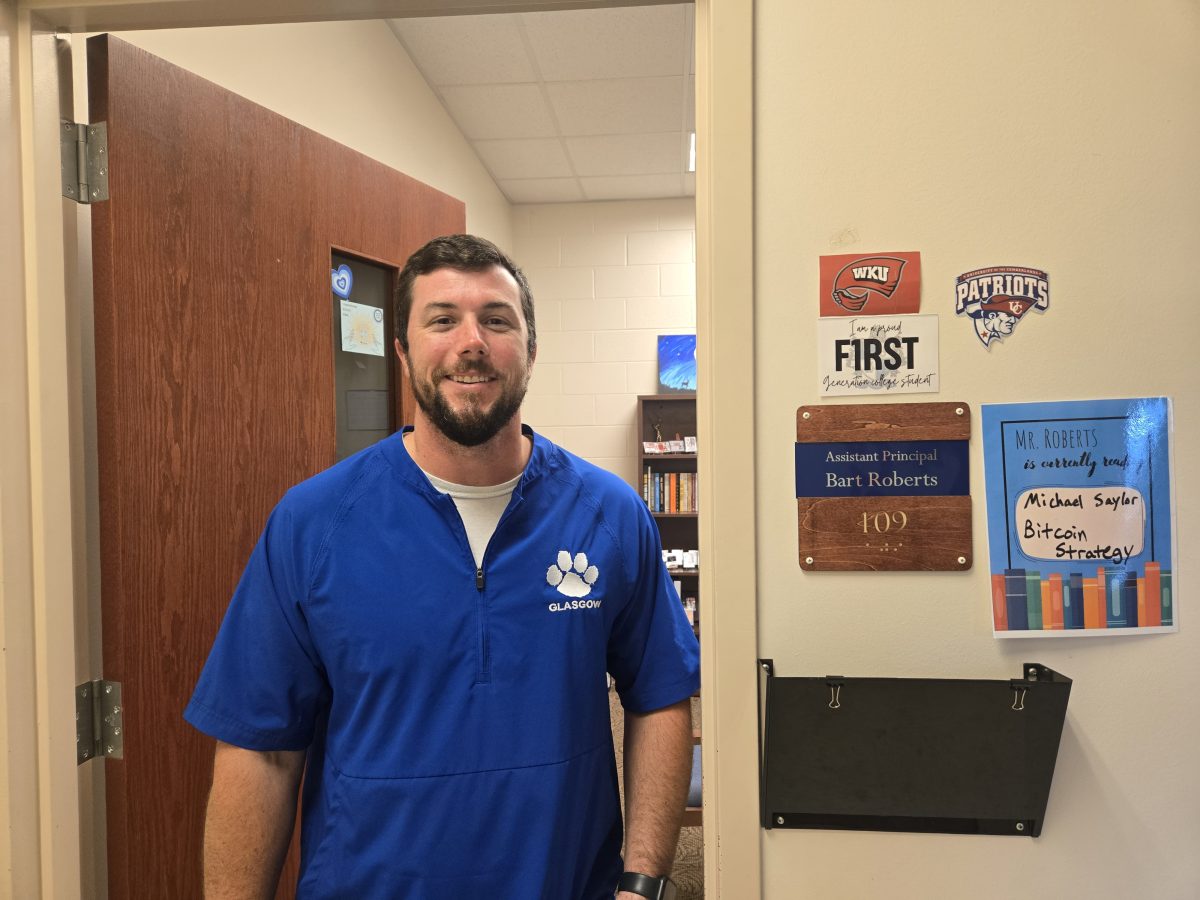
Bart Roberts, Assistant Principal of Glasgow High School, said students are learning how to reengage with one another following the district’s decision to implement a personal device ban for students during school hours. Allyson Dix/BCP Photo




What a positive action ! and students seeing the impact of communicating with one another is a great result. These students will improve in their problem- solving skills, working out differences through communication and iunderstanding and be much more valuable in the workforce. Buc-ee’s and Chick-fil-a policy to ban employee cell phones on the customer floor has drastically improved customer service. I hope Barren County moves in this direction. This action should also help eliminate the cyber- bullying. It will open eyes of students to the negative effect of media, such as controlling the slant of news and indoctrination by liberal thinking media owners.