Glasgow-Barren Tax Rate Updates
By Allyson Dix, Managing Editor/Barren County Progress
The City of Glasgow will meet on September 29 in a special-called meeting for the second reading of an ordinance to set this year’s tax rate.
A public hearing and the first reading of the ordinance on September 15 passed in a 6-3 vote, with all council members present to adopt a rate higher than the compensating rate.
Three council members, Marna Kirkpatrick, Elizabeth Shoemaker, and Randy Wilkinson, voted against the tax rate being considered.
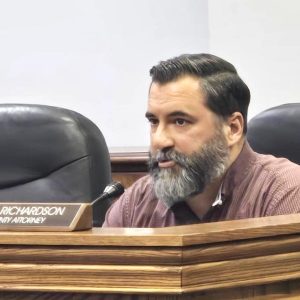
As proposed by the finance committee, a motion was made to approve 16.5-cents per $100 of assessed value for real property. While the pre-drafted ordinance read by the city attorney had listed the 16.5-cent rate, Wilkinson brought up his preference to accept a compensating rate instead, which is a lesser rate.
Last year, the city’s real property tax rate was 16.9-cents per $100, but because of the increase in property assessments, a compensating rate of 16-cents would have given the city only $18,460 more than last year despite being a lower tax rate. With the increased rate, the city is expected to garner $82,522 more in revenue than last year.
In 1979, the passage of House Bill 44 was considered to be “landmark legislation” that governs the amount of taxes a local taxing district can levy against property.
HB 44 provides three options for adopting tax rates:
- adopt a compensating rate;
- adopt up to a 4% increase above the compensating rate; or
- adopt a rate that will produce more than 4% additional revenue.
Compensating rate is a rate applied to the current year’s property assessment of real property (excluding new property) that will produce an amount of revenue, at a minimum, equal to the amount of revenue a district received the year before.
A public hearing and advertising are required for local taxing districts to levy an amount above the compensating rate up to the 4%.
The third option, adopting a rate that produces more than 4% of additional revenue than the year prior, is subject to a recall vote or reconsideration by the taxing district, which is governed by KRS 132.017.
Earlier in the month, the Barren County Fiscal Court and the City of Park City approved a 4% increased tax rate on real property before both entities changed directions and re-voted to approve the lower, compensating rate.
Park City said in their agenda that when considering this, they inadvertently failed to hold a public hearing for the 4% increased rate, which is required by state law. Cave City did hold a public hearing for the 4% increased tax rate and subsequently approved the higher rate as opposed to the lower, compensating rate.
Oftentimes, discussions held about tax rates state that they are lowering the tax rates from the year prior, but the reason it decreases is due to the increasing property assessment valuations and House Bill 44 (1979) that governs the amount a taxing district can levy against property.
Still, revenue from property taxes can bring higher revenue than the prior year despite lowering the rate.
School taxing districts are among the highest tax rates paid by property owners, yet they are not required to have any public hearings or provide legal advertisements if they want a rate that is above the compensating rate, unless it is more than a 4% increase. Caverna Independent Schools is the only district that approved the lower, compensating rate.