
RBG Divides Community
By Allyson Dix, BCP Managing Editor
Local spokespersons on behalf of Refuge Bowling Green have doubled down in misinformation or opted to ignore requests for information, county denies support, city won’t talk about it, and citizens continue pursuing transparency.
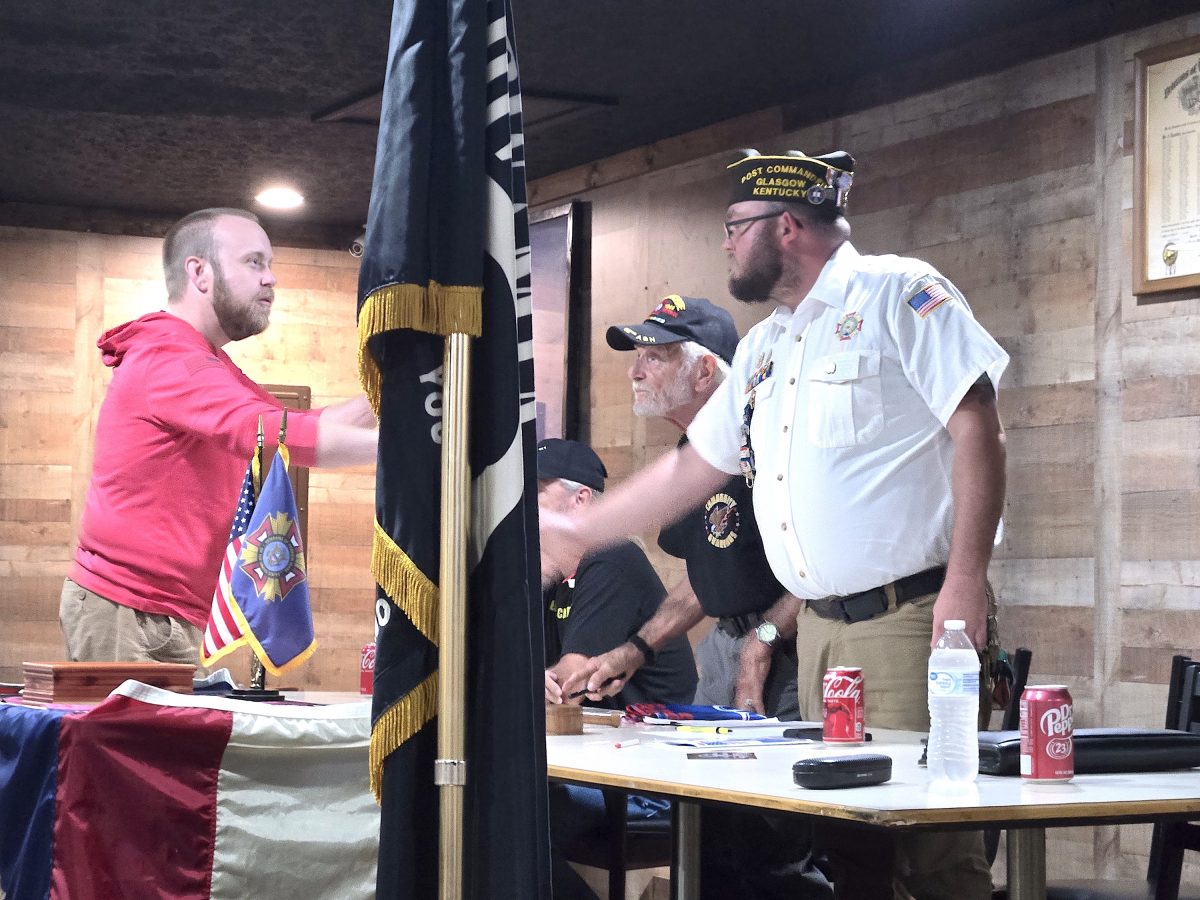
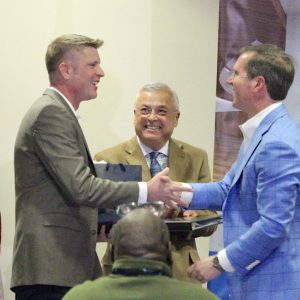
Matthew Stevens, left, greets local veterans Royce Bunch, center, and VFW #5906 Post Commander Joseph Greer prior to a July 18 town hall meeting, who were under the impression Stevens was representing Refuge Bowing Green, but would later find out, he was speaking on his own accord. Photo by Allyson Dix, JPI
“Sunshine is the best disinfectant,” David Dickerson said in a recent town hall meeting. “Transparency of information will alleviate many of the concerns.”
Dickerson was speaking on the lack of transparency that has seemingly persisted for weeks now following a leak of information that some locals were working with Refuge Bowling Green (RBG) and the U.S. Department of State to resettle refugees in Glasgow-Barren County, a move by the Bowling Green-based nonprofit organization that has divided the county.
On June 17, a meeting was held with a select few regarding the refugee matter. The Barren County Progress (BCP) later confirmed those in attendance included local pastor Ray Woodie, Jordan Woodie, Glasgow Mayor Henry Royse, Glasgow Police Chief Guy Howie, Barren County Sheriff Kent Keen and Deputy Mike Houchens, City Administrator April Russell, and representatives from RBG Alice Tarnagda and RJ Baise.
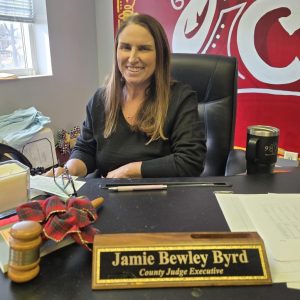
Barren County Judge/Executive Jamie Bewley Byrd revealed in a July 8 fiscal court meeting that she nor magistrates had been invited to the meeting.
It was determined in that private meeting Baise would be the official spokesperson for local information. Baise serves as RBG’s Children’s Program Coordinator, according to the nonprofit’s website.
BCP confirmed that on July 1, Baise, on behalf of RBG, sent an e-mail to at least two elected officials in Glasgow-Barren requesting a letter of support from each. It is unclear at this time if others were also sent an e-mail, and Baise has not responded to the BCP’s specific inquiry as of press time.
In Baise’s e-mail to Glasgow Mayor Henry Royse, she provided a pre-drafted template with wording that provides extensive support on behalf of the mayor. Some of the pre-drafted language includes phrases such as “Refuge Bowling Green has answered many of the questions we had…As the mayor of the city of Glasgow, I believe that resettling a small number of refugees in our area could be of great benefit to our community…I trust Refuge Bowling Green…We are ready to provide…”
Royse told BCP he had not responded to this e-mail and doesn’t plan on doing so at this time.
Byrd invited the public to speak at a July 8 fiscal court meeting, a move that the city council denied in late June, and on Monday, also voted down an amendment to add discussion on the matter to the agenda in the July 22 city council meeting. Also, a town hall meeting at the local VFW was held for open discussions on July 18.
In the July 16 court meeting, Judge Byrd said the county will forgo signing a letter of support and explained why.
While Byrd commended the recent discussions held, she said, “There’s still a lot of questions I still had at the end (of the July 8 meeting).”
Byrd said she spoke with each of the magistrates individually after that meeting. “We will not be doing a letter on behalf of the county in support, and it’s not anything negative towards any refugee or anything like that,” Byrd said.
She later explained that by writing a letter of support, “It’s not just me speaking for myself, it’s me speaking for Barren County, and I do not feel that I can write that letter at this point.”
Byrd also described Barren County as a welcoming and diverse community, but the hesitations stem from the ongoing lack of information and because RBG has never engaged in resettling refugees before.
“This is more towards the situation that we’re in with this group, and it’s just they’ve never done this before,” Byrd said. “They told me this is the first time they’ve ever brought a refugee group in. They’ve been more of a group that helps refugees and helps them get acquainted to the areas…”
However, some of Byrd’s concerns are the one-time payment of $1,300 for each refugee and the lack of specifics on those looking to come to the community.
“$1,300 will not go far, and there’s still really no details on the individuals that are coming, ages, any information on skill sets or anything like that,” Byrd continued, adding she requested it at the end of the July 8 meeting and still not received anything.
Some in the community have touted that by not supporting this refugee placement it will negatively impact the current migrant program in place. However, Byrd refuted the claim after contacting Congressman Brett Guthrie’s office for clarification and the Department of Agriculture.
“I was told the refugee resettlement program falls under the State Department, the migrant program is an H2A program that falls under the Department of Labor,” Byrd explained. “Guthrie’s office said in their experience, they’ve never seen where one impacts the other negatively.”
RBG representatives Alice Tarnagda and Matthew Stevens, who is not a local realtor but a mortgage lender, spoke in the July 8 fiscal court meeting, where citizens also shared concerns and asked questions, as reported previously.
Tarnagda told the court that Warren County has an existing resettlement agency, which is the International Center in Bowling Green, and the efforts to resettle refugees in Barren was due to the fact that the program in which the refugees are coming through is made specifically for an area without a resettlement agency.
“We have no intention to go to additional areas,” Alice Tarnagda answered after Magistrate Derek Pedigo asked if they had met with other area counties.
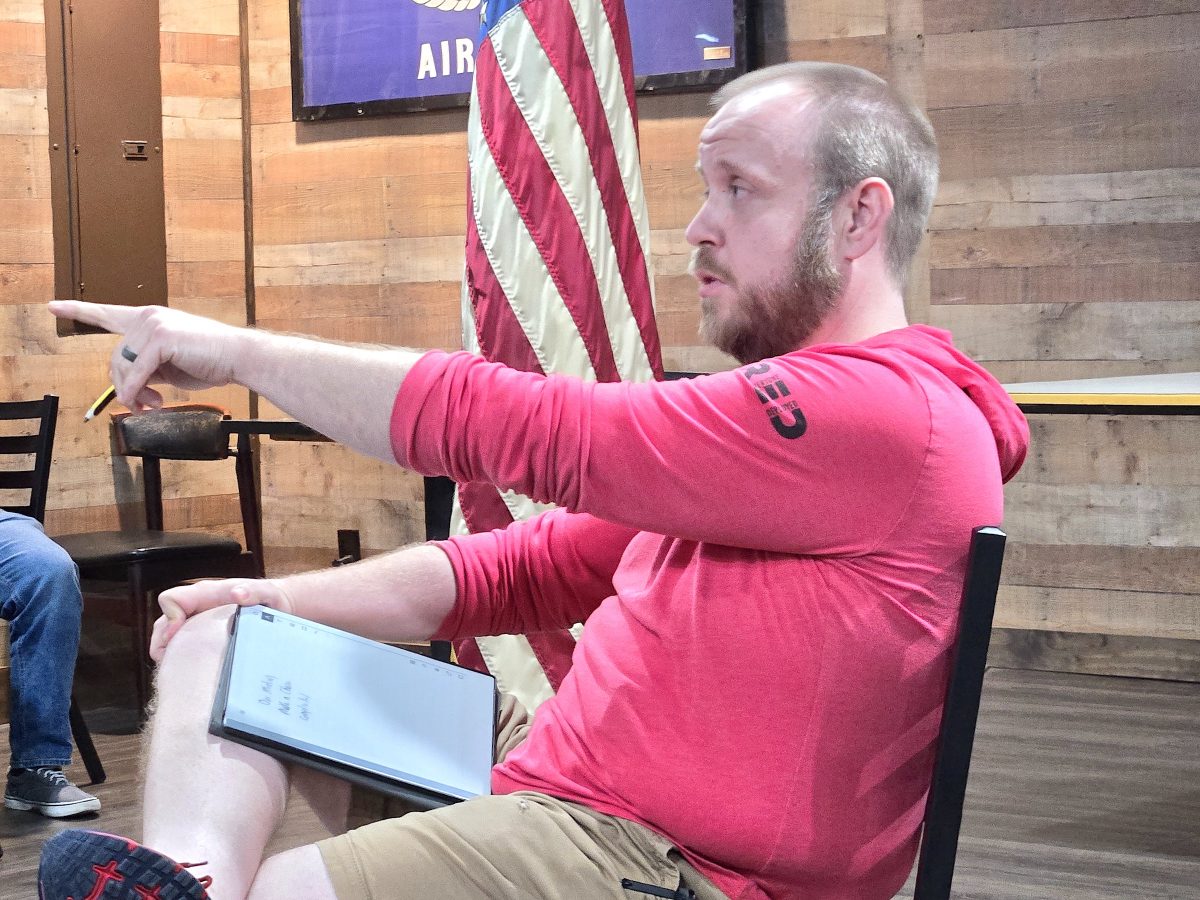
Matthew Stevens, who is not a realtor but a local lender, attempts to answer questions from attendees at a town hall meeting on July 18 to discuss in public fashion the refugee resettlement. Stevens sits on the board of directors for Refuge Bowing Green, but disclosed in this meeting that he was not representing the non-profit organization despite the original understanding that he was. Photo by Allyson Dix, JPI
When asked about the ages of the 30 refugees by Magistrate Jeff Botts, Stevens failed to answer the question directly, and instead, said the refugees have been in a refugee camp “for a substantial amount of time” and they’ve gone through the regular refugee process in place for decades.
When Stevens finished, Botts simply stated, “Age.”
Stevens answered the original question and said there is no age limit.
Magistrate Brad Groce said his biggest concern was the burden it would place on the school systems and shared an example of the burden teachers have been placed with due to the immigrants housed in Warren County. “I just know from experience with families teaching in that system it’s a burden, it’s a big burden.”
Alice Targnada said, “We really don’t know how many children would be involved.” She also said they had an option to choose more than 30 refugees for Glasgow-Barren, but, “We said we don’t want to overwhelm the community.”
Byrd said she was bothered that RBG had said prior to the meeting that they felt unsafe in coming, perhaps due to the way the city’s council meeting was held and the response from that; however, Byrd emphasized Barren County’s welcoming community.
“Barren County is a welcoming community…I just think the way things have been put out and the information has been the biggest downfall of this,” Byrd said, adding it could have been made into a positive situation.
Magistrate Marty Kinslow more or less inquired as to how the 30 individuals is a one time only deal.
“Other than your word on that, what guarantee do we have? And the reason I ask that is what I’m hearing in the community is they’re worried it’s a pipeline once it’s open, it’s not going to be shut off,” Kinslow said.
Stevens echoed the statement from Tarnagda in that the opportunity was there for more, but they didn’t discuss more than 30 refugees.
“As far as what it looks like in the future, I think we would probably agree on both sides that we’re far more concerned about the illegal issues that face our country in the millions than 30 individuals that have been in a camp and seeking to come through all legal means possible,” Stevens said.
According to U.S. Citizenship and Immigration Services’ website, any legal refugee can file a petition to bring their spouses and/or unmarried children under age 21 within two years after their arrival in the United States. They can also file for an extension of that deadline if needed.
TOWN HALL MEETING
A town hall meeting was held at the local VFW (Veterans of Foreign Wars) facility in Glasgow on July 18, allowing citizens and Stevens to have open discussions as well. The town hall was led by a local group known as USA Veteran Combat Brothers who are known as “community guardians” and founded by local veteran Royce Bunch.
Stevens disclosed that his presence was not on behalf of RBG before he spoke, as he sits on the RBG’s board of directors, but it was the understanding by those leading the meeting that he was there on behalf of RBG. In an e-mail on July 22, Tarnagda confirmed with BCP that Stevens was not present at this meeting on behalf of RBG, leaving confusion on the roles and information being presented to community members.
While some attendees asked about 30 individual refugees potentially turning into more in requesting their families to follow, Stevens said, “They’re going to have to apply through the same process as a refugee does.”
However, the BCP would later attempt in the meeting to clarify this statement which resulted in Stevens taking over three minutes to partially answer the question as to whether or not 30 could turn into more. Specifically, he was asked to explain the legal route with the application/petition process noted above, and that wasn’t without extra effort to garner a yes or no answer.
“Could there be more? Of course there could be more,” Stevens finally answered. He touched on, in the midst of attempting to answer the direct question, the right or wrong aspects as to whether or not families should be able to join the refugees in America.
Dickerson, during his allotted time to speak, shared similar comments as he did earlier in the month. He said RBG has not been transparent with the community’s questions. He pointed out that Alice Tarnagda did confirm that in the July 8 fiscal court meeting that the refugee resettlement could be stopped.
Dickerson said when asking who the refugees are, he wasn’t asking for names, but instead what specific program they’d enter the U.S. through and whether or not they can apply, without limit, for their family members to also come. He also suggested an impact survey for the near future and the impacts expected down the road.
“If we get transparency, a lot of these problems go away or we can make decisions based upon complete information that should be given to us to make a rational decision-that’s all we ask, or an impact study,” Dickerson added.
After the meeting, Dickerson clarified the value of an impact study for Barren County, and said the refugees have never been the problem, but instead, the lack of information from RBG and the unanswered questions has left many to lose trust over the issue.
“An impact study would give complete data on strains on the local system, including schools, medical, EMS, etc.,” he said. “RBG should conduct a thorough survey over the next six months to the satisfaction of the local government authority.”
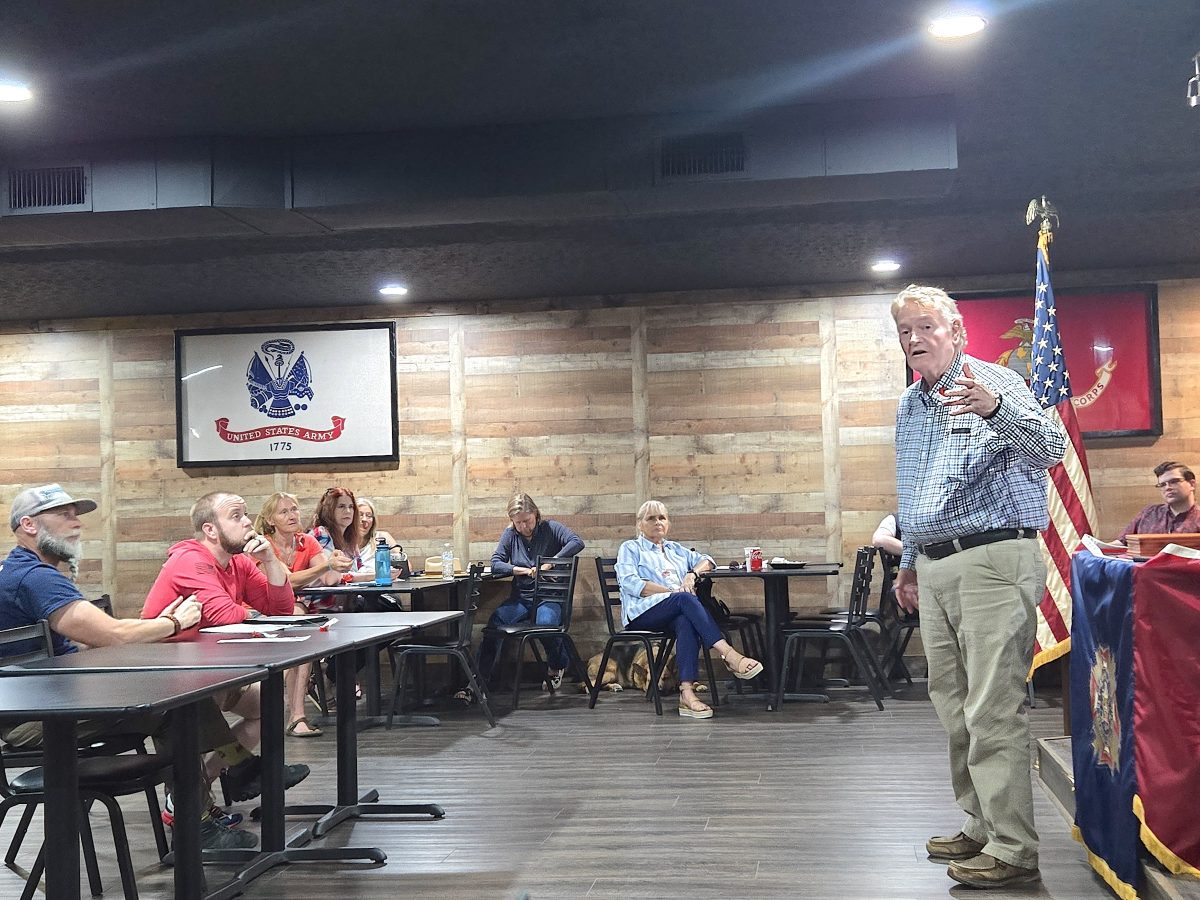
David Dickerson, standing, shares concerns about the lack of transparency with regard to the refugee resettlement, an endeavor initiated by a few locals and Refuge Bowling Green. Photo by Allyson Dix, JPI
In the meeting, Leighan Dickerson, said, “We’ve been asked to take on a responsibility and we’ve been painted, because we want to ask questions about this responsibility, as uncaring. We are not uncaring.”
Stevens said, in response to Leighan’s comments on local poverty levels, “If refugees are coming in and they’re going to live on the [governmental assistance] system, that changes the conversation completely, but those are not the people trying to come in.” Stevens said there are no “entitlement” programs set up.
To read about the program the refugees will enter through, see the corresponding article in this week’s print “Refugee Statistics”.
VFW’s Post Commander Joseph Greer asked Stevens if privacy concerns were the reason for not disclosing housing and employment locations. Stevens agreed, elaborating on how the “state” is requesting reassurance as to whether or not refugees would be safe in Glasgow-Barren.
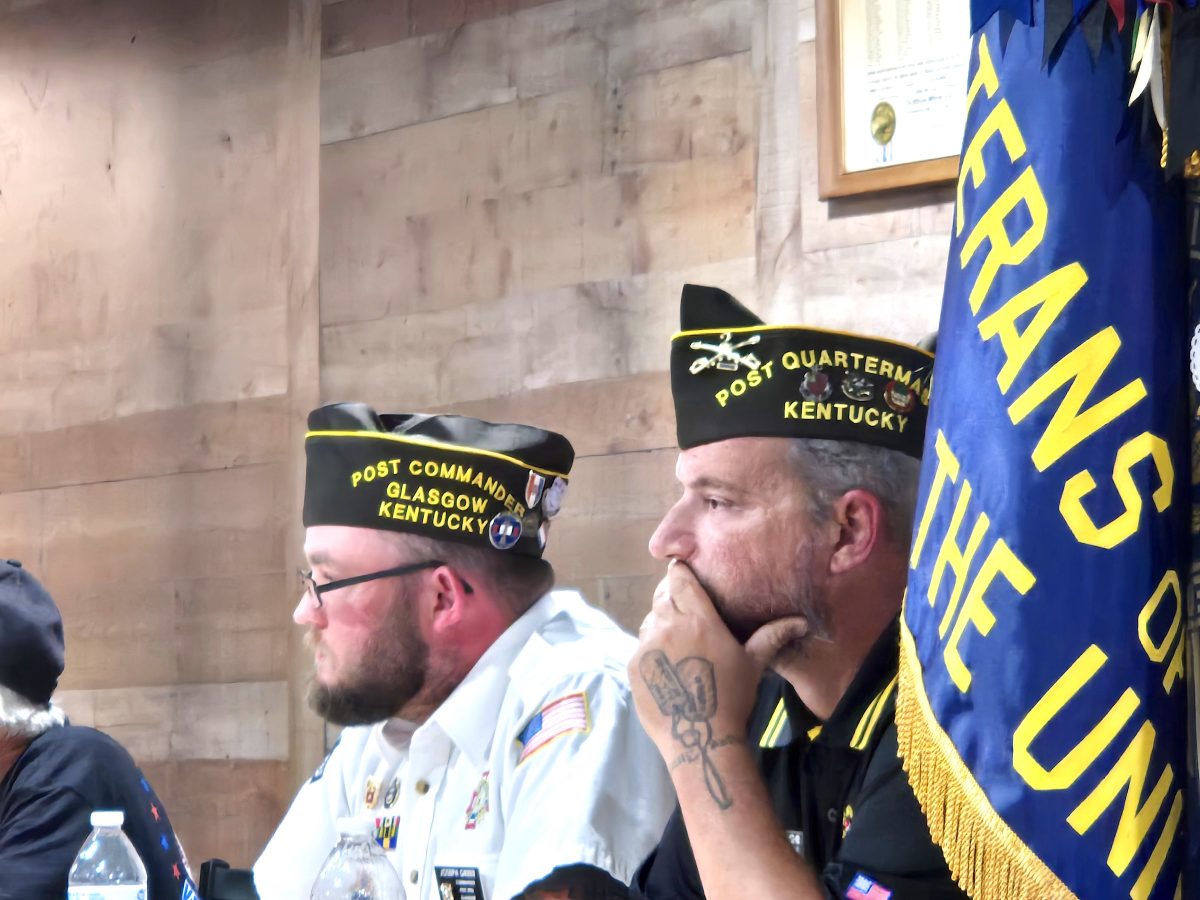
Post Commander of Glasgow’s VFW Edwin P. Barlow Post #5906 Joseph Greer, left, and Post Quartermaster Eric Milledge listen to the discussions at a town hall meeting. Photo by Allyson Dix, JPI
“Whenever we have the state asking Refuge or any organization can you ask the local leaders…can you behave in a way that’s going to protect against victimization…we have to do that, we have to honor the request,” Stevens said.
Several others spoke at the meeting including Chelene Nightingale, Michelle Snyder, Larry Eaton, and more. Additionally, VFW Quartermaster Eric Milledge said he was supportive of the refugee resettlement especially given his experiences as a veteran in countries where refugees often flee from, as long as the legal routes were taken.
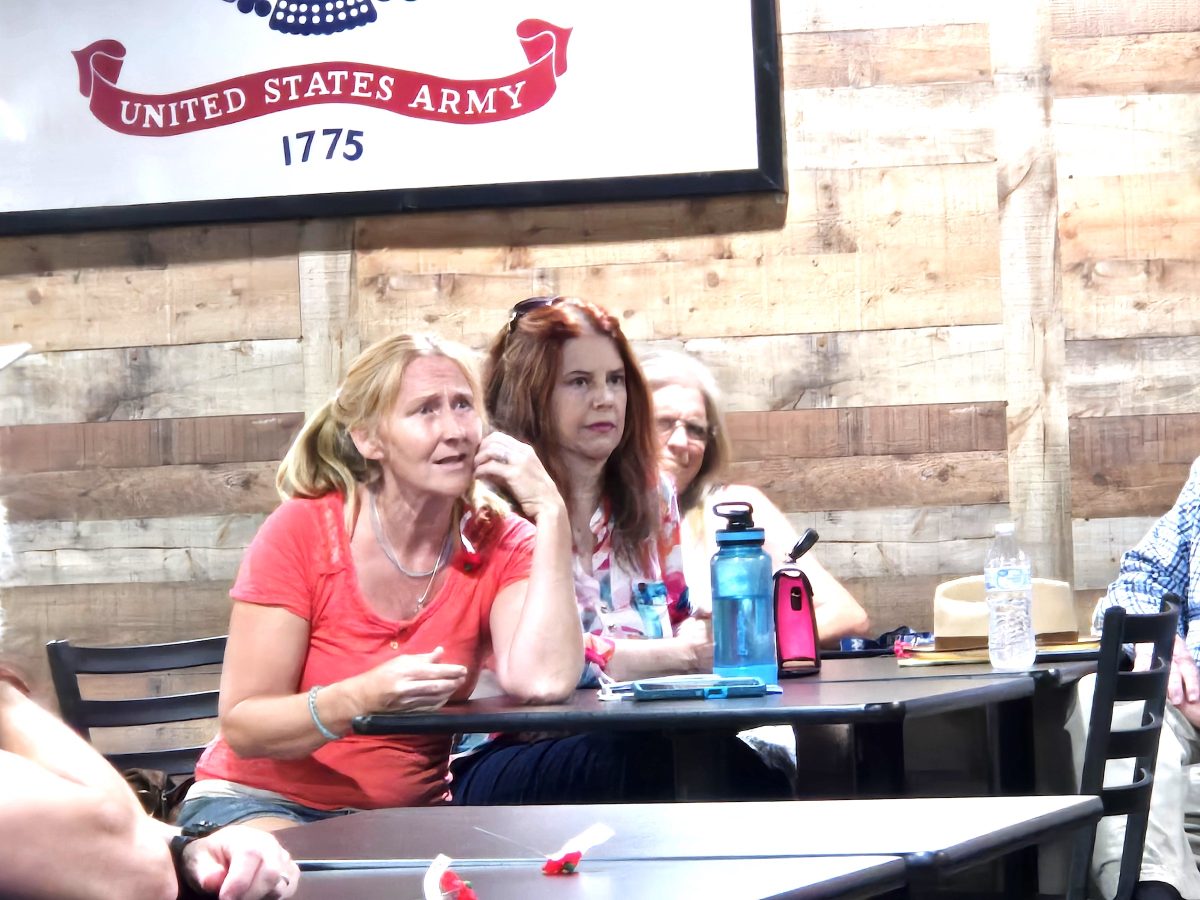
Michelle Snyder, left, asks questions at a recent town hall meeting on July 18 at the local VFW Post #5906. Also pictured is Chelene Nightingale, center, and Sheri Eubank. Photo by Allyson Dix, JPI
RECENT RBG RESPONSES
Alice Tarnagda responded to BCP’s inquiries on July 22 via e-mail. She confirmed that the process of resettling refugees in Glasgow-Barren has slowed down; however, it isn’t out of the question in the future.
“We plan to continue working with leaders in the Glasgow area to further discussions, enhance education about refugee resettlement, and build a strong base of support,” Tarnagda said.
The hope is, according to Tarnagda, that this will enable future resettlement efforts in the area to be managed smoothly with community support and collaboration.
Despite Tarnagda affirming in a July fiscal court meeting that RBG can stop the process when posed the question by a citizen, she said the following on July 22:
“While we acknowledge that the final decision on refugee resettlement lies with the Department of State and is at their discretion, we remain committed to making the Glasgow/Barren County area welcoming for newcomers and a safe haven for refugees and immigrants. We will collaborate with the Department of State and the local community to ensure the successful resettlement of refugees in our care to the best of our ability.”
Note: A single typographical correction for the spelling of a name has been made for the online publication of this article that wasn’t caught prior to print publication.
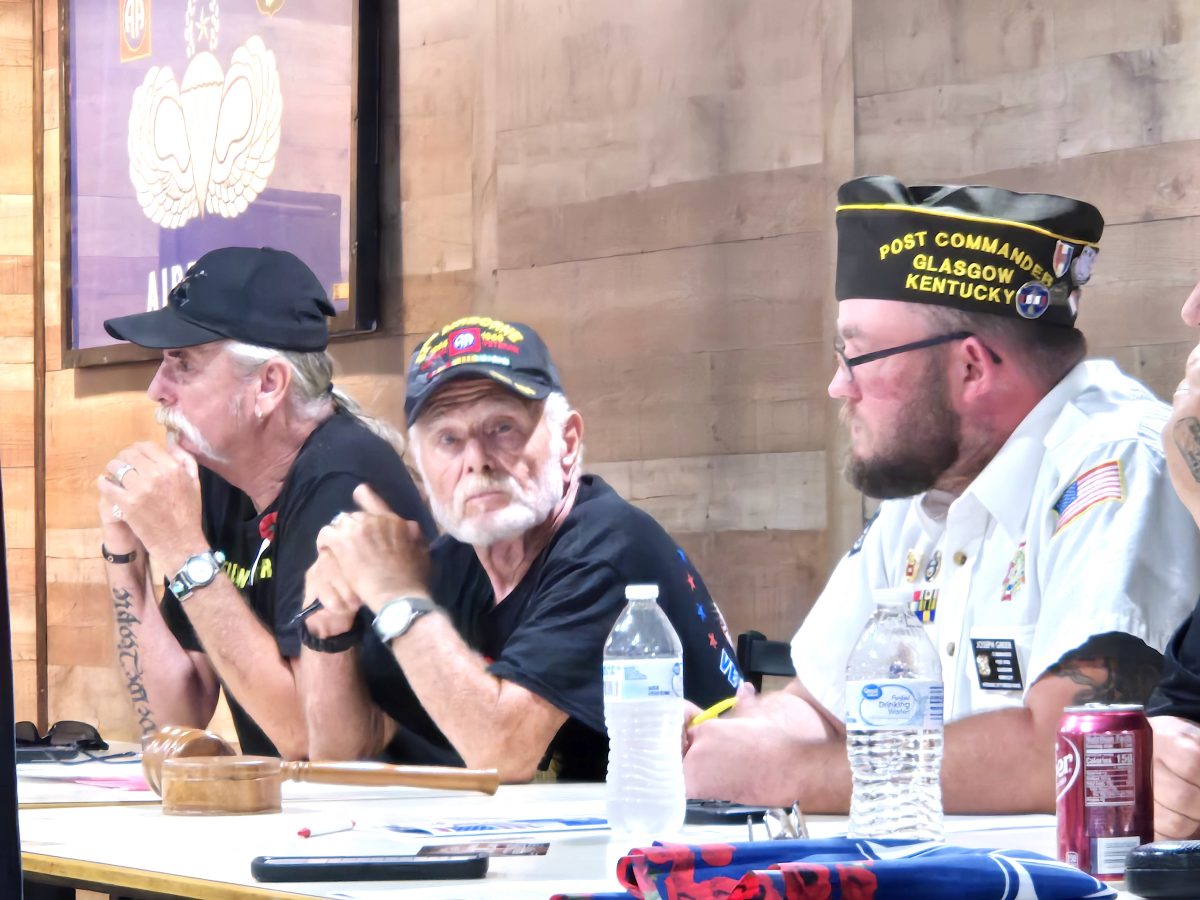
Veterans with the local VFW Post #5906 preside over a July 18 town hall meeting. From left, Ernie Wagoner, Royce Bunch, and Post Commander Joseph Greer. Photo by Allyson Dix, JPI

Sarge…..couldn’t think of a better HAT to see on your head…..hope things r well with u and ur family…Brothers,,Doc