Glasgow moves forward to prohibit cannabis businesses
By Allyson Dix, Managing Editor / Barren County Progress
Glasgow City Council approved the first reading of an ordinance prohibiting medical cannabis businesses within the city limits.
Council members were nearly split in the decision with five in favor of prohibiting, and three council members were in favor of considering to “opt in,” which even if a jurisdiction opts in, there is no guarantee it would be selected to operate cannabis businesses.
The 5-3 vote consisted of Councilmembers Marlin Witcher, Terry Bunnell, Chasity Lowery, James “Happy” Neal, and Freddie Norris voted against, and Marna Kirkpatrick, Max Marion, and Joe Trigg voted to allow medical cannabis businesses to operate.
Glasgow Mayor Henry Royse disavowed a vote and comments by Councilman Patrick Gaunce due to his late notice of Zoom video, which corresponds with KRS teleconferencing laws.
The hour-long discussion revolved around a pre-drafted ordinance already in the agenda packet for council members to “opt out,” causing some confusion at vote time mostly because of the language.
The ordinance before the council was to prohibit all cannabis business operations within the city limits. A cannabis business is defined in KRS as any entity licensed under KRS 218B as a cultivator, dispensary, processor, producer, or safety compliance facility.
The vote as to whether a city opts in or out of cannabis-related businesses does not affect individuals who are prescribed medical marijuana. The consideration does not prohibit an individual from being able to use medical marijuana if prescribed.
At the start of the cannabis discussion, Kirkpatrick asked Kevin Myatt, planning director for the Joint City-County Planning Commission, to speak. Myatt, who has attended the state-level training on the new cannabis laws, provided details with the council about the regulations.
“It’s still a pretty fluid situation,” Myatt said, explaining the state has made new changes in the regulations, specifically mentioning the amount of medical cannabis a person can be prescribed, with the main type being ingestible. Plant production will be up to 3.75 grams. Just since May 23, these numbers have changed, Myatt said.
Myatt explained if the city opts in, ordinances would be required for the council to pass to set up regulations and zoning must also be considered.
Myatt said a total of 16 cultivators, or growers, will be issued a license for the entire state. Only ten processors and 48 dispensaries for the entire state will be allowed. In nine-county regions, there are eleven regions, so four total dispensary sellers could be issued to sell in the entire Barren region.
The jurisdictions are not issued licenses, instead, individuals apply for a license to operate cannabis-related businesses will be issued the license, Myatt explained. A randomized lottery drawing will be how individuals who have filed for a license, which is open for application July 1 through August 31 for growers and sellers, is selected to operate.
However, later in the meeting, Myatt said Lexington and Louisville have been guaranteed four dispensaries each and the other 40 will be selected in the lottery drawing.
“If you opt out, you can always opt in at any moment,” Myatt explained. “If, and I will make this statement, if you put this on a ballot and it gets voted down, you have a three-year waiting period no matter what. You can’t bring it back up for three years.”
Once you opt in, you can never opt out, he added.
“It seems like we’re moving moving awful fast, fact of the matter is, things are changing daily,” Norris said. “Also, there is the federal level, there’s some things going on changing it from Schedule I to a Schedule III, which brings in a a whole new situation for pharmacies, pharmacists.”
Bunnell asked for a cost estimate to start the program and potential burdens of manpower and annual expenses for administering the program if Glasgow opted in. Kentucky League of Cities, Myatt said, has not given any type of solid numbers for ongoing costs.
City Tax Administrator Nick Hurt said, “Honestly, we don’t have a lot of information about inspections, the state is going to handle a lot of it. But as a far as from a revenue standpoint…it won’t be like ABC where you can get regulatory fees.”
Hurt said as of now, cannabis businesses will run just as any other business with normal business inspections.
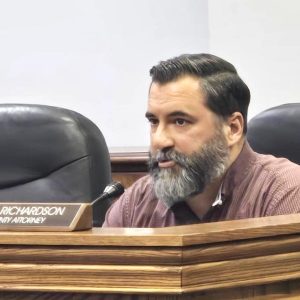
City Attorney Rich Alexander shared his legal opinion on the matter with the three decisions cities must make with regard to the new law.
“Are we gonna allow it, and if so, how are we gonna zone it and regulate it? Are we gonna prohibit all of the business activity?…or three, are we going to pass a resolution and say, ‘we’re not gonna make a decision, we’re gonna let the citizens decide?’”
He also said if the city passes an ordinance prohibiting it, the citizens can take it to ballot if they want to, or vice versa.
Alexander said his opinion, with all the fluctuation and changes, “the safest, prudent route for anything as game changing as this would be to prohibit it and see how it goes.”
Witcher sought more information on a citizen ballot vote for the matter, questioning how the city and county votes are tied together, if at all.
Alexander explained, for example, if Glasgow took no action, and the county level opts in, that means it would be able to take place in Glasgow, too, unless or until the city makes its decision.
“If the citizens of Glasgow don’t like whatever decision the council made, they have the ability to file a petition” to take the issue to a ballot.
Marion pointed out several things for consideration.
“If we don’t jump on this bandwagon, and we wait, and there’s already four given out, we may be on the outside looking in,” Marion said.
As for Norris’ comments on the unknowns, Marion said after thoughtful consideration, “There’s a lot of unknowns, there’s a lot of unknowns in the budget that we just passed of $30 million, we’re banking on the aquatics center that we’re gonna spend a fortune on.”
He also spoke on the unknowns surrounding the Covid vaccine. “But we all jumped on, or not all, a vast majority jumped in on that and took a chance.”
“Years later, now we realize what those side effects are,” Marion continued. “Some people it helped, some people it didn’t. Some lives were saved, some people wish they wouldn’t have taken it.”
Marion said regardless of the costs to the city, individuals will obtain their medically-prescribed cannabis either way, explaining the traveling required for patients to drive to other counties to fulfill their prescriptions.
“My fear is if we don’t do this and we have a lot of people on the road,” Marion said before questioning how it might affect the current cannabis businesses in Glasgow, which are at a much lower THC volume.
Marion said missed opportunities had already happened, including Western Kentucky University and alcohol sales. “Always waiting to see how it affects somebody else isn’t the right thing, guys.”
“We’re talking about people’s health…we’re just voting if it’s gonna be convenient for our citizens to obtain, ” Marion added.
Trigg, who has been a long supporter of medical marijuana, said Kentucky has the strictest medical marijuana system in the nation with stringent and limited licenses available, and a robust inspection system.
“Yes, we can opt out but with a medical card, you can still participate in your home, but why inconvenience local citizens who have to go elsewhere for their medicine?” Trigg said.
If the city were to opt out, Trigg said there is no guarantee of any available licenses if they opt in at a later time, due to the lottery system selection, but individuals with business licenses can move their businesses to other areas, Myatt would later explain. Trigg also said he requested the police chief to compile a report of incidences of before and after the county went wet with alcohol sales, and little to no increase was the result.
Bunnell said his main concerns were that the city has no process currently in place to manage the system including the cost to administer and so many unknown potential impacts such as the city’s staffing, police, and the city needs more time to consider taking on such a measure.
“By opting out, it gives us an opportunity to understand what is gonna happen down the road, and if we miss it, I would dare say it would come back around again,” Bunnell said, adding he doesn’t believe Glasgow is ready to jump in.
In response to Marion’s budget comments of the unknowns, Bunnell said, “We have history of a budget, how a budget has worked over the years because we have experience in that…but this we don’t know, there’s so many unknowns on this and if we opt in, we can’t opt back out.”
“If we get in a mess and get sideways with it, then we’ve created a system that we can’t live with, that we cannot manage, and we put a burden on people and on systems,” Bunnell said, adding that at least the city has a choice right now and not being mandated from the state level.
“I feel like if we don’t do it we’re taking a choice away from someone who could utilize this to benefit their health,” Marion said.
Lowery said, hypothetically, “We’re agreeing to ten rules but only five of them have been written. We have no idea what other restrictions, qualifications, fall backs on the city are gonna be.”
She said if the city opts in, they’re agreeing to whatever other rules trickle down with it. “There’s lots of things you want to be in the front run for, I’m just not sure this is one of them.”
Glasgow Mayor Henry Royse said a lot of work has already been done with Myatt and Hurt spending many hours in training at seminars.
“Every council member here spent their own time hearing this training so they’d know how to respond to this and speak intelligently about this when we get up here tonight,” Royse said.
Additionally, Glasgow Police Chief Guy Howie told council that House bill 142 and a subsequent bill that passed gives local law enforcement the ability to deal with current businesses that now sell the lower limit THC products if, for example, they’re found to have suspecting products of higher THC amounts than allowed by law. The bill provides police the ability to have products tested.
The council is expected to vote for the second reading on June
24 at 6 p.m. in the Council Chambers of Glasgow City Hall.
Medical Cannabis in Schools
House Bill 829 requires each local board of education of schools, charter, public, or certified private, to develop policies and use of medical cannabis on school grounds.
School boards in the Glasgow-Barren area are considering as early as this week on whether or not they will prohibit or allow use of such. The state website states they must decide and enact policies by July 1.