Challenge accepted – Cadet training comes to Metcalfe
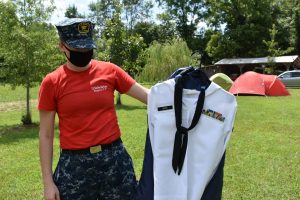
Petty Officer Allison Ross second class displays a Naval dress uniform.
Jennifer Moonsong
Central Divison
General Manager
Joe Publishing, Inc.
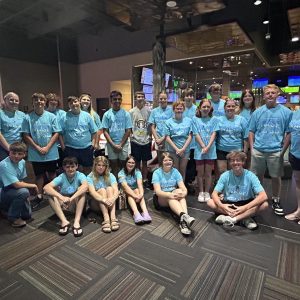
Last week fourteen brave young men and women form across the state between the ages of 10 and 17 gathered at Cabin Creek in Sulphur Well, Kentucky, to take part in a five day training for the US Naval Sea Cadet Corps.
There are four units in Kentucky: Lexington, Louisville, the Land Between the Lakes, and Edmonton.
Two years ago commanding officer Mark Thomas, a Metcalfe County veteran, decided to begin a unit here for the community, in hopes of giving Kentucky youth another path they could take towards their future.
“We have a partnership with the local American Legion, Providence Point church, and 4H shooting sports,” Thomas said. “I wanted a mission project for the church, to help youth with the program outside of school, and hopefully put them on a path other than crime or just giving up on their dreams. This program offers a ton of opportunities to those who participate.”
The program, which hosts 150 cadets a year, is a two week long Boot Camp that begins with a 10 day online course, followed by a 5 day in-person training.
Although it is for youngsters, make no mistake: It isn’t child’s play. To the contrary, it’s a rigorous program that tests participants mental and physical stamina.
“It is a mini version of what is done in Great Lakes, Illinois when individuals join the Navy,” Thomas said.
Aspects of the training can be used as promotion credit within the Navy for those who go on to a military career, as an airman or a seaman.
“It can make as big as a $400 dollar a month pay difference, and that’s a huge jumpstart for someone starting off,” he said.
The experience has other types of payoffs as well.
The program sends participants to 13 different countries internationally.
They can participate in things such as Seal team training, EOD, medical, aviation training and instruction, aviation maintenance, and entry level pilot training.
“The program has numerous advantages and offers so much,” Thomas said.
Even so, Thomas is the first to admit that the program is not for everyone.
“This is for children who want a challenge of their own,” Thomas said. “This is for the kid who maybe doesn’t play a sport, or isn’t on the academic team, but wants to find a challenge that fits them.”
Thomas says that often times, the children who participate are children who are from military families and have a parent or grandparent who served in the military.
“They want to see what it’s like, and see how they measure up,” he said.
On the physical end of things, they will have to pass a PT test that includes sit ups, push-ups, and running. However, Thomas says that being mentally fit it’s probably the most important part of the program.
“This program will determine how strong you are mentally,” he said. “From the minute they come over that hill, we are screaming at them. This is very much like training for the Navy. Only the strong survive.”
For some of those in attendance, it was not their first time. Having learn from the program and appreciating the training, they returned in hopes of someday having a career in line with the cadet training.
Those who return have a change to rank and become petty officers.
In addition to the physical and mental aspects of the program, they participate in learning customs and courtesies, and basic barrack style processes like packing and unpacking their totes, and keeping the area clean.
“We normally do this in a barrack setting, but because of the virus and having to maintain social distancing we are using tents. Cabin Creek is ideal for this because it’s outside, and there is plenty of space,” Thomas said.
Each cadet had their own tent to maintain safe social distancing, and only disposable cookware, cups, plates, and utensils were used during the training.
Last but certainly not least, the cadets learn to be part of a team.
“I think that’s a big part of what is lacking with youth today, They don’t know how to be part of a team. So, from the minute they get here, they have a battle buddy, they don’t go anywhere without that person.”
At the end of the two week long training, the cadets graduate. They have the opportunity to wear a real Navy dress uniform and be honored for their accomplishments.
To learn more about the program, visit www.seacadets.org.
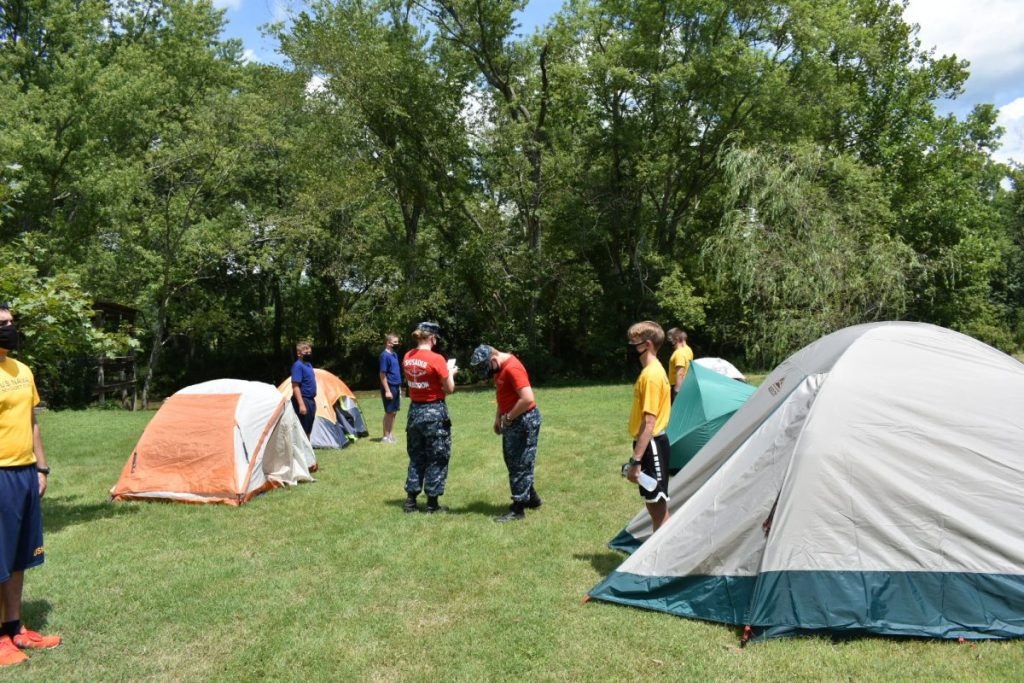
Cadets in training wore masks in order to comply with state guidelines.
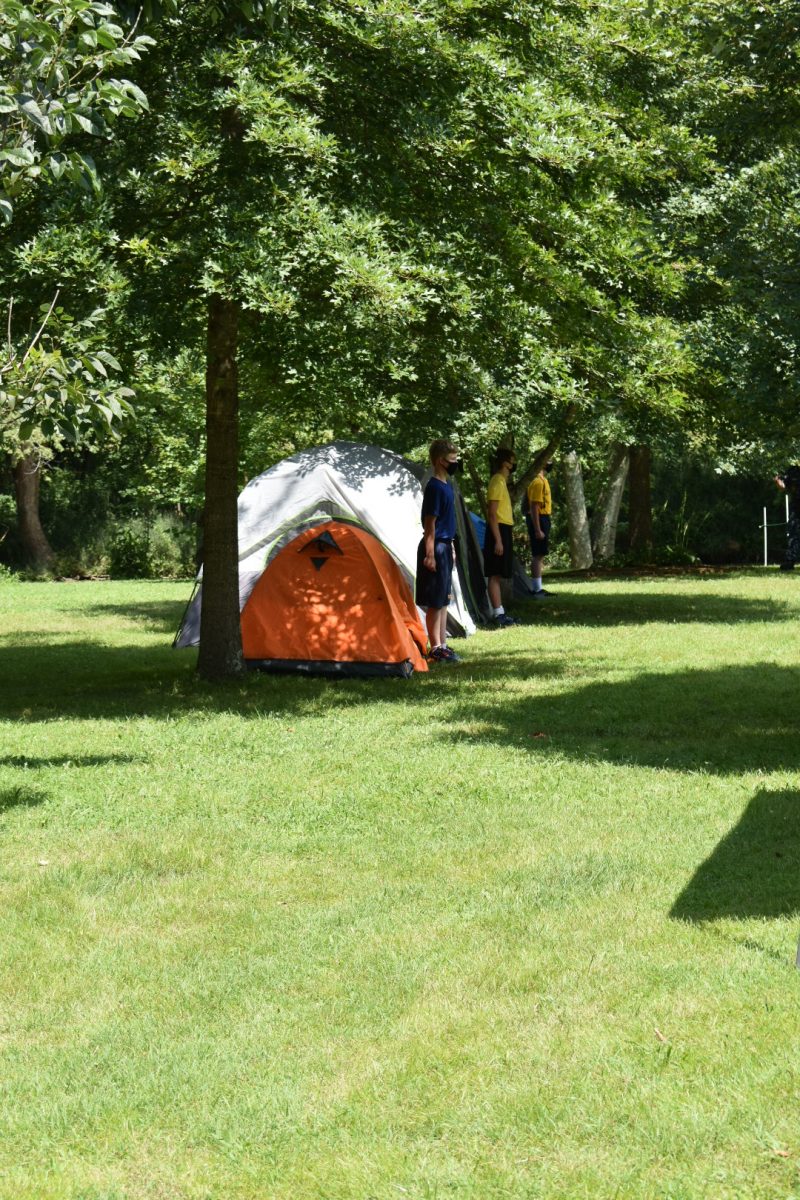
After a grueling morning in the heat, developing both mental and physical stamina, the young cadet trainees stand at attention.