Technology on Patrol: How Flock Cameras aid Glasgow police
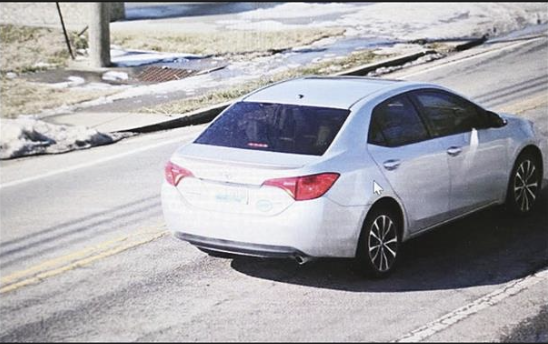
The Glasgow Police Department maintains its own Flock camera system database with monthly audits, including user searches and data obtained. Flock cameras can only take a photo from the rear of a vehicle, as in this example from Glasgow’s database. Photo by Allyson Dix
By Allyson Dix, Managing Editor/Barren County Progress
Communities throughout the United States are turning to more advanced technologies to aid in law enforcement, including utilizing the Flock Safety cameras. The Glasgow Police Department operates over a dozen of these cameras inside the city.
Flock cameras are designed to take photos of passing vehicles, capturing the license plate number and a vehicle footprint like the make, model, color, and any unique features. The cameras have become more widely adopted by law enforcement over the past five years and are frequently used by homeowners associations (HOA) and private businesses.
Glasgow Police Chief Guy Howie said the results were immediate for the department after the Flock cameras were activated. On the first day Glasgow’s cameras became operational, police recovered a stolen vehicle from Warren County and arrested an occupant with an outstanding warrant who was also found with drugs in the car.
Since then, Howie said the GPD has recorded nearly 50 investigative “hits” connected to the system, including several notable cases.
In one incident, Howie said the cameras helped resolve a public safety concern involving an elderly man who sustained a serious dog bite at a local park. The dog’s owners left before police could confirm its rabies vaccination status.
Using the Flock camera footage and a vehicle description, officers were able to identify the car, locate the owners, and confirm the dog was up to date on its vaccination, preventing the man from having to undergo rabies treatment.
The system has also been used to assist with missing persons’ cases. In one instance, police were able to track a missing person from Glasgow to Mississippi, where she was located safely.
After a local pharmaceutical company had a major theft, Howie said police tracked a suspect’s vehicle through Kentucky, Indiana, Michigan, and Minnesota before it was ultimately located in Colorado. The case was picked up by the U.S. Drug Enforcement Administration (DEA), resulting in federal convictions and lengthy prison sentences. He also said other cases identified through the local system were taken over by the Federal Bureau of Investigations (FBI).
Howie addressed privacy concerns surrounding the license plate reader technology, noting that courts have consistently ruled that there is no expectation of privacy for vehicles operating in public spaces.
“Flock has taken a hit in the media here recently, but Supreme Court cases have ruled that people do not have an expectation of privacy when they are out in public,” Howie explained. “It is no different than a police officer standing on the corner reading tag numbers as cars go by.”
“The Flock cameras do not take video; they do not take a picture of the occupants of the car. We don’t know who is driving,” Howie said. “All we have is a description of the car and the tag number.”
A federal judge recently sided with the City of Norfolk, Virginia, over Flock cameras,
with plaintiffs alleging the cameras violate Fourth Amendment rights. While the plaintiffs say they plan to appeal the decision, even still, courts continue to rule in favor that constitutional rights are not violated by Flock cameras.
Howie said the department began exploring the technology after he returned as chief in 2023, following a recommendation from one of the detectives. The city council approved the purchase of three Flock cameras, and three more were purchased from the department’s drug seizure money. Today, fifteen Flock cameras are placed around the entrances and exits into Glasgow on the major thoroughfares.
The chief emphasized that the cameras are not located in any specific neighborhoods, nor are they used to target any particular area.
The data collected by the Flock system is retained for 30 days before being automatically deleted. For criminal investigations, the photos can be downloaded and entered into evidence if collected within the 30-day timeframe.
The police department has adopted a policy governing the use of license plate readers that outlines procedures for data collection, handling, and access, as well as prohibited uses by personnel. The policy includes safeguards and audit requirements, with the system designed to flag erroneous entries, such as invalid case numbers, and log each search conducted by an authorized user. It provides guidelines for police officers’ handling of a “hit” from the system, defines misuse of data, and specifies when disciplinary action may be taken for use in bad faith.
Since the turn of 2026, the Flock cameras have recorded 1,233,652 license plate reads as of Feb. 4, a figure Howie said highlights the amount of traffic moving through the city.
“People think Glasgow is small and there’s not a lot of traffic, but the numbers show otherwise,” he said. “If you don’t think people are coming to Glasgow from outside to commit crimes…even though Glasgow is a smaller community, we’re still the target of criminal activity. That’s why we need to stay technology savvy.”
The department owns the locally-stored data and shares information with over 2,000 law enforcement agencies for legitimate investigative purposes. Private entities, such as HOAs or retail businesses, that own Flock cameras control whether their data is shared with businesses.
Howie said the department strives to stay up to date with technology in law enforcement.
“If we as an agency do not think globally about law enforcement trends, we’re going to fall short,” Howie said. “But if we think globally and act locally, we’re going to stay current.”
Howie said he wants the Glasgow community to know that its local police department operates professionally and has a strong, working relationship with the local sheriff’s office and offers assistance to Cave City Police when needed.
“We’re making strides,” Howie said. “The citizens of Glasgow and Barren County need to be very proud and supportive of their law enforcement officers.”