Embracing the Traction: Glasgow Mayor Henry Royse Notes City’s Momentum
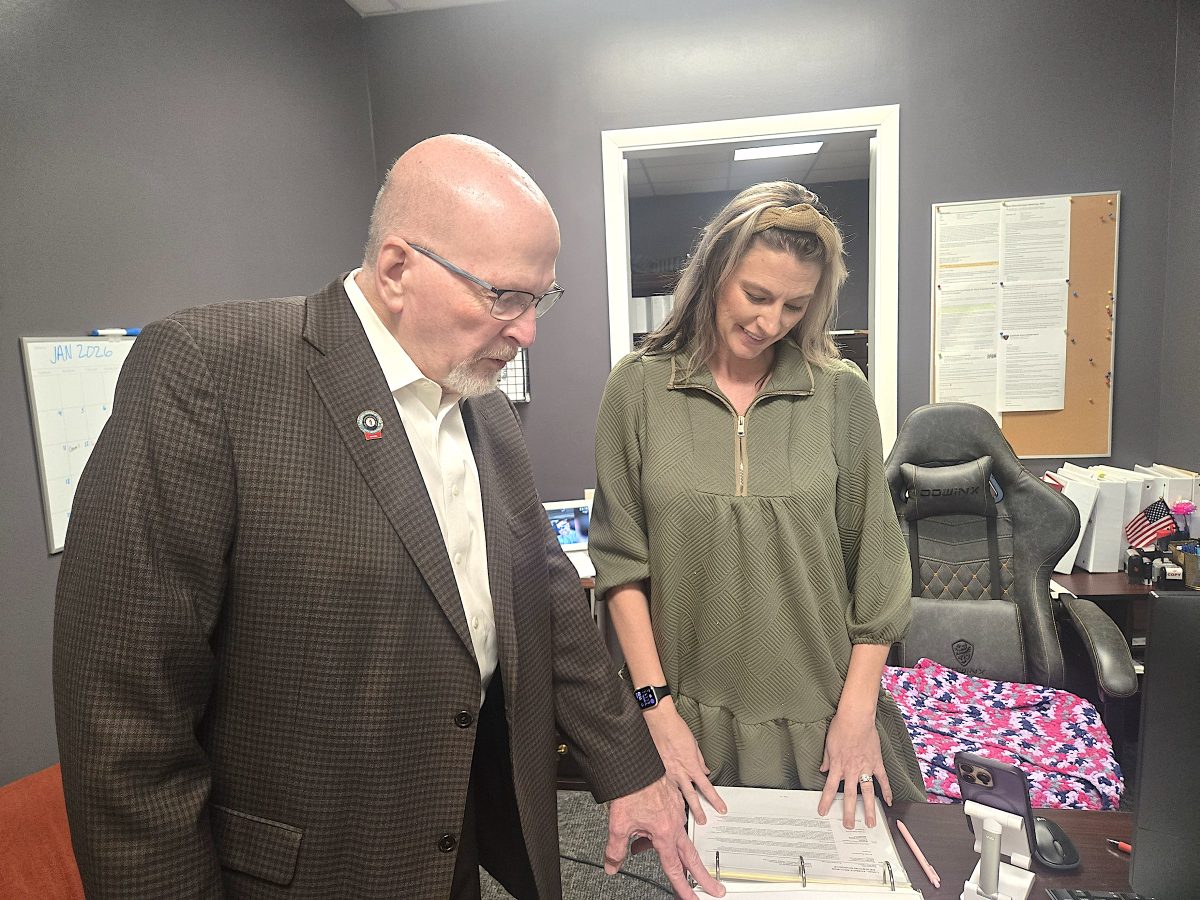
Glasgow Mayor Henry Royse notes the city’s traction while reviewing documents with City Clerk Danielle Cashion. Photo by Allyson Dix
By Allyson Dix, Managing Editor/Barren County Progress
The wheels continue to turn as we enter the new year in Glasgow. From infrastructure and industry to safety and family, Glasgow Mayor Henry Royse reflects on 2025 and shares future plans for the upcoming year.
Royse said that the city has gained a lot of “traction” over the last year with an expectation that the momentum will continue.
The economic traction Royse points to includes several new developments, including two existing employers in Glasgow that are quietly expanding operations by adding second shifts, a move that is equivalent to welcoming new businesses altogether.
“When an established company adds a second shift, that’s like adding another industry,” Royse said, noting that increased employment opportunities remain a top priority.
In addition to the new industries having announced a move to Glasgow– such as Tate, Inc. and Union–and the expansion of existing industries last year, another major step forward for the Southcentral Kentucky Community & Technical College’s expansion of its nursing program.
Royse said SKYCTC has played a vital role in addressing local nursing shortages, which led to the reduction of relying on costly travel nurses and ultimately improving patient care.
Investment in the community has also been visible across retail, tourism, and small business, Royse said, highlighting short-term rentals, local restaurants, and downtown events like the annual Louisville Orchestra concert.
“People are investing in Glasgow,” Royse said. “Starting a small business takes risk, and seeing folks invest money into doing something and taking the time to make sure it happens–that’s huge.”
Several major projects are moving forward on the infrastructure front, including the highly-anticipated swimming pool that is set to open this year in the renovated American Legion Park and the Farmers Market on West Main Street, which has seen delays due to additional dirt work.
“I’ve been so disappointed that things we embraced have taken longer to do than we thought they ever would,” Royse said. “Like the pool, it has just taken longer and some added expenses, but we’re there. It’s going to be really nice for the community to enjoy.”
Repairs to a retaining wall on West Main Street near the county attorney’s office remain on the to-do list; however, the project was pushed back due to the need for a walking bridge from the courthouse to the parking structure. With costs of construction work continuing to climb, the walking bridge project is elevated to two times more than expected.
Not all projects are with delay, though, and one of those is the construction of a new bridge across Beaver Creek at the landfill.
“It’s going faster than we thought it would,” Royse said about the landfill bridge. The city owns property on both sides of Beaver Creek and received a $750,000 grant to build the bridge, which will create a path to move dirt over and will prevent destruction to the current roads, which would incur ongoing costs to repair.
Mid-2025, Glasgow reopened the North Race Street public parking structure after safety concerns arose and subsequent repairs made.
Another long-standing and long-awaited need for Glasgow’s infrastructure is the bridge and tunnel on Water Street, also referred to as the “Water Street Tunnels.”
Due to deterioration of Water Street Bridge, which was built in 1917, passage through the tunnels came to a halt over a decade ago. The Kentucky Transportation Cabinet has marked the site with intent to replace the bridge, dating back to at least 2018, according to a KTC Structure Selection Report.
“It keeps getting pushed down the road,” Royse said about the state funding for the tunnel repair. “We stay on top of Frankfort to make sure no one touches the money in the budget for us to fix this bridge and tunnel.”
The city owns several aged buildings that require ongoing maintenance and can present unexpected challenges. Downtown preservation efforts continue, including rest planned for the South Central Kentucky Cultural Center, also known as Museum of the Barrens.
Turning to future development, Royse said when the City of Glasgow purchased the Johnson Farm on KY 1297 / Cleveland Avenue last year, they did so with a long-term vision in mind: positioning it to benefit from future development and meet a growing need for desired residential housing.
Royse said there is no urgency to rush development, as its value is expected to continue appreciating with the planned widening of KY 1297, which will also allow for more traffic and accessibility. Development guidelines and standards for the property will help regulate the types of homes built, including square footage, curb and gutter requirements, etc.
The need for such development became apparent during efforts to market properties like the Donnelly building to potential investors, Royse explained. Prospective buyers touring sites in Glasgow would sometimes route through neighborhoods in Bowling Green to showcase desired housing options not currently available in Glasgow-Barren County, highlighting a potential gap that Royse said the Johnson Farm purchase is a proactive step in an attempt to address that need.
Looking ahead, Royse acknowledges some emerging needs the city will face, especially with the Glasgow Fire Department and Department of Public Works.
The flooring at the fire station on South Broadway, which was built in 1951, has started to fail. “It is not a terrible problem unless you’re trying to park much heavier fire trucks than those built in 1951,” Royse said, adding that consideration of where to construct a new fire station is in motion when location is important for response calls.
In what was the old county jail on West Front Street, Public Works has reached its capacity for equipment and completely outgrown the structure. One potential idea the mayor said floating around is to combine the two departments in one structure.
Royse also commended the Glasgow Housing Authority and their work in ensuring housing is available for individuals when needed.
When it comes to safety of Glasgow, Royse is confident in the numerous departments the city has. The Glasgow Police Department is now fully staffed and the fire department continues to adapt and maintain mutual aid partnerships despite a decline in volunteer fire services due to various reasons.
“I’ve been really pleased with Chief (Guy) Howie and all the people building a good place at the department,” Royse said. “The fire department is the same way…We’re trying to get it as competitive as possible–it’s competitive in the fire industry.”
Technology investments, like the Flock cameras, continue to enhance crime prevention and investigation efforts, while the city continues to fully fund its share of the 911 dispatch center, annually investing over $2 million in Glasgow’s dispatchers.
Royse said 911 dispatchers are the lifeline for officers and first responders. “We send our police officers out in the middle of no where and that’s their only contact with humanity.”
The mayor said he is proud of the community and its services, and hopes the community feels safe, noting fast response times from various agencies, “We’ve got their back.”
Having been raised in Glasgow himself, Royse said he chose to raise his family here also because of the opportunities and community pride that this town holds.
As Glasgow enters 2026, the focus appears to remain on sustaining momentum, embracing the traction, finishing projects, and ensuring the city continues to be a safe, welcoming place to live, work, and raise a family.
“I think Glasgow provides opportunities for people to be productive, we have schools and job opportunities to where you can work, make a living, and raise a family here,” Royse said. “We have a lot of good things going on that I hope people will learn about and take advantage of.”
“How does this happen? As Hillary Clinton said: It takes a village.”