Refugee Resettlement
By Allyson Dix, Managing Editor/Barren County Progress
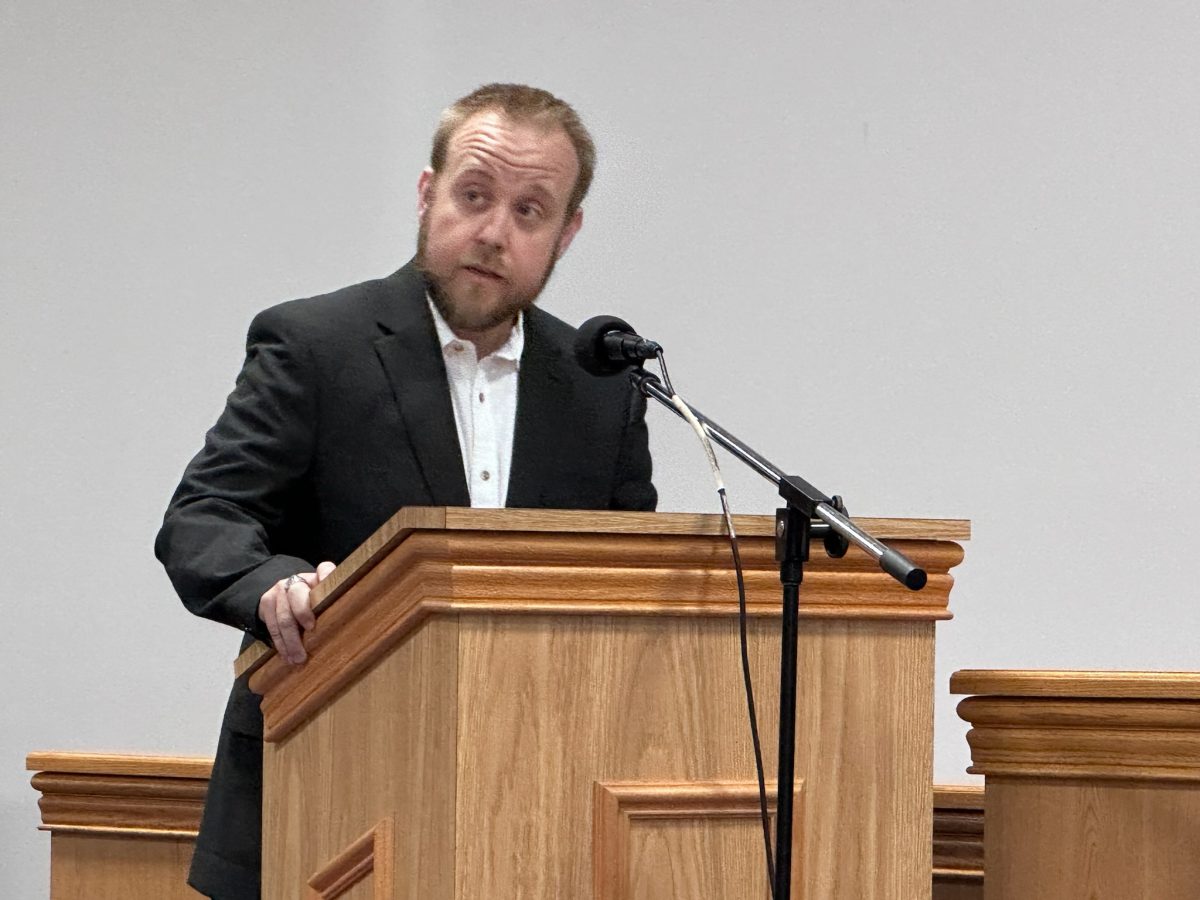
Matthew Stevens, a board member of Refuge Bowling Green and a local lendor/realtor, is one of the representatives from Refuge Bowling Green that were invited to speak at Glasgow City Council meeting on June 24 on the future resettlement of Latin American refugees in Glasgow. Photo by Jeff Jobe, JPI
Following a majority vote to amend the city council’s June 24 meeting agenda, the council heard comments from those associated with the future resettlement of refugees in the community in front of a packed council chamber including attendees standing along the back walls, many of whom left after the presentation ended.
An apparent push from citizens in the community helped bring the matter to the forefront of Monday’s meeting stemming from a social media post, which appears to have sparked the agenda amendment request from Councilwoman Chasity Lowery. Glasgow Mayor Henry Royse said he wanted the community to have the information from those involved in the resettling of refugees.
Some references to the social media post were labeled as “misinformation,” which is why the Barren County Progress has attempted to obtain information to report to the community before speculation began to swirl, offering the agency’s assigned spokesperson, RJ Baise, the opportunity to share these details beforehand, to which they denied in three separate phone calls on June 13, 18, and 24, saying there just wasn’t information available to share yet.
Matthew Stevens, a realtor/lender in Glasgow, Pastor Ray Woodie of Coral Hill Baptist Church, and Daniel Tarnagda with Refuge Bowling Green (RBG) spoke to the council.
Royse recognized that some in attendance may wish to comment but that the Open Meetings Act only grants the public the right to attend all public meetings and observe, but that it does not grant the right to speak at a meeting. “As such, there will be no public comment as a part of this council meeting tonight,” he said.
The mayor also clarified that the refugee matter is not something decided on at the local level.
“This is not really a city issue, the city has no vote, the city has no say on if somebody comes here or not,” Royse said. “They just came to see us to make sure that we were aware this was going to happen.”
Stevens said RBG is a non-profit organization offering a variety of services to refugees such as language courses and job placements, among other things, but there is no liability to the tax payers at the local, state, or federal level.
The refugees are utilizing a travel loan program through the International Organization for Migration (IOM), according to Stevens. IOM is an international organization with the Refugee Admissions Program, and the IOM Headquarters is housed in Geneva, Switzerland, according to www.iom.int.
The travel loan program, Stevens said, requires refugees to sign a promissory note before departure committing to repay a debt to the U.S. State Department within a determined period after arrival.
The IOM “aims to connect United Nations qualified refugees in areas that are not currently at capacity for refugee support,” Stevens said. “As such, Refuge Bowling Green is exploring the placement of 30 individuals total from Latin countries that have been background checked and vetted. They are in every definition in every way of the word legal the definition legal.”
He said RBG has “secured the support of local churches and local companies” to facilitate the resettling, and they have strong relationships with the U.S. State Department and Kentucky Office of Refugees.
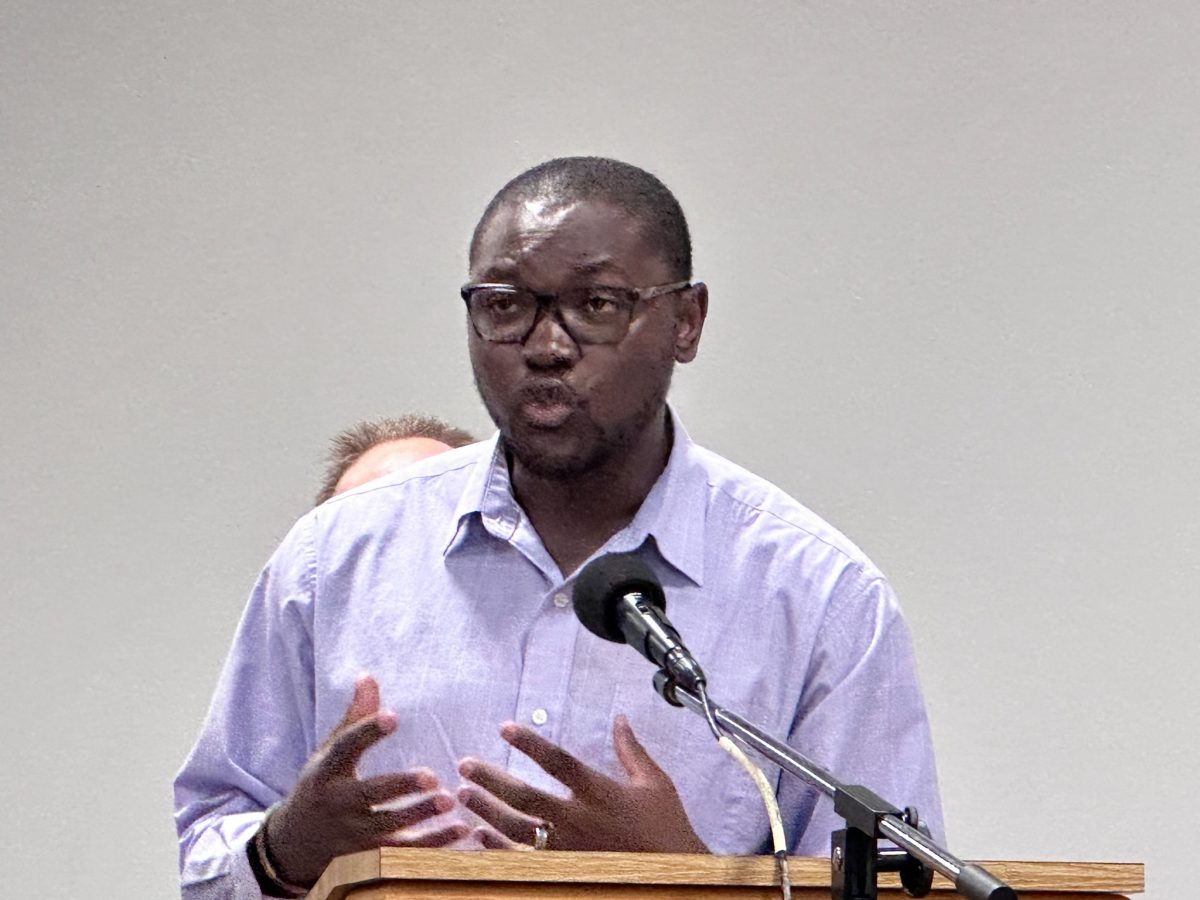
Refuge Bowling Green’s co-founder Daniel Tarnagda shares details at the June 24 Glasgow City Council meeting regarding the resettlement of Latin American refugees. Photo by Jeff Jobe, JPI
RBG’s co-founder, Tarnagda, who is from West Africa, said 30 refugees will be resettled in the community with “zero” requirement from the city. He said he and his wife began helping refugees in 2013, and in 2018 became an official 501(c)(3) organization. Tarnagda said RBG provides wraparound services for refugees.
Woodie said that in a recent meeting with the mayor, police chief, sheriff, many of the questions asked were the same as many of the citizens with things like housing and costs. BCP confirmed that those in attendance of the meeting included Ray Woodie, Jordan Woodie, Mayor Royse, representatives with RBG including Alice Tarnagda and local RJ Baise, City Administrator April Russell, Sheriff Kent Keen, Police Chief Guy Howie, and Sheriff Deputy Mike Houchens.
“There was a clear distinction between refugees and immigrants, and many of these have lived 30 years in refugee camps throughout the world,” Woodie said.
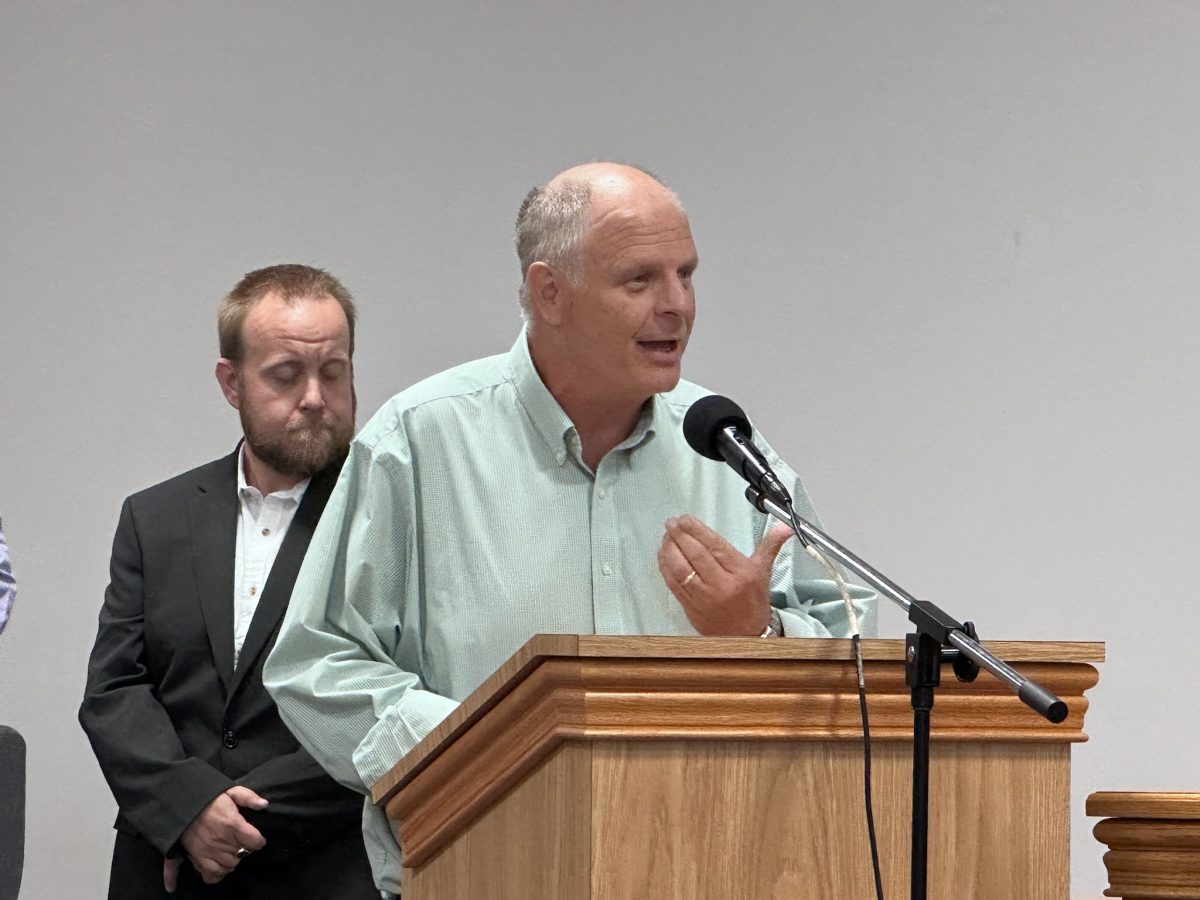
Local Pastor Ray Woodie of Coral Hill Baptist Church talks about the church’s role, one he hopes to see reach across denominational lines, in the June 24 Glasgow City Council meeting. Photo by Jeff Jobe, JPI
“So, in compliance with our current presidential administration, we’re looking to help come alongside these individuals,” Woodie said, attributing it to being good stewards of what God has given us, and he believes it will be a benefit to Glasgow.
The mayor asked Glasgow Police Chief Guy Howie to present his take on the recent meeting. He said he had “some great concerns about who, what, when, and why” before contacting RBG and requesting them attend the meeting. He explained how, with the number of illegal immigrants crossing into the United States across the southern border bringing problems to the community, his first concern was whether or not these individuals have been vetted.
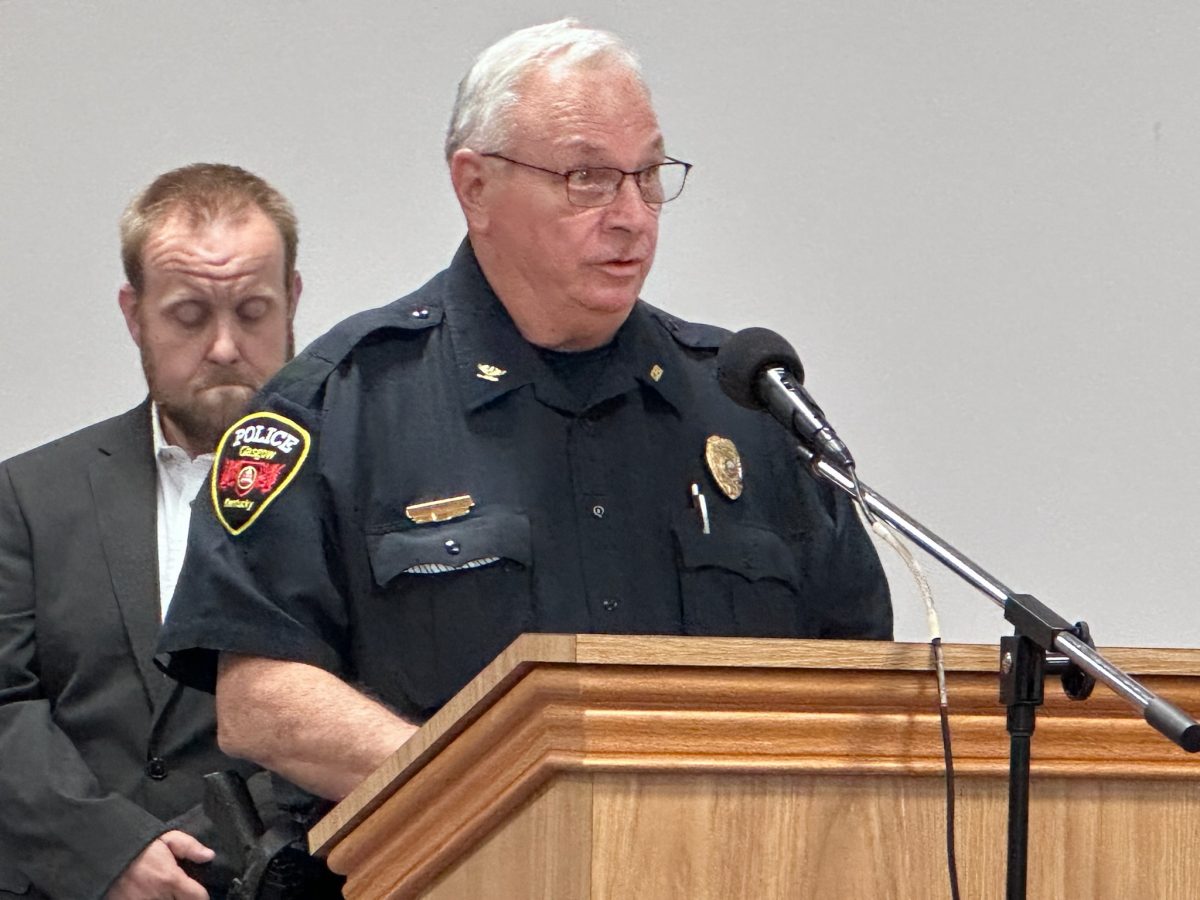
Glasgow Police Chief Guy Howie shares his initial concerns regarding refugees resettling in Glasgow. Photo by Jeff Jobe, JPI
“They have been vetted by, I’m told,” Howie said, “by the United States Government,” which aroused laughter from the crowd. He continued, “They are not convicted criminals, as a matter of fact, I believe some of them where outstanding citizens in their communities.”
Later in the meeting, prompted by inquiries from council members, the RBG representatives revealed they do not know nor have they met any of the refugees.
Howie also said with this type of refugee status, he has a resource to help negotiate among other things.
“If by chance, we have somebody stopped on a traffic charge or a disagreement at a store, I have somebody I can reach out to help….I don’t have that ability right now with those people that are undocumented…that doesn’t mean that these people that are violating the law are not going to be held accountable for their actions, that’s not what I’m saying at all.”
Councilman Terry Bunnell asked for RBG to provide more information on the services and to define that “in success or failure.”
Stevens said services include things to help them assimilate into American culture, “Functionally, that looks like driving training, language training, and job placement.” The goal is to help refugees, according to Stevens, achieve success with a gainful income, giving them integrity of life, and an auto-deducted repayment from their paychecks for the travel loan repayment, which also, he said, their employment creates tax revenue.
Stevens also said the refugees are “typically growing families with two parents in the family.”
Councilman Freddie Norris asked basically who’s responsible on the bottom line if they’re not repaying the loan back, and Stevens said RBG or the individual who endorses the loan commitment. He also said through gainful employment, refugees will pay their own housing rent as well.
There was no discussion on what type of financial hardship that may place on the refugees to pay back the loans.
Tarnagda said as for issues, “Everybody has issues,” but language barriers and driving are the more common ones. Stevens asked Tarnagda if there are any criminal issues with refugees. Tarnagda said if a police officer stops them, they may get scared and run away because of their history with police officers in their native land, who are “not good people.” He said they educate them to deal with those scenarios.
Norris also asked who will be overseeing the refugees of Glasgow-Barren County. Stevens replied, “RBG, as an organization, oversees job placement, housing in cooperation with the churches, and companies who are looking to hire these individuals.”
Woodie said the church looks to partner with other local churches across denominational lines.
Councilwoman Marna Kirkpatrick asked for a time frame for arrival, and Stevens said nothing is finalized yet, referencing an Executive Order. “There’s refugees in the portal…it’s a process that could be ongoing over the next 12 months.”
She also asked how Glasgow was chosen for refugee resettlement, and Tarnagda referred to the group at this point as 30 families, and in a phone call after the meeting, Stevens clarified he misspoke. Due to press time, BCP was unable to reach Tarnagda.
“We talked to the church and asked if they’d be willing to partner with us for these 30 families, they said, ‘Yes, that’s something we’d love to do and serve.’ At the same time, I was talking with the job placement, I have created already several partnerships with different job placements in Glasgow…Glasgow has been a very welcoming community,” Tarnagda said, before elaborating on his personal experiences in the community.
Stevens said, “There’s a temporary housing that still goes to that debt to be repaid,” before sharing details on job placement agencies, etc. after Kirkpatrick asked if, upon their arrival, they will already be employed, have housing, and language “all taken care of.”
He also said the church is tasked more with cultural assimilation and that more collaboration is needed.
Councilman Max Marion asked regarding being chosen as a placement, “What I’m hearing is Bowling Green is flooded with them, is that correct?” Stevens said that’s not the case and with Glasgow’s warm heritage and a growing, healthy, and stable Latino community, “That’s probably the reason Glasgow was chosen.”
Marion inquired as to whether the refugees are Christian-based. Stevens replied, “I’ve never met them. I haven’t spoke to them.”
Woodie said the same, but that the ultimate goal of any pastor would be to see them come to faith in Christ; however, he said, “We respect people where they are in their journey.”
Councilman Patrick Gaunce asked, “Questions I’ve received through the day, is this going to be 30 of 300 coming, or is this 30 and then we would come back for another group?”
Stevens said only 30 individuals have been approved, and Gaunce said, “But if it became more than 30…?”
“We have no reason to believe there’s more than 30 individuals at this time,” Stevens replied.
Stevens said refugees in Southern Kentucky have included African Christians fleeing persecution, victims of genocide, as well as people from Afghanistan who supported American efforts in the war but faced extreme violence by the terrorist organization, Isis, after the evacuation of U.S. troops.
“Make no mistake, refugees believe in the American dream,” he added.
Gaunce said he is familiar with RBG and commended their work. “I have no idea how many refugees are in Bowling Green but there’s a huge community. One of the things that stuck out to me is I went to Briarwood Elementary a couple years ago. There was 26 countries represented in that one elementary school of different people.”
“I commend you, appreciate you letting us know, be able to ask questions because there’s been a lot of misinformation,” Gaunce said. “But I’d be glad to help, from me, not the city, for me, anyway I could.”
Many attendees left the meeting after the discussion, and at one point, the mayor banged his gavel several times in a row, telling attendees to not disrupt the speaker. State Representative Steve Riley was present to hear the discussion as well.
Before leaving, Ernie Wagoner, Commander of Freedom Warriors, asked, “Mayor, mayor? No body else is going to get to say nothing?” Royse replied, “No, that’s not the way meetings work.”
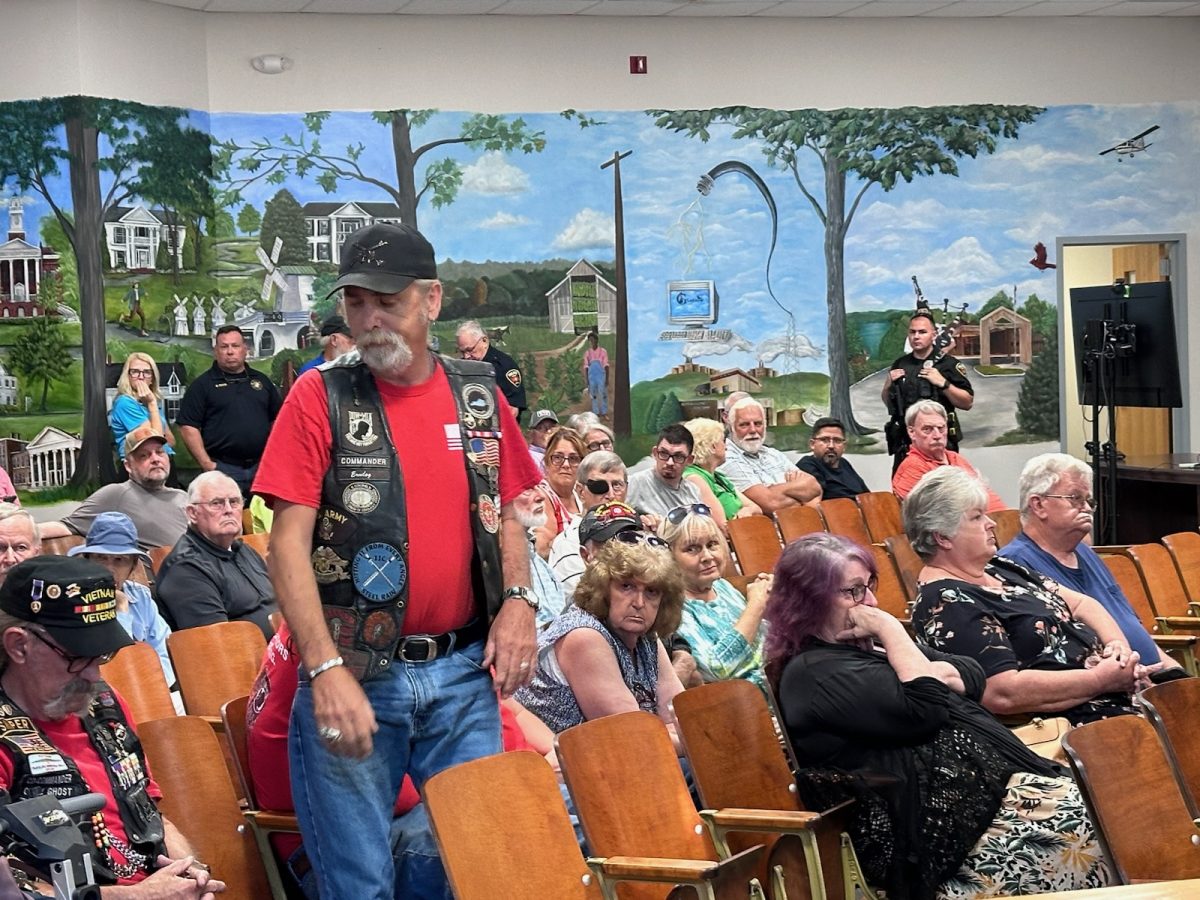
Ernie Wagoner, Commander of the local Freedom Warriors, was outspoken as well as others in the June 24 Glasgow City Council meeting. Wagoner, and others, felt they should have been permitted to give public comment at the meeting regarding the resettlement of refugees in Glasgow-Barren County. Their were concerns were not acknowledged in the meeting and stated it was a violation of their First Amendment rights. Photo by Jeff Jobe, JPI
In a follow up phone call with Stevens on Tuesday morning, BCP further clarified some of the information presented in the council meeting.
Stevens said as far as the loan repayment, it is similar to college loans. “They are responsible for federal debt in the same way student loans are required to be repaid, the only difference is refugees cannot put their loan into deferment, they’re obligated to pay.”
When asked to clarify how tax dollars are not used in the resettlement if refugees owe a federal loan, Stevens said it isn’t a black-and-white issue.
“Number one is the premise that the nation’s budget is fully funded by tax dollars only – that’s just not true. Last year, all of our interest spending for the first time in American history outpaced the military spending.”
“That means that we’re borrowing money from frankly countries that hate us and that’s disappointing,” Stevens continued. “The idea that this is only a tax dollar conversation is not true. The money is being spent, debts are going up, and this is [something] frankly every American should be concerned about regardless of political affiliation. Out of control spending destroys countries.”
Stevens said the vetting and budget is the same under the Biden administration as it was the Trump administration. “If we ran a balanced budget, it would be fair and honest to say that these are tax dollars, but that’s not true.
“You can easily say the money that’s being spent is on loan from other countries as you could tax dollars,” he added.
When asked what happens if refugees face financial hardship in repaying the loan, similar to many Americans struggling now, Stevens said out of all three classifications (Green Card Immigrants, Refugees, and illegal border immigrants) Refugees receive the lowest amount of entitlement programs with the vast difference of the three being that refugees are vetted through United Nations, and it’s unfair to lump them all into the same category.
In response to the those in attendance who opposed the move and were denied opportunities to speak or ask questions in the meeting, Stevens said, “Protesters asked me how much I got paid to do this as if somehow this is a monetary driving policy for us.”
“I volunteer to be on the board at Refuge, I don’t see any money from enjoying the benefits for what I experienced last night, but that’s not the way that works. We’re a non-profit that operates an extremely lean budget and we depend the charity of the community, churches, and cooperation with corporations and the grants that are available in order to fund the needs that we’re trying to meet.”
The Barren County Progress will provide updates to this story when more information becomes available.