Against All Odds: One Family’s NICU Journey
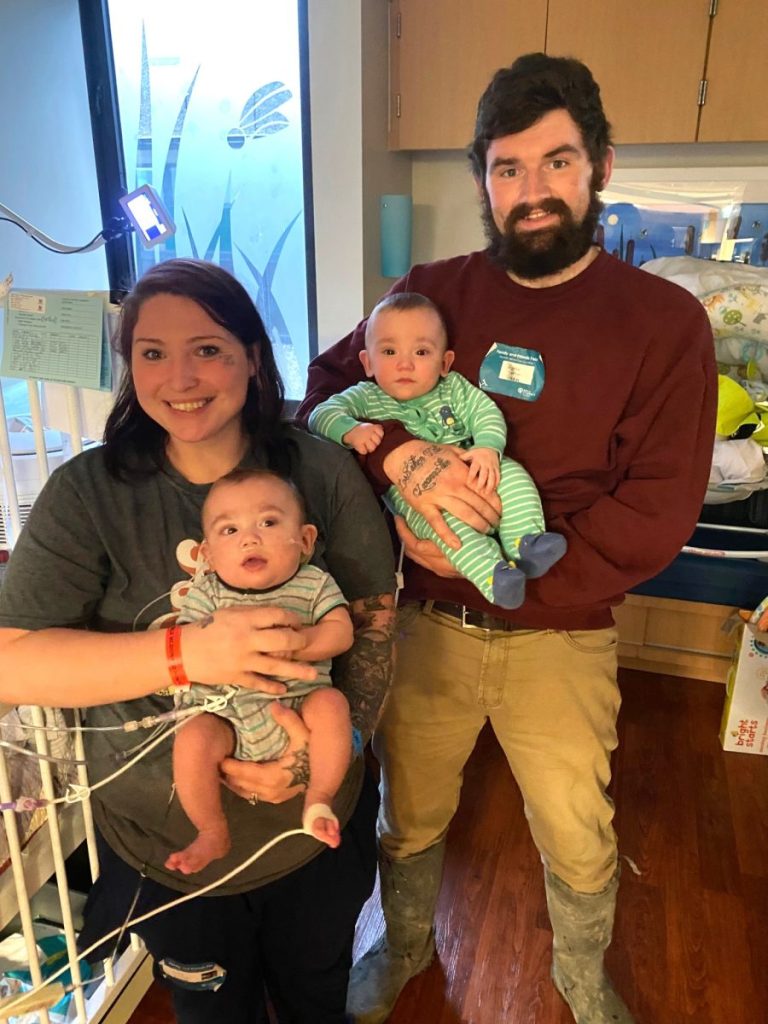
Alisha and Kyle Richardson hold twins Marshall and Richie Richardson, who were born at just 24 weeks and 5 days gestation. Marshall, who spent 250 days hospitalized after being born, continues receiving specialized medical care at home. Photo submitted.
Mary Beth Sallee
Managing Editor
Hart Co. News-Herald
For most parents, the first days after bringing home newborn twins are filled with sleepless nights, bottles, diapers and learning a new routine. But for Alisha and Kyle Richardson, those first days were spent walking hospital hallways, sitting beside incubators, and praying their sons would make it through.
Marshall and Richie Richardson were born on June 28, 2025, at just 24 weeks and five days gestation. Tiny and fragile, the twins immediately began fighting for their lives inside a neonatal intensive care unit.
Alisha said she was terrified as she realized her twins would be arriving much earlier than expected. Although doctors initially hoped to stop her labor, the family soon gathered in Louisville as the boys prepared to enter the world months ahead of schedule.
The boys were born at the University of Louisville Hospital and immediately placed in intensive care. Alisha described those early days as overwhelming and surreal.
“We were at Ronald McDonald House, so we’d get up and walk up there every day to see them,” she said. “They didn’t even look real. They were so small. It was stressful, very stressful.”
At four weeks old, Marshall was transferred from the neonatal intensive care unit (NICU) at the University of Louisville Hospital to the NICU at Norton Children’s after doctors discovered serious intestinal complications.
Dr. Ankur Datta, a neonatologist with Norton Children’s, cared for Marshall during much of his NICU stay. According to Dr. Datta, babies born this prematurely face enormous challenges from the moment they enter the world.
“Immediate concerns for babies born this early are first in the delivery room, and resuscitating the baby and being able to put them on the ventilator and keep them warm,” Dr. Datta said. “And then in the first few weeks, there’s things specifically that we pay attention to, keeping them in the incubator, minimizing the chance of infection, managing their ventilator, and especially managing their nutrition.”
At just four weeks old, Marshall’s condition worsened dramatically.
Dr. Tiffany N Wright, a pediatric general surgeon at Norton Children’s, first met Marshall when he was transferred for emergency surgical evaluation.
“Over the days leading up to his transfer, he had developed some abdominal distension and feeding intolerance,” Dr. Wright said. “On his x-rays, there was concern that he had air in the wall of his intestine.”
Initially, doctors believed Marshall was suffering from necrotizing enterocolitis, often called NEC, a serious intestinal disease commonly seen in premature infants. But when Marshall arrived at Norton Children’s, doctors discovered something even more severe.
“He actually had air that was outside of his intestine at that point,” Wright said. “That means that he had a perforation basically, or a hole in his intestine.”
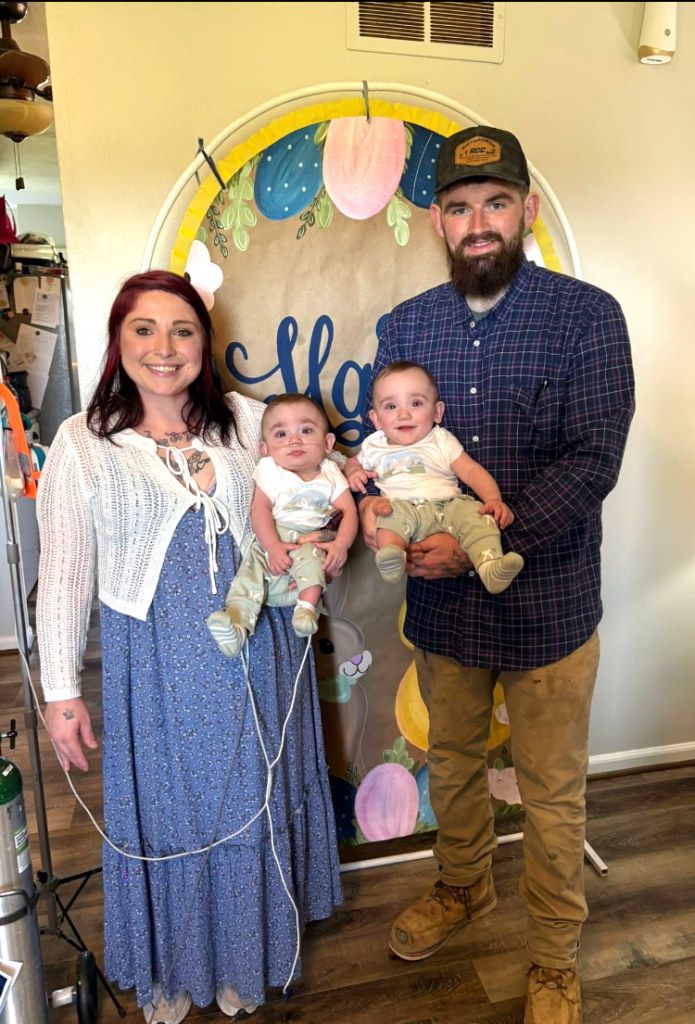
Alisha and Kyle Richardson pose with their sons Marshall and Richie during the twins’ NICU journey at Norton Children’s. Photo submitted.
“At the time, he was only probably a pound and a half, and he was very sick,” Wright added.
Doctors first attempted to stabilize him by placing a drain into his abdomen, but when his condition failed to improve, they rushed him into surgery inside a specialized operating suite located directly within the NICU. What surgeons found was unexpected.
“Marshall had an abnormal band of tissue that was extending from his intestine to the abdominal wall that’s not supposed to be there,” Dr. Wright said. “His intestine had actually kind of twisted around that band, and it had cut off the blood supply to probably three-fourths of his small intestine.”
Surgeons were forced to remove much of his intestine.
Meanwhile, the twins were separated at that time. Because there was not initially a room available for Richie at Norton Children’s, he remained at the University of Louisville Hospital while Marshall underwent surgery and intensive treatment.
“We were split going to two different places,” Alisha said.
At the same time, Kyle Richardson continued trying to keep the family’s concrete business running.
“He was finishing up jobs here that he legally had to finish,” Alisha explained.
The emotional toll mounted quickly. Doctors warned the family that Marshall might not survive. The surgeries and medical complications continued throughout Marshall’s 250-day NICU stay. Along the way, he experienced seizures, a stroke, and ongoing intestinal complications requiring additional procedures, feeding support, and IV nutrition.
Dr. Datta explained that seizures are very common in babies born prematurely and can happen for a multitude of reasons, often because their blood vessels are still extremely fragile. Marshall also eventually developed what doctors refer to as short bowel syndrome, requiring long-term nutritional support through IVs and feeding tubes.
The family had to learn highly specialized medical care before Marshall could safely leave the hospital.
“They have to hook up his IV nutrition at home, which are things that in the hospital a nurse would do,” Dr. Wright said. “So it’s almost like these parents have to get sort of a mini nursing degree just to provide care for their child at home.”
“I’ve just become obsessed with it instead of stressed about it, and learned how to do it all,” Alisha said.
Richie joined Marshall at Norton Children’s NICU four weeks after Marshall was admitted to Norton’s, when they were both eight weeks old.
“I lived in the hospital,” Alisha said. “My husband went to work, and I stayed in the NICU and took care of them all day.”
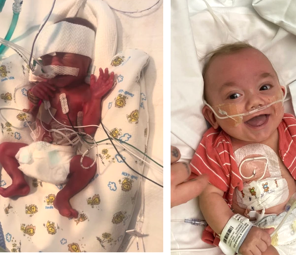
A side-by-side photo shows Marshall Richardson shortly after birth at just 1 pound, 5 ounces and later during his recovery journey.
Richie was eventually discharged on Dec. 3, 2025, after spending 177 days in the NICU. After Richie came home, visiting Marshall became far more difficult. Because of flu season restrictions, he was not allowed back into the hospital to see his brother.
Alisha said that separation became one of the hardest parts of the entire journey.
“I had to wait until my husband come home from work, which is late at night, and then go see Marshall for like an hour or two and then come back home and take care of Richie,” she said.
Marshall’s NICU journey continued for a total of 250 days. Despite the long months inside the NICU, both Dr. Datta and Dr. Wright acknowledged the Richardson family’s dedication as one of the reasons Marshall was able to successfully come home.
“To take a baby like this home that needs IV nutrition, home oxygen, many, many follow-ups with many different doctors takes a very involved family, which they were,” Dr. Datta said of the Richardsons.
“I think having Alisha and Kyle being present and invested in Marshall and Richie’s care was huge,” Dr. Wright added.
For the medical team, Marshall’s case also represented the level of specialized care available through Norton Children’s intensive neonatal services.
Dr. Datta said Marshall’s care involved everyone working together.
“To have the surgeons, the GI doctors, the physical therapists, the neurologists all come together and very frequently discuss Marshall specifically, how to best care for him, how to get him home and how to get him home safely was really eye-opening to me,” Dr. Datta said.
Dr. Wright said babies born this prematurely can face countless complications, but advancements in neonatal medicine continue improving survival and recovery outcomes.
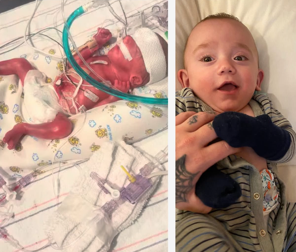
A side-by-side photo shows Richie Richardson shortly after birth at 1 pound, 13 ounces and later during his recovery journey. Photo submitted.
“Even 20 years ago, a baby like Marshall maybe would not have been able to go home,” she said.
For the doctors who cared for him during his 250-day NICU stay, seeing Marshall finally leave the hospital was deeply rewarding.
“Whenever we have a happy story like Marshall, and they get to go home and they seem to be thriving, it’s huge,” Dr. Wright said. “That’s the most rewarding part of our job for sure.”
One of the most emotional moments for the family came months later when the twins were finally reunited. With Richie being released to go home in December 2025 as Marshall’s stay in the NICU continued, the twins were not together again until March 3, 2026.
“It was awesome,” Alisha said of having the boys back together. “…They still don’t know what to think of each other. Richie doesn’t understand what Marshall’s oxygen is on his nose, and he just wants to take it off.”
For Marshall and Richie Richardson, the journey home was marked by surgeries, setbacks, and months spent inside the NICU. But through the dedication of their family and the specialized care provided by the team at Norton Children’s neonatal intensive care unit, the twins are finally home together. For Alisha and Kyle Richardson, every difficult day was worth the chance to watch their boys continue growing stronger side by side, just as they were always meant to be.
“It’s worth it,” Alisha said. “It’s all worth it in the end.”
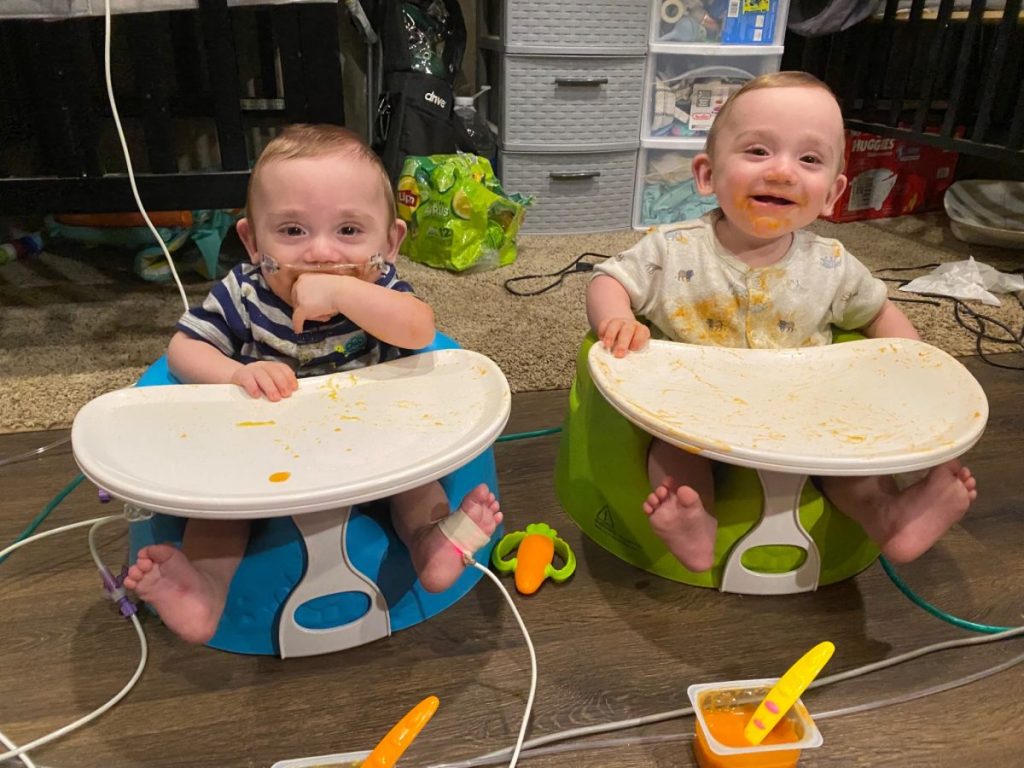
Twins Marshall and Richie Richardson share a meal together at home after months of separation during their NICU journey. The family said one of the most emotional moments came when the brothers were finally reunited after Marshall’s extended hospital stay. Photo submitted.